Ditapis dengan
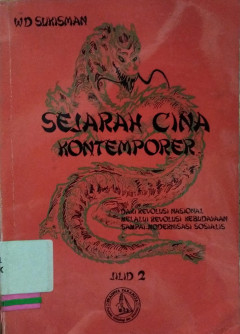
Sejarah Cina kontemporer: Jilid 2
Sejarah Tiongkok Kontemporer, Volume 2 memberikan kajian komprehensif tentang transformasi politik, sosial, dan budaya Tiongkok dari Revolusi Nasional hingga Revolusi Kebudayaan, hingga era Modernisasi Sosialis. Ditulis oleh W. D. Sukisman, buku ini menganalisis peristiwa sejarah besar dan gerakan ideologis yang membentuk Tiongkok pada pertengahan abad ke-20, termasuk perjuangan revolusioner, p…
- Edisi
- -
- ISBN/ISSN
- 979-408-316-x
- Deskripsi Fisik
- xii, 166 halaman : Ilustrasi ; 20,8 cm
- Judul Seri
- Jilid 2
- No. Panggil
- 951 SUK s
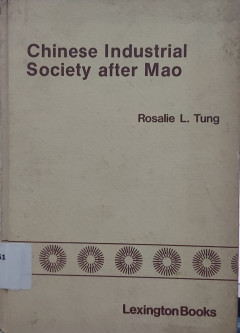
Chinese industrial society after Mao
This book examines the transformation of Chinese industrial society in the period following the death of Mao Zedong. It analyzes changes in industrial organization, labor relations, management practices, and social structures within China’s state-led economy after 1976. Drawing on economic, sociological, and political perspectives, the study provides insight into how post-Mao reforms reshaped…
- Edisi
- -
- ISBN/ISSN
- 0-669-04565-9
- Deskripsi Fisik
- xvi, 357 pages ; 22 cm
- Judul Seri
- -
- No. Panggil
- 338.0951 TUN c
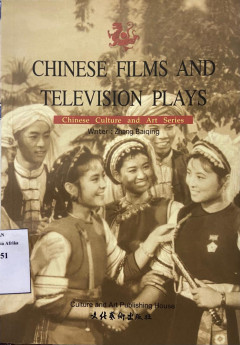
Chinese films and television plays
Zhang Baiqing's book, *Chinese Films and Television Plays*, examines the development of film and television drama in China as part of national artistic and cultural expression. It examines the history, aesthetic characteristics, themes, and role of film and television in Chinese society. Structured within a cultural and artistic framework, the book provides an understanding of how film and tele…
- Edisi
- -
- ISBN/ISSN
- 7-5039-1832-2
- Deskripsi Fisik
- 183 pages; illustration: 20 cm
- Judul Seri
- Chinese culture and art series
- No. Panggil
- 791.430951 ZHA c

Reformasi ekonomi RRC era Deng Xiaoping: Pasar bebas dan kapitalisme dihidupk…
Buku ini berisi: 1. Faktor perubahan kepemimpinan 2. Faktor strategi pembangunan radikal Mao 3. Faktor prioritas pertumbuhan ekonomi 4. Faktor internasional 5. Reformasi ekonomi RRC pasca 1978 6. Perkembangan setelah satu setengah dasawarsa
- Edisi
- Cet. 1
- ISBN/ISSN
- 979-416-332
- Deskripsi Fisik
- 232 halaman ; 21 cm
- Judul Seri
- -
- No. Panggil
- 338.951 Nai r

China's new democracy : with full texts of the three constitutions of the Peo…
China’s New Democracy provides an overview of the political foundations and institutional development of the People’s Republic of China through the lens of its constitutional evolution. The book discusses the concept of “New Democracy” as a guiding ideological framework and examines how it shaped the early political structure of the state. Included in the volume are the full texts of th…
- Edisi
- -
- ISBN/ISSN
- -
- Deskripsi Fisik
- 298 pages : illustration ; 19 cm
- Judul Seri
- -
- No. Panggil
- 321.51 QIX c
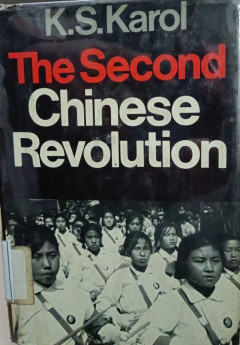
The Second Chinese revolution
The Second Chinese Revolution examines China’s political, social, and economic transformation in the years after 1949. The book describes how the country attempted to reshape its agricultural and industrial sectors, reorganize society under socialist principles, and navigate internal debates over ideology and policy. It also discusses the shifting dynamics within the Chinese Communist Party, …
- Edisi
- -
- ISBN/ISSN
- 0-8090-8516-X
- Deskripsi Fisik
- 472 pages : 20 cm
- Judul Seri
- -
- No. Panggil
- 320.95105 KAR s
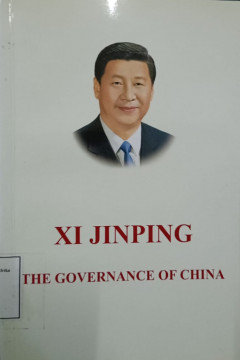
Xi Jinping : The Governance of China
Xi Jinping: The Governance of China is a compilation of key speeches, interviews, instructions, and correspondence from Xi Jinping, the President of China, covering the period from November 15, 2012, to June 13, 2014. The book provides a comprehensive overview of Xi’s political philosophy and vision for the future of China, focusing on the country's governance under the leadership of the Comm…
- Edisi
- -
- ISBN/ISSN
- 9787119090238
- Deskripsi Fisik
- xviii, 515 pages : illustrations ; 24 cm
- Judul Seri
- -
- No. Panggil
- 320.53 JIN g

The Invisible China : The overseas Chinese and the politics of Southeast Asia
The Invisible China explores the influence and role of overseas Chinese communities in shaping the political dynamics of Southeast Asia. The book examines how these communities—often economically influential yet politically marginalized—navigate issues of identity, citizenship, and allegiance within multicultural and multiethnic societies. It analyzes the historical migration patterns that …
- Edisi
- -
- ISBN/ISSN
- -
- Deskripsi Fisik
- xiv, 264 pages : illustration ; 21 cm
- Judul Seri
- -
- No. Panggil
- 320.51 ALE i

The Political thought of Mao Tse-Tung
The Political Thought of Mao Tse-tung explores the ideological foundations and evolution of Mao’s political philosophy, tracing its development from the early revolutionary years through the consolidation of power in the People’s Republic of China. The book examines key concepts such as the mass line, class struggle, continuous revolution, and the relationship between leadership and the peo…
- Edisi
- -
- ISBN/ISSN
- -
- Deskripsi Fisik
- ix, 319 pages : 19 cm
- Judul Seri
- -
- No. Panggil
- 320.951 SCH p
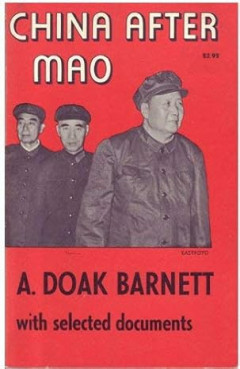
China after Mao
One of America's leading authorities on China outlines and assesses the implications of the inevitable passing of Mao Tse-tung and the older generation of revolutionary leaders from their position of command in China. Describing the mid-1960’s as "a transitional period of great historic significance," the author outlines the basic unsolved problems and unresolved issues that face Peking’s l…
- Edisi
- -
- ISBN/ISSN
- 978-0691000008
- Deskripsi Fisik
- vii, 287 pages : 19 cm
- Judul Seri
- -
- No. Panggil
- 320.551 BAR c
 Karya Umum
  Filsafat
  Agama
Agama  Ilmu-ilmu Sosial
  Bahasa
  Ilmu-ilmu Murni
  Ilmu-ilmu Terapan
  Kesenian, Hiburan, dan Olahraga
  Kesusastraan
  Geografi dan Sejarah