Ditapis dengan

Thought and behaviour in modern Japanese politics
A seminal study that analyzes the intellectual foundations, patterns of thought, and political behavior that shaped modern Japanese politics. Maruyama examines how the legacy of feudalism, traditional power structures, and hierarchical norms influenced Japan’s political development before and after World War II. The book explores the relationship between ideology, political institutions, and …
- Edisi
- -
- ISBN/ISSN
- 0-19-580453-8
- Deskripsi Fisik
- ix, 407 pages ; 20 cm
- Judul Seri
- -
- No. Panggil
- 320.952 MAR t
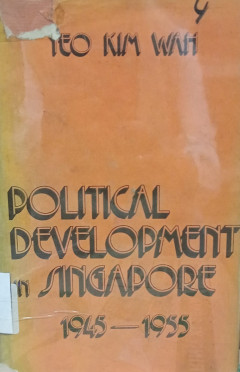
Political development in Singapore 1945-55
This book examines Singapore’s political transformation in the decade following World War II, highlighting the emergence of new political institutions and rising local political consciousness. It analyzes the interplay between British colonial policies and the growing demand for self-governance among Singapore’s diverse population. The author explores key political movements, societal chang…
- Edisi
- -
- ISBN/ISSN
- -
- Deskripsi Fisik
- x, 230 pages ; 22 cm
- Judul Seri
- -
- No. Panggil
- 320.959 WAH p
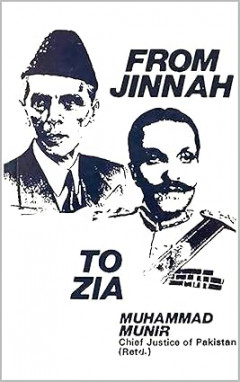
From jinnah to zia
This book concerned with a part of that history, namely, the ideological and geo¬graphical changes in Pakistan. Its aim is to show how from the Secularism of Quaid-i-Azam, Muhammad Ali Jinnah, the State has drafted into the hands of an orthodox element which claims that they will make Pakistan a totally Islamic State, as it was in the days of Nizam-i-Mustafa. There can be no doubt that Jinnah…
- Edisi
- Second Edition
- ISBN/ISSN
- -
- Deskripsi Fisik
- xx, 183 pages; 20 cm
- Judul Seri
- -
- No. Panggil
- 954.9205 MUN f
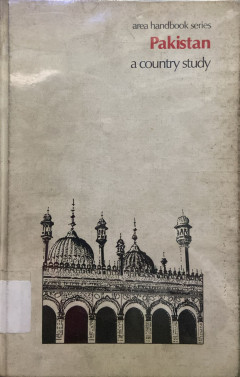
Pakistan: A Country study
Richard F. Nyrop's Pakistan: A Country Study (1983) is a comprehensive study of the geographic, social, political, economic, military, and cultural conditions of Pakistan in the early 1980s. The book is structured as an analytical report that provides a comprehensive overview of Pakistan's historical development from independence to the contemporary era. It examines the diverse social structur…
- Edisi
- -
- ISBN/ISSN
- -
- Deskripsi Fisik
- xvi, 453 pages: illustration; 24 cm
- Judul Seri
- -
- No. Panggil
- 954.910 NYR p

Burmese poltics: The Dilemma of national unity
The book Burma’s Struggle Against British Imperialism, 1885–1895 discusses the early phase of Burmese resistance after the fall of the Konbaung Dynasty and the British occupation of Upper Burma in 1885. This work traces how Burmese society—including the nobility, local leaders, monks, and peasant groups—responded to the drastic political changes that occurred during the early colonial p…
- Edisi
- -
- ISBN/ISSN
- 0-8135-0900-9
- Deskripsi Fisik
- xi, 263 pages ; 23 cm
- Judul Seri
- -
- No. Panggil
- 959.104 SIL b
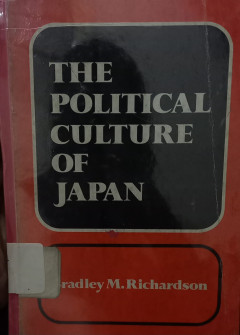
The Political culture of Japan
The values, beliefs, and behaviors that shape political life in Japan. The book explores how historical experiences, social structures, and cultural norms influence citizen participation, leadership styles, policy-making, and institutional development. Richardson highlights the interaction between traditional practices and modern democratic principles, offering insights into political continuit…
- Edisi
- -
- ISBN/ISSN
- 0-520-03049-4
- Deskripsi Fisik
- xi, 271 pages ; 20 cm
- Judul Seri
- -
- No. Panggil
- 361.61 RIC p
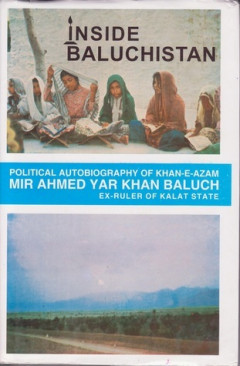
Inside Baluchistan: Political autobiography of Khan-E-Azam
Inside Baluchistan: Political Autobiography of Khan-e-Azam is a political account and personal experience of Mir Ahmad Yar Khan Baluch, a prominent figure and the last ruler of the state of Kalat before its integration into Pakistan. In this autobiography, the author reveals the political dynamics of Baluchistan during the transitional period leading up to and following Pakistan's independence …
- Edisi
- -
- ISBN/ISSN
- -
- Deskripsi Fisik
- xx, 352 pages: illustration; 24 cm
- Judul Seri
- -
- No. Panggil
- 923.254 BAL i

The Making of Burma
This book discusses the history of Burma before and during the colonization process, beginning with the arrival of early explorers, the first British traders, and the competition for power on the eastern border of India. The discussion continues with the first and second Anglo-Burmese wars, the development of trade, and Burma's relations with Pegu, Ava, and China. The next section outlines the…
- Edisi
- -
- ISBN/ISSN
- -
- Deskripsi Fisik
- v, 594 pages : 21 cm
- Judul Seri
- -
- No. Panggil
- 959.1 WOO m
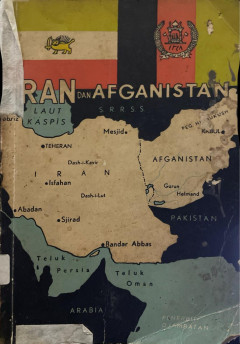
Iran dan Afganistan
Iran dan Afganistan karya J. F. Sluimers menyajikan gambaran menyeluruh mengenai dinamika sejarah, politik, dan budaya yang membentuk hubungan antara Iran dan Afganistan. Buku ini membahas warisan budaya yang sama, interaksi regional, serta pengaruh geopolitik yang turut menentukan perkembangan kedua negara. Melalui kajian terhadap peristiwa-peristiwa penting, ikatan etnis dan sosial, serta tan…
- Edisi
- 1
- ISBN/ISSN
- -
- Deskripsi Fisik
- xvi, 169 halaman : ilustrasi ; 16 cm.
- Judul Seri
- -
- No. Panggil
- 955 SLU i

Japanese politics--an inside view: Readings from Japan
A detailed examination of Japan’s political system from a domestic perspective. The book compiles analyses and essays that explore the structure and function of political institutions, the role of political parties, electoral behavior, and policymaking processes. Itoh emphasizes how cultural, historical, and social factors shape political decision-making in Japan. This collection provides rea…
- Edisi
- -
- ISBN/ISSN
- -
- Deskripsi Fisik
- x, 248 pages : illustrations ; 21 cm
- Judul Seri
- -
- No. Panggil
- 952 ITO j
 Karya Umum
  Filsafat
  Agama
Agama  Ilmu-ilmu Sosial
  Bahasa
  Ilmu-ilmu Murni
  Ilmu-ilmu Terapan
  Kesenian, Hiburan, dan Olahraga
  Kesusastraan
  Geografi dan Sejarah