Ditapis dengan
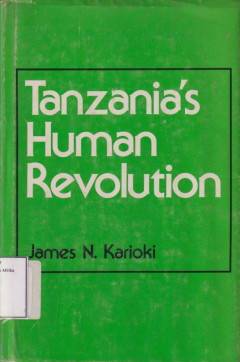
Tanzania's human revolution
This book analyzes the social, political, and economic changes in post-independence Tanzania, particularly through the human development policies initiated during the era of President Julius Nyerere. James N. Karioki evaluates the implementation of Ujamaa socialism, collective village development, and their impact on the country's social structure. In addition to discussing theory and policy, t…
- Edisi
- -
- ISBN/ISSN
- 0-271-00206-9
- Deskripsi Fisik
- 225 pages ; 23,5 cm
- Judul Seri
- -
- No. Panggil
- 309.1678 KAR t

Milestones on my Journey
Milestones of My Journey is an autobiography by Ali Sastroamidjojo, a prominent figure in Indonesian political history. Sastroamidjojo chronicles his life and political career, including his involvement in the Indonesian government during the early years of independence, foreign diplomacy, and the dynamics of national politics from 1927 to 1960. The book provides both a personal and historical …
- Edisi
- -
- ISBN/ISSN
- 0-7022-1206-7
- Deskripsi Fisik
- xiii, 405 pages : illustration ; 21,5 cm
- Judul Seri
- -
- No. Panggil
- 923.2 SAS m

Nation-building in Tanzania: Problems and issues
This book is a collection of articles discussing the challenges and issues of nation-building in Tanzania during the early years of independence. Edited by Anthony H. Rweyemamu, the book presents a multidisciplinary analysis by various experts on the political, economic, social, and administrative issues facing Tanzania. Contributors evaluate development strategies, economic planning, the moder…
- Edisi
- -
- ISBN/ISSN
- -
- Deskripsi Fisik
- 109 pages ; 22 cm
- Judul Seri
- -
- No. Panggil
- 320.9628 RWE n

A Fading dream: The Story of Roeslan Abdulgani and Indonesia
Written by Retnowati Abdulgani-Knapp, A Fading Dream: The Story of Roeslan Abdulgani and Indonesia presents an in-depth biography of Roeslan Abdulgani, a key figure in modern Indonesian political history. As a senior diplomat, minister, and one of the architects of the 1955 Asia-Africa Conference, Roeslan played a crucial role in shaping Indonesia's national identity in the early years of indep…
- Edisi
- -
- ISBN/ISSN
- 981-232-423-2
- Deskripsi Fisik
- xiv, 272 pages : illustrations ; 22,5 cm
- Judul Seri
- -
- No. Panggil
- 324.2092 KNA f

In The Time of madness: Indonesia on the edge of chaos
In the Time of Madness: Indonesia on the Edge of Chaos is an in-depth journalistic account by Richard Lloyd Parry that follows the violent events and political conflicts in Indonesia in the late 1990s. Parry chronicles the tragedy of the May 1998 riots, ethnic conflict in Kalimantan, violence in Maluku, and the upheaval leading up to the East Timor independence referendum. Using a narrative and…
- Edisi
- cet.1
- ISBN/ISSN
- 0-8021-1808-9
- Deskripsi Fisik
- 315 pages : illustration ; 24,5 cm
- Judul Seri
- -
- No. Panggil
- 959.87 PAR t
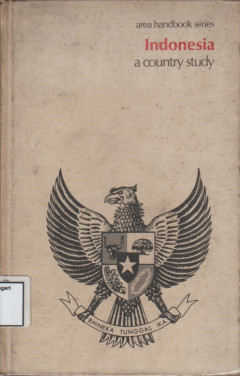
Indonesia a country study (Area handbook series)
The book Indonesia: a country study is part of the Area Handbook Series compiled by Foreign Area Studies, The American University. This edition presents a comprehensive study of Indonesia's geographical, social, cultural, political, economic, historical, and security conditions up to 1982. This book is intended to provide in-depth understanding for researchers, academics, and the United States …
- Edisi
- edisi 4, cet.1
- ISBN/ISSN
- -
- Deskripsi Fisik
- xxx, 343 halaman : ilustrasi ; 23,5 cm
- Judul Seri
- -
- No. Panggil
- 959.803 BUN i

The Struggle for Zimbabwe: The Chimurenga war
The Struggle for Zimbabwe: The Chimurenga War provides a comprehensive and detailed narrative of Zimbabwe’s liberation struggle against colonial rule. Written by journalists David Martin and Phyllis Johnson, the book examines the origins, development, and climax of the armed resistance led by liberation movements such as ZANU and ZAPU. Drawing from first-hand accounts, interviews, and histori…
- Edisi
- -
- ISBN/ISSN
- 0-571-11066-5
- Deskripsi Fisik
- xvii, 378 pages : illustration ; 22,5 cm
- Judul Seri
- -
- No. Panggil
- 968.9104 MAR t

Mugabe: Power, plunder, and the struggle for Zimbabwe
This revised and updated edition by Martin Meredith offers a comprehensive and critical examination of Robert Mugabe’s rise to power, his decades-long rule, and the political, social, and economic turmoil that unfolded in Zimbabwe under his leadership. Drawing on extensive research and firsthand accounts, Meredith exposes how Mugabe transformed from a celebrated liberation hero into one of Af…
- Edisi
- -
- ISBN/ISSN
- 978-1-86842-291-3
- Deskripsi Fisik
- 259 pages : illustration ; 20 cm
- Judul Seri
- -
- No. Panggil
- 968.9105 MER m

What happens after Mugabe? : Can Zimbabwe rise from the ashes?
What Happens After Mugabe? examines the uncertain political, economic, and social future of Zimbabwe at a time when Robert Mugabe’s leadership was nearing its end. Geoff Hill investigates the collapse of Zimbabwe’s economy, the erosion of democratic institutions, state-sponsored violence, and the humanitarian crisis that emerged during Mugabe’s rule. Drawing on interviews, historical anal…
- Edisi
- -
- ISBN/ISSN
- 978-1-77007-102-5
- Deskripsi Fisik
- xiv, 178 pages : illustration ; 21 cm
- Judul Seri
- -
- No. Panggil
- 968.91 HIL w

Zimbabwe: The Past is the future – rethinking land, state and nation in the…
This book provides a critical examination of Zimbabwe’s political, social, and economic trajectory in the years following independence. Edited by David Harold-Barry, it brings together the perspectives of multiple scholars who analyze the deepening national crisis, focusing on land redistribution, governance, state power, and national identity. Through historical insight and contemporary anal…
- Edisi
- -
- ISBN/ISSN
- 1-77922-025-1
- Deskripsi Fisik
- xv, 274 pages : illustration ; 21,5 cm
- Judul Seri
- -
- No. Panggil
- 968.91 HAR z
 Karya Umum
  Filsafat
  Agama
Agama  Ilmu-ilmu Sosial
  Bahasa
  Ilmu-ilmu Murni
  Ilmu-ilmu Terapan
  Kesenian, Hiburan, dan Olahraga
  Kesusastraan
  Geografi dan Sejarah