Ditapis dengan
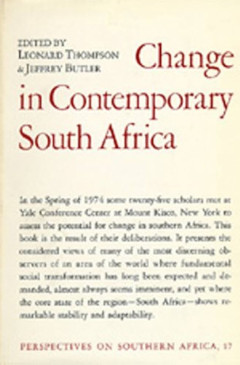
Change in contemporary South Africa
In the Spring of 1974 some twenty-five scholars met at Yale Conference Center at Mount Kisco, New York to assess the potential for change in southern Africa. This book is the result of their deliberations. It presents the considered views of many of the most discerning observers of an area of the world where fundamental social transformation has long been expected and de-manded, almost always s…
- Edisi
- -
- ISBN/ISSN
- 0-520-02839-2
- Deskripsi Fisik
- 447 pages; 24 cm
- Judul Seri
- -
- No. Panggil
- 320.968 THO c
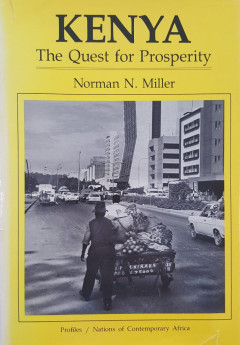
Kenya: The Quest for prosperity
Norman N. Miller's Kenya: The Quest for Prosperity is a comprehensive analysis of Kenya's journey toward national development after independence. The book examines the dynamics of Kenyan politics and governance from 1963 to the early 1980s, including changes in national leadership and the challenges of state consolidation. Miller discusses Kenya's economic development, social inequality, cha…
- Edisi
- -
- ISBN/ISSN
- 0-566-00547-6
- Deskripsi Fisik
- x, 180 pages; 22 cm
- Judul Seri
- -
- No. Panggil
- 967.62 MIL k
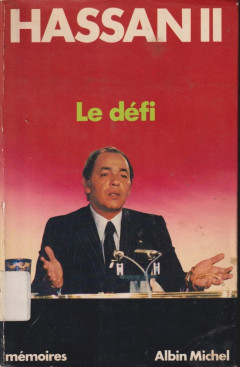
Le Défi
Le Défi is a reflective work by King Hassan II of Morocco that examines the political, economic, and social challenges facing the Maghreb during his reign. In this book, Hassan II outlines his strategic vision for national development, regional diplomacy, the modernization of Moroccan society, and the monarchy's role in maintaining the country's stability. Through both a personal and political…
- Edisi
- -
- ISBN/ISSN
- 2-226-00317-7
- Deskripsi Fisik
- 284 pages ; 24 cm
- Judul Seri
- -
- No. Panggil
- 320.9645 HAS l
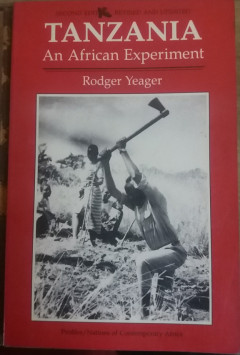
Tanzania: An African experiment
Rodger Yeager's Tanzania: An African Experiment is a comprehensive analysis of Tanzania's political, social, and economic journey since independence. This revised and updated edition critically examines President Julius Nyerere's ujamaa policy, rural development, and African socialism, as well as the successes and challenges of nation-building. Yeager examines how Tanzania's political experimen…
- Edisi
- -
- ISBN/ISSN
- 0-8133-8344-7
- Deskripsi Fisik
- 193 pages; 23 cm
- Judul Seri
- -
- No. Panggil
- 967.8 YEA t
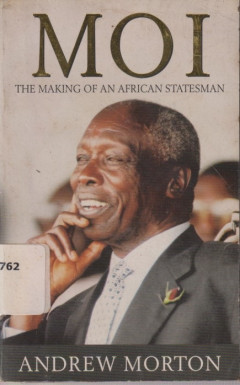
Moi: The Making of an African statesman
This book provides a detailed biography of Daniel arap Moi, the second President of Kenya, tracing his early life, rise through political ranks, and eventual emergence as a central figure in Kenyan national leadership. Andrew Morton examines Moi’s personal background, political ideology, leadership style, and the challenges he faced in guiding Kenya through periods of political transition. Dr…
- Edisi
- First published
- ISBN/ISSN
- 1-85479-369-6
- Deskripsi Fisik
- xi, 305 pages : illustration ; 17,5 cm
- Judul Seri
- -
- No. Panggil
- 967.6205092 AND m

The Politics of independent Kenya 1963–8
This book is an in-depth study of Kenya's political dynamics in the early period after independence from 1963 to 1968. Cherry Gertzel analyzes the formation of the national government structure, the process of consolidation of power, the role of political parties, and the relationship between the political elite and the people. It also discusses factors influencing political stability, administ…
- Edisi
- -
- ISBN/ISSN
- 0 435 83351 0
- Deskripsi Fisik
- xii, 180 pages ; 21 cm
- Judul Seri
- -
- No. Panggil
- 320.96762 GER p
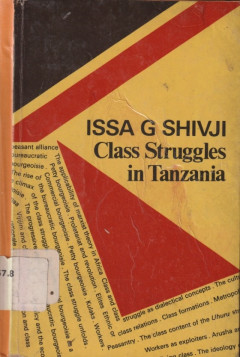
Class struggles in Tanzania
Class Struggles in Tanzania is a landmark analytical work by leading academic Issa G. Shivji, examining power relations, social classes, and the political and economic development of Tanzania from the colonial period to the early years of independence. Using a Marxist approach, Shivji charts how the post-independence state forged alliances and contradictions between classes—including the bure…
- Edisi
- -
- ISBN/ISSN
- -
- Deskripsi Fisik
- 182 pages ; 21,5 cm
- Judul Seri
- -
- No. Panggil
- 320.9678 SHI c
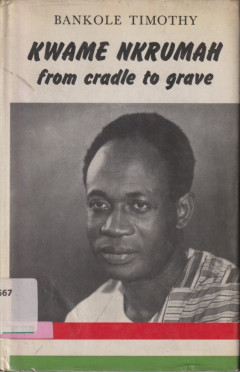
Kwame nkrumah: From cradle to grave
This book presents a comprehensive biographical account of Kwame Nkrumah, tracing his life from early childhood to his final years. Bankole Timothy offers detailed insights into Nkrumah’s upbringing, education, political awakening, and rise to prominence as the first Prime Minister and President of Ghana. The narrative explores Nkrumah’s ideological formation, his leadership in the independ…
- Edisi
- First edition
- ISBN/ISSN
- 0-905868-06-4
- Deskripsi Fisik
- viii, 258 pages : illustration ; 22 cm
- Judul Seri
- -
- No. Panggil
- 966.7092 BAN k

The Making of a periphery: Economic development and cultural encounters in so…
The Making of a Periphery traces the economic, social, and cultural history of southern Tanzania, particularly the Makonde people, from the colonial era to the post-independence period. It demonstrates how the southern region was shaped as a "periphery" within the national economic structure by colonial policies, post-independence state-building, and modern market interactions. Through multidis…
- Edisi
- -
- ISBN/ISSN
- 9976-973-40-3
- Deskripsi Fisik
- 344 pages : illustration ; 22 cm
- Judul Seri
- -
- No. Panggil
- 330.9678 SEP m

Kwame Nkrumah: His rise to power
This book provides an insightful account of the political rise of Kwame Nkrumah, one of Africa’s most influential independence leaders and the first Prime Minister and President of Ghana. Bankole Timothy traces Nkrumah’s early activism, his leadership in the anti-colonial movement, and his emergence as a central figure in postcolonial African politics. Through personal observations and hist…
- Edisi
- Second edition
- ISBN/ISSN
- -
- Deskripsi Fisik
- xiii, 191 pages : illustration ; 22 cm
- Judul Seri
- -
- No. Panggil
- 966.7092 BAN k
 Karya Umum
  Filsafat
  Agama
Agama  Ilmu-ilmu Sosial
  Bahasa
  Ilmu-ilmu Murni
  Ilmu-ilmu Terapan
  Kesenian, Hiburan, dan Olahraga
  Kesusastraan
  Geografi dan Sejarah