Ditapis dengan
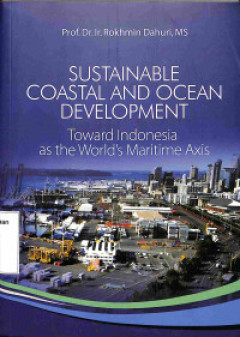
Sustainable coastal and ocean development
There is no country on earth that might have a greater need than Indonesia to be concerned about its ocean space and resources. For centuries at a crossroad of the international trade, with geo-strategically located at the epicenter of global economy. forming the world's largest achipelago (more than 17,500 island), and possessing the greatest marine biodiversity of any region of the world, Ind…
- Edisi
- Ed. 2
- ISBN/ISSN
- -
- Deskripsi Fisik
- 226 pages : illustrations (black and white) ; 21 cm
- Judul Seri
- -
- No. Panggil
- 339.5 Dah s

Selling China : Foreign direct investment during the reform era
This book about China's integration into the world economy proposes a radically different perspective. Most economists view China's large foreign direct investment (FDI) inflows as the result of China's economic success. This study views the same phenomenon as a function of the imperfections in the Chinese economic system. It uses economic theory to explain FDI to a greater extent than previous…
- Edisi
- -
- ISBN/ISSN
- 0-521-81428-6
- Deskripsi Fisik
- xx, 383 pages : illustrations (black and white) ; 23 cm
- Judul Seri
- -
- No. Panggil
- 332.6 Hua s

Market unbound: Unleashing global capitalism
The world is on the verge of the most sweeping economic changes since the Industrial Revolution. National economies are transforming from government-controlled market systems into an open international marketplace under no one's control. The consequences will be both exhilarating and terrifying. Market Unbound is the first compelling blueprint for adapting to this new global market. According …
- Edisi
- -
- ISBN/ISSN
- 0-471-14446-0
- Deskripsi Fisik
- xvii, 268 pages : illustrations (black and white) ; 23 cm
- Judul Seri
- -
- No. Panggil
- 332.042 Bry m
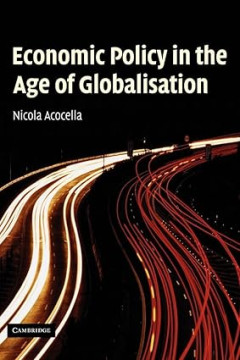
Economic policy in the age of globalisation
In the age of globalization, both domestic and foreign economic policies play an important role in determining firms' strategies. At the same time, firms' choices have a greater impact on economic policymaking in a global economy, as the range of alternatives open to them expands. Nicola Acocella analyzes both sides of this relationship and places special emphasis on current issues. Broad in sc…
- Edisi
- -
- ISBN/ISSN
- 0-521-54038-0
- Deskripsi Fisik
- xxvii, 509 pages : illustrations (black and white) ; 24 cm
- Judul Seri
- -
- No. Panggil
- 338.9 Aco e

The collapse of globalism: And the reinvention of the world
Globalization, like many great geopolitical ideologies before it, is now dead. Despite the almost-religious certainty with which it was originally conceived, a growing vagueness now surrounds the original promise of the global ideal that the fading power of nation states would be replaced by global markets that economics, not politics or arms, would determine the course of human events and that…
- Edisi
- -
- ISBN/ISSN
- 1-58567-629-2
- Deskripsi Fisik
- 309 pages ; 24 cm
- Judul Seri
- -
- No. Panggil
- 337 Sau c

The roaring nineties: A new history of the world's most prosperous decade
The Roaring Nineties offers not only an insider's illuminating view of policymaking but also a compelling case that even the Clinton administration was too closely tied to the financial community—that along with enormous economic success in the nineties came the seeds of the destruction visited on the economy at the end of the decade. This groundbreaking work by the Nobel Prize-winning eco…
- Edisi
- -
- ISBN/ISSN
- 0-393-05852-2
- Deskripsi Fisik
- xxxiv, 379 pages ; 24 cm
- Judul Seri
- -
- No. Panggil
- 330. 9730929 Sti r

Indonesia's struggle for economic development: Pragmatism in action
This book examines Indonesia's economic development from the mid-1960s to the mid-1990s. Combining scholarly objectivity with an insider's view, the book offers insightful analysis of the events that shaped Indonesia's development.
- Edisi
- Cet. 1
- ISBN/ISSN
- 983-56-0053-8
- Deskripsi Fisik
- xxvi, 374 pages : illustrations (black and white) ; 23 cm
- Judul Seri
- -
- No. Panggil
- 338.9598 Pra i
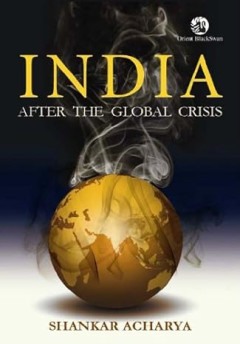
India after the global crisis
India after the Global Crisis assesses India s resilience in the face of the global financial crisis but then shows how the global crisis and our domestic policy failures have taken a toll on India s economic performance: growth has slowed significantly, inflation has remained high, the external current account deficit has more than doubled, and the rate of domestic investment has fallen. Dr…
- Edisi
- Cet. 1
- ISBN/ISSN
- 978-81-250-4509-0
- Deskripsi Fisik
- xiii, 226 pages : illustrations (black and white) ; 20 cm
- Judul Seri
- -
- No. Panggil
- 330.954 Ach i

Japan's big bang: The deregulation and revitalization of the Japanese economy
The consistent failure of the Japanese bureaucracy and business establishment to meet proper management and regulatory standards has made America's premier ally in Asia a major source of financial instability in today's world. - Japan has the world's biggest ever bad-debt burden - Japan has allowed organized crime to systematically infiltrate its financial institutions - Japan's national p…
- Edisi
- Ed. 1 ; Cet. 1
- ISBN/ISSN
- 0-8048-3227-7
- Deskripsi Fisik
- 215 pages ; 23 cm
- Judul Seri
- -
- No. Panggil
- 330.952 Hay j

The roaring nineties: Why we're paying the price for the greediest deecade in…
This is the explosive story of how capitalism US-style got its comeuppance: how excessive deregulation, government pandering to big business and exorbitant CEO salaries all fed the bubble that burst so dramatically amid corporate scandal and anti-globalization protest. As chief economic advisor to the president at the time, Stiglitz exposes the inside of what went wrong, but also reveals how…
- Edisi
- -
- ISBN/ISSN
- 0-141-01431-8
- Deskripsi Fisik
- xlii, 389 pages ; 20 cm
- Judul Seri
- -
- No. Panggil
- 338.9 Sti r
 Karya Umum
 Filsafat
 Agama
 Ilmu-ilmu Sosial
 Bahasa
 Ilmu-ilmu Murni
 Ilmu-ilmu Terapan
 Kesenian, Hiburan, dan Olahraga
 Kesusastraan
 Geografi dan Sejarah