Ditapis dengan

Inclusive diplomacy: Advancing Papuan participation in Indonesia’s approach…
This paper examines Indonesia’s inclusive diplomacy in the Pacific by emphasizing Papuan participation in engagement with Melanesia. The Papua issue and questions of cultural legitimacy continue to constrain Indonesia’s diplomacy in the Melanesian Spearhead Group (MSG) and the Pacific Islands Forum (PIF). Through a literature review, the paper assesses the alignment of the Ministry of Forei…
- Edisi
- -
- ISBN/ISSN
- -
- Deskripsi Fisik
- -
- Judul Seri
- -
- No. Panggil
- Sesdilu 79-2025

The pebble in the shoe: The diplomatic struggle for East Timor
This is a book that written too soon after the tragic developments in East Timor in 1999, it could have become part of a burning debate, one that had been generating more heat than light.
- Edisi
- -
- ISBN/ISSN
- 9793851090
- Deskripsi Fisik
- xx, 330 halaman ; 21 cm
- Judul Seri
- -
- No. Panggil
- 959.86 Ala p
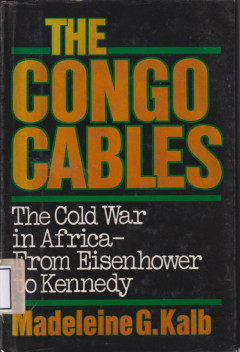
The Congo cables
“The Congo Cables” is a detailed diplomatic history examining the United States’ role in the Congo Crisis (1960–1965) during the Cold War. Drawing on newly declassified U.S. government cables and archival materials, Madeleine G. Kalb reveals the political maneuvering, intelligence activities, and international tensions surrounding the rise and assassination of Patrice Lumumba, as well a…
- Edisi
- -
- ISBN/ISSN
- 0-02-560620-4
- Deskripsi Fisik
- xxviii, 466 pages : illustration ; 24 cm
- Judul Seri
- -
- No. Panggil
- 967.5103 KAL c

Chinese Foreign Policy after the Cultural Revolution, 1966–1977
Chinese Foreign Policy after the Cultural Revolution, 1966–1977 analyzes the evolution of China’s foreign policy during and immediately after the Cultural Revolution. Written by Robert G. Sutter, the book examines how domestic political turmoil affected China’s external relations and diplomatic behavior. It explores policy changes, strategic priorities, and China’s interactions with maj…
- Edisi
- -
- ISBN/ISSN
- 0-89158-342-4
- Deskripsi Fisik
- 176 pages; 30 cm
- Judul Seri
- -
- No. Panggil
- 327.51 SUT c

A Strategy of interdependence: A Program for the control of conflict between …
This book presents a comprehensive program for controlling conflict between the United States and the Soviet Union during the Cold War era. Vincent P. Rock outlines a strategic framework based on political interdependence, diplomatic negotiation, and cooperative security measures. The work analyzes sources of tension between the two superpowers and proposes practical mechanisms to prevent escal…
- Edisi
- -
- ISBN/ISSN
- -
- Deskripsi Fisik
- xv, 399 pages ; 23 cm
- Judul Seri
- -
- No. Panggil
- 327.17 ROC s
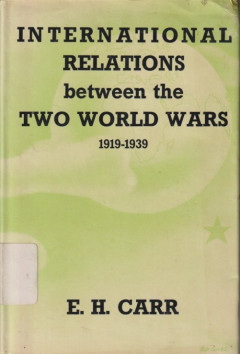
International relations between the two world wars 1919–1939
This book provides a comprehensive analysis of international relations during the interwar period from 1919 to 1939. E. H. Carr examines the political, economic, and diplomatic developments that shaped the fragile international order after World War I. The work discusses the consequences of the peace treaties, the rise of new power dynamics, and the failures of collective security leading to Wo…
- Edisi
- -
- ISBN/ISSN
- 0 333 08318 0
- Deskripsi Fisik
- viii, 302 pages : illustration ; 19 cm
- Judul Seri
- -
- No. Panggil
- 327.090 CAR i

Codification of the principles of peaceful and active coexistence
This book discusses the formulation and legal codification of the principles of peaceful and active coexistence in international relations. Tomislav Mitrovic analyzes political, legal, and diplomatic frameworks that support cooperation among nations, particularly during the global tensions of the mid-20th century. The work explores the foundations of peaceful coexistence as a guiding principle …
- Edisi
- -
- ISBN/ISSN
- -
- Deskripsi Fisik
- 54 pages ; 20 cm
- Judul Seri
- -
- No. Panggil
- 327 MIT c
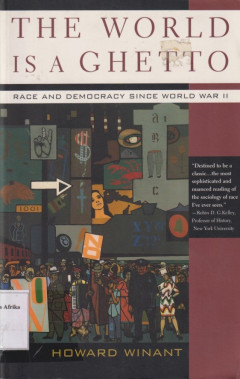
The World is a Ghetto: Race and democracy since World War II
This book examines the evolution of race and democracy in the global context since World War II. Howard Winant explores the transformation of racial politics, the rise of social movements, and the challenges posed by racial inequality in modern democratic societies. Through historical and comparative analysis, the author argues that race has become a central issue in contemporary global politic…
- Edisi
- -
- ISBN/ISSN
- 0-465-04340-2
- Deskripsi Fisik
- xvi, 428 pages ; 23 cm
- Judul Seri
- -
- No. Panggil
- 305.8 WIN w
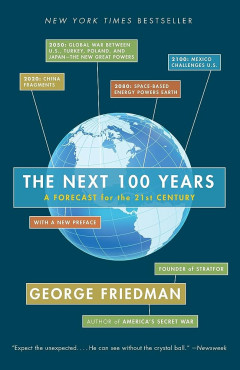
The next 100 years: A forecast for the 21st century
In his thought-provoking new book, George Friedman, founder of STRATFOR-the preeminent private intelligence and forecasting firm-focuses on what he knows best, the future. Positing that civilization is at the dawn of a new era, he offers a lucid, highly readable forecast of the changes we can expect around the world during the twenty-first century, all based on his own through analysis and rese…
- Edisi
- Cetakan Pertama
- ISBN/ISSN
- 0-393-03075-x
- Deskripsi Fisik
- xxi, 253 pages : illustration : index ; 22 cm
- Judul Seri
- -
- No. Panggil
- 303.49 Fri n
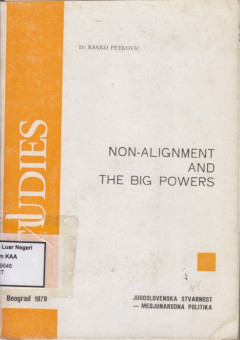
Non-Alignment and the big powers
Non-Alignment and the Big Powers analyzes the development, principles, and political significance of the Non-Aligned Movement in the context of global power rivalry. Dr. Ranko Petkovic examines how non-aligned countries attempted to assert independence from the dominant blocs during the Cold War while promoting peace, sovereign equality, and collective cooperation. The book also explores the re…
- Edisi
- -
- ISBN/ISSN
- -
- Deskripsi Fisik
- 46 pages ; 20 cm
- Judul Seri
- -
- No. Panggil
- 327.17 PET n
 Karya Umum
 Filsafat
 Agama
 Ilmu-ilmu Sosial
 Bahasa
 Ilmu-ilmu Murni
 Ilmu-ilmu Terapan
 Kesenian, Hiburan, dan Olahraga
 Kesusastraan
 Geografi dan Sejarah