Ditapis dengan
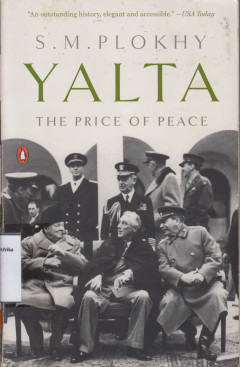
Yalta: The Price of peace
“Yalta: The Price of Peace” by historian Serhii Plokhy provides a comprehensive examination of the 1945 Yalta Conference, where Roosevelt, Churchill, and Stalin negotiated the political shape of the postwar world. Drawing from newly available archival materials, Plokhy reveals the strategic calculations, personal dynamics, and geopolitical pressures that shaped the decisions leading to the …
- Edisi
- -
- ISBN/ISSN
- ISBN 978-0-670-02141-3
- Deskripsi Fisik
- xxviii, 451 pages ; 21,5 cm
- Judul Seri
- -
- No. Panggil
- 940.5314 PLO y
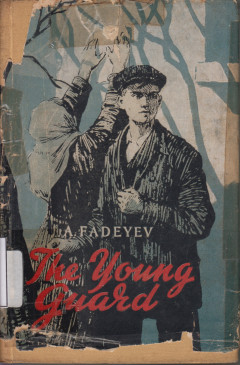
The Young guard : A Novel
The Young Guard is a classic Soviet novel by A. Fadeev depicting the heroic activities of the Young Guard, an underground Komsomol resistance organization operating in Krasnodon during the Nazi occupation in World War II. The novel follows a group of young patriots who organize sabotage, spread anti-fascist materials, and resist German forces despite the extreme dangers they face. Blending hist…
- Edisi
- -
- ISBN/ISSN
- -
- Deskripsi Fisik
- 715 pages ; 20,5 cm
- Judul Seri
- -
- No. Panggil
- 891.73 FAD y

Soviet foreign policy in a changing world
This book is a collection of essays and academic studies on the changes and dynamics of the Soviet Union's foreign policy after 1975. Editors Robbin F. Laird and Erik P. Hoffmann present in-depth analyses of Soviet international political strategy, including relations with developing countries, reactions to global changes, and the role of ideology and internal power structures in shaping Soviet…
- Edisi
- -
- ISBN/ISSN
- 0-202-24167-X
- Deskripsi Fisik
- xxiv, 969 pages ; 23,5 cm
- Judul Seri
- -
- No. Panggil
- 327.47 LAI s

Soviet foreign policy since world war II
This second edition of Soviet Foreign Policy Since World War II provides a comprehensive analysis of the Soviet Union's foreign policy from the end of World War II to the early 1980s. Joseph L. Nogee and Robert H. Donaldson discuss the dynamics of ideology, strategic interests, international relations, and changes in Soviet leadership that influenced foreign policy. This book combines a framewo…
- Edisi
- Second edition
- ISBN/ISSN
- 0-08-030151-7
- Deskripsi Fisik
- vii, 351 pages ; 23 cm
- Judul Seri
- -
- No. Panggil
- 327.47 NOG s

The Brutal friendship: Mussolini, Hitler, and the Fall of Italian Fascism
This book is an in-depth study of the complex relationship between Benito Mussolini and Adolf Hitler, and how the alliance between these two totalitarian regimes contributed to the downfall of Italian Fascism. F. W. Deakin traces the development of the personal and political relationship between the two leaders, their failed military strategies, and the internal tensions within Mussolini's regi…
- Edisi
- -
- ISBN/ISSN
- -
- Deskripsi Fisik
- 574 pages ; 18 cm
- Judul Seri
- -
- No. Panggil
- 945.0915 DEA b
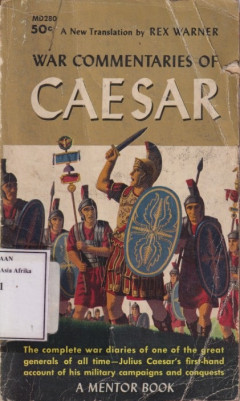
War Commentaries of Caesar
Caesar's Commentaries on the Wars is a translation of Julius Caesar's classic work documenting his various military campaigns, including analysis of strategy, tactics, and the political conditions of Rome at that time. This book presents Caesar's firsthand accounts of the wars he led, accompanied by modern interpretations and translations by Rex Warner. As one of the most important primary sour…
- Edisi
- -
- ISBN/ISSN
- -
- Deskripsi Fisik
- 335 pages : illustration ; 18 cm
- Judul Seri
- -
- No. Panggil
- 937.05 CAE w
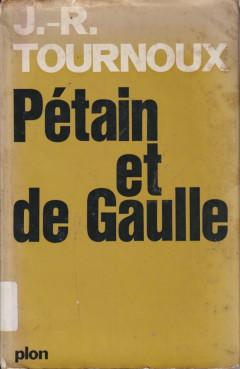
Pétain et De Gaulle
This book presents an in-depth study of two of the most influential and controversial figures in 20th-century French history: Philippe Pétain and Charles de Gaulle. Through his investigative style, J.-R. Tournoux depicts the relationships, ideological conflicts, differences in political vision, and the lives of these two figures who played a major role in World War I, World War II, and the pol…
- Edisi
- -
- ISBN/ISSN
- -
- Deskripsi Fisik
- 556 pages : illustration ; 23,5 cm
- Judul Seri
- -
- No. Panggil
- 944.081 TOU p

Histoire des relations internationales. Tome septième : Les crises du XXᵉ …
This seventh volume of the “Histoire des relations internationales” series examines the dynamics of international relations between 1914 and 1929, a period marked by the outbreak of World War I, major geopolitical changes, the collapse of old empires, and the emergence of new international security systems such as the League of Nations. Pierre Renouvin examines the causes of conflict, warti…
- Edisi
- -
- ISBN/ISSN
- -
- Deskripsi Fisik
- 369 pages : illustration ; 22 cm
- Judul Seri
- -
- No. Panggil
- 327.0904 REN h
Divided loyalties
This book is the memoir of Janet Teissier du Cros, a Scottish woman who lived in southern France during World War II. Through a powerful personal narrative, she describes daily life under German occupation, the struggle for survival, political tensions, and the inner struggle between identity and loyalty to two homelands. With a foreword by D. W. Brogan, this work offers a humanistic perspectiv…
- Edisi
- -
- ISBN/ISSN
- -
- Deskripsi Fisik
- xxvii, 350 pages :; 21 cm
- Judul Seri
- -
- No. Panggil
- 940.53 TEI d
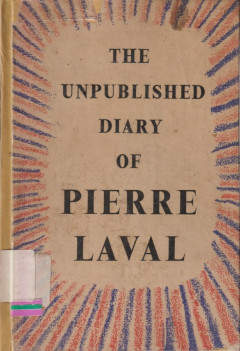
The Unpublished diary of Pierre Laval
This book contains the diaries of Pierre Laval, a French politician known for leading the collaborationist Vichy government during the German occupation of World War II. Compiled and introduced by his daughter, Josée Laval, the book offers a firsthand account of Laval's personal views, political decisions, and defense of his actions up until his trial in 1945. The diaries provide important his…
- Edisi
- -
- ISBN/ISSN
- -
- Deskripsi Fisik
- 217 pages : illustration ; 22 cm
- Judul Seri
- -
- No. Panggil
- 944.0816 LAV u
 Karya Umum
  Filsafat
  Agama
Agama  Ilmu-ilmu Sosial
  Bahasa
  Ilmu-ilmu Murni
  Ilmu-ilmu Terapan
  Kesenian, Hiburan, dan Olahraga
  Kesusastraan
  Geografi dan Sejarah