Ditapis dengan

The CTBT and the rise of nuclear nationalism in India: Linkage between nuclea…
The book is an attempt to analyse recent trends in the nuclear non-proliferation diplomacy after the Gulf crisis, with a focus on efforts to strengthen the nuclear export control regime, IAEA 'Special Inspections' based on satellite intelligence, and US policy of establishing regional nuclear non-proliferation regimes. An attempt has been made to examine how the nuclear non-proliferation regime…
- Edisi
- -
- ISBN/ISSN
- 81-7095-061-9
- Deskripsi Fisik
- x, 309 pages ; 21,5 cm
- Judul Seri
- -
- No. Panggil
- 355.825119 Pou c
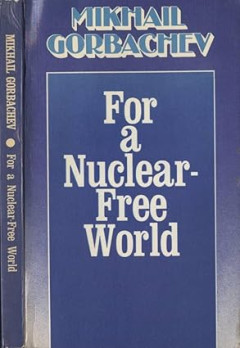
For a nuclear-free world
Contents: 1. Statement by the general secretary of the CPSU central committee 2. To Mr. Hitosh Motoshma, mayor of Nagasaki, and Mr. Takeshi Araki 3. To the disarmament conference 4. From the political report of the CPSU central committee to the 27th party congresh 5. Replay to the joint message of the leaders of Argentina, India, Mexico, Tanzania, Sweden and Greece, etc.
- Edisi
- -
- ISBN/ISSN
- -
- Deskripsi Fisik
- 298 pages ; 20 cm
- Judul Seri
- -
- No. Panggil
- 621.48 Gor n

India and the bomb : Public opinion and nuclear options
In 1994 the Joan B. Kroc Institute for International Peace Studies, in cooperation with the Fourth Freedom Forum, conducted the most comprehensive survey to date of the Indian public's attitude toward nuclear arms. This book examines the findings of that landmark survey. Contents: 1. Indian public opinion and nuclear weapons policy 2. Abstaining : The nonnuclear option 3. Status quo : Mai…
- Edisi
- -
- ISBN/ISSN
- -
- Deskripsi Fisik
- xiii, 160 pages ; 25 cm
- Judul Seri
- -
- No. Panggil
- 623.45 Cor i

Beyond arms control: Challenges and choices for nuclear disarmament
Beyond arms control: challenges and choices for nuclear disarmament is a collaborative work of non-governmental researchers and activists who critically examine the mainstream discourse of nuclear weapons. The book explores some of the most important challenges that governments and civil society will face at the 2010 NPT Review Conference and beyond, highlighting the prospects and pitfalls for …
- Edisi
- -
- ISBN/ISSN
- -
- Deskripsi Fisik
- xii, 250 pages ; 21, 5 cm
- Judul Seri
- -
- No. Panggil
- 355.825119 Ach b
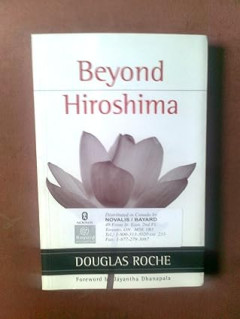
Beyond Hiroshima
Based on a recent U.N. sponsored conference on the non-proliferation of arms, Douglas Roche shows how the world has become more dangerous and more equitable through nuclear arms. This book presents a compelling case for a continued struggle to eliminate nuclear weapons. Roche explains how political, and especially religious and other civic leaders can work for a nuclear weapon-free world. Th…
- Edisi
- -
- ISBN/ISSN
- 2-89507-670-7
- Deskripsi Fisik
- 249 pages ; 21 cm
- Judul Seri
- -
- No. Panggil
- 355.8 Roc b

Are we prepared? Four WMD crises that could transform U.S. security: Failed W…
The four scenarios: the United States and its allies have begun to fear the imminent collapse of the nonproliferation regime * a state known to possess a nuclear weapons capability and suspected of possessing both chemical and biological weapons programs stands on the brink of political collapse * analysis of samples from multiple BioWatch sensors has identified a large-scale release of aerosol…
- Edisi
- -
- ISBN/ISSN
- 9781521153192
- Deskripsi Fisik
- 91 pages : illustrations (black and white) ; 25 cm
- Judul Seri
- -
- No. Panggil
- 355.825119 Man a

Cost of disarmament-disarming the costs: Nuclear arms control and nuclear rea…
This study evaluates the costs and benefits of nuclear arms control treaties between the US and the Soviet Union/Russian Federation. The report finds that, although the implementation and verification of nuclear arms control regimes can be expensive, these costs pale into insignificance compared to the costs and risks of nuclear rearmament and the consequences of a nuclear arms race.
- Edisi
- -
- ISBN/ISSN
- 92-9045-154-8
- Deskripsi Fisik
- xviii, 156 pages : illustration ; 21 cm
- Judul Seri
- -
- No. Panggil
- 355.825119 Wil c

Second strike: Arguments about nuclear war in South Asia
In May 1998 India tested a series of nuclear devices in Pokharan. Two weeks later Pakistan announced a matching series of its own tests. A year later, when the two countries had a bitter confrontation in Kargil, the worst fears of 'proliferation pessimists' appeared to be coming true. The alarm bells have never really stopped ringing since then. In Second Strike Rajesh Rajagopalan challenges mu…
- Edisi
- Cet. 1
- ISBN/ISSN
- -
- Deskripsi Fisik
- xvii, 237 pages ; 22 cm
- Judul Seri
- -
- No. Panggil
- 355.825119 Raj s

Arms on the market: Reducing the risk of proliferation in the former soviet u…
Almost overnight, the massive military-industrial assets of the Soviet Union came under the jurisdiction of fifteen states instead of one established government. While only four states inherited weapons of mass destruction, most of the fifteen states of the former Soviet Union can produce sensitive materials and equipment. Because all the states serve as transit points for both legal commerce a…
- Edisi
- -
- ISBN/ISSN
- 0-415-92059-0
- Deskripsi Fisik
- xiv, 239 pages ; 23 cm
- Judul Seri
- -
- No. Panggil
- 367.1974 Ber a

The nuclear predicament: Nuclear weapons in the cold war and beyond
Second Editions Highlights - Reflects how the end of the cold war gives us an opportunity to redefine the way the nuclear world operates - Examines how the nuclear age will never be over because humanity will never be able to rid itself of the knowledge of how to make these instruments of destruction - Discusses how nuclear weapons can produce catastrophic damage, and how there is no defens…
- Edisi
- ed. 2
- ISBN/ISSN
- 0-13-626912-5
- Deskripsi Fisik
- x, 326 pages : illustrations (black and white) ; 23 cm
- Judul Seri
- -
- No. Panggil
- 355.0217 Bec n
 Karya Umum
  Filsafat
  Agama
Agama  Ilmu-ilmu Sosial
  Bahasa
  Ilmu-ilmu Murni
  Ilmu-ilmu Terapan
  Kesenian, Hiburan, dan Olahraga
  Kesusastraan
  Geografi dan Sejarah