Ditapis dengan

The Middle East peace process and the EU: Foreign policy and security strateg…
EU policy-makers have in the past decade endeavoured to formulate a substantial redefinition of the organisation's international ambitions. Attempting to carve out a new role as a key foreign and security policy actor in international politics, the EU has been involved in peace negotiations across the globe. Here, Taylan Ozgur Kaya looks at how this is enacted, with particular reference to the …
- Edisi
- -
- ISBN/ISSN
- 978-1-84885-982-1
- Deskripsi Fisik
- xiii, 266 pages : bibl: hlm 240-259 : index ; 23 cm
- Judul Seri
- -
- No. Panggil
- 327.1720956 Kay m

Saudi Arabia and Iran: Power and rivalry in the Middle East
In the wake of the 1979 Iranian revolution, relations between states in the Middle East were reconfigured and reassessed overnight. Amongst the most-affected was the relationship between Iran and Saudi Arabia. The existence of a new regime in Tehran led to increasingly vitriolic confrontations between these two states, often manifesting themselves in the conflicts across the region, such as tho…
- Edisi
- -
- ISBN/ISSN
- 978-1-78453-466-0
- Deskripsi Fisik
- xii, 298 pages : index, bibliography ; 20 cm
- Judul Seri
- -
- No. Panggil
- 327.538055 Mab s

America right or wrong: An anatomy of American nationalism
This book seeks to help explain why a country which after the terrorist attacks of September 11, 2001, had the chance to create a concert of all the world's major states- including Muslim ones- against Islamist revolutionary terrorism chose in. stead to pursue policies which divided the West, further alienated the Muslim world and exposed America itself to greatly increased danger. The most imp…
- Edisi
- -
- ISBN/ISSN
- 0-19-516840-2
- Deskripsi Fisik
- xii, 274 pages : index ; 24 cm
- Judul Seri
- -
- No. Panggil
- 320.540973 Lie a
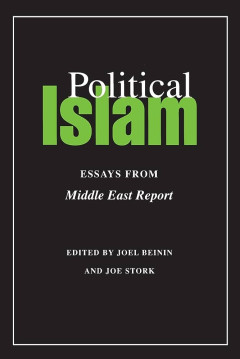
Political Islam: Essays from Middle East report
The appearance of modern political movements proclaiming missions and legitimacy based on religious tradition and scripture has proved to be an enduring feature in many late twentieth-century societies. These phenom- ena are by no means exclusive to the Middle East, but there the issue has assumed great urgency and visibility because of the region's strategic cen- trality to Western political a…
- Edisi
- -
- ISBN/ISSN
- 0-520-20448-4
- Deskripsi Fisik
- x, 395 pages : illustrations : index ; 24 cm
- Judul Seri
- -
- No. Panggil
- 292.272 Bei p

Economic developments and prospects: Middle East and North Africa Region 2005
This is the first in a new World Bank publication series devoted to the Middle East and North Africa region. In this and subsequent issues, the series aims to provide a venue for regularly monitoring major economic trends in the region and highlighting the central issues affecting regional development.
- Edisi
- -
- ISBN/ISSN
- -
- Deskripsi Fisik
- xviii, 81 pages ; 27,5 cm.
- Judul Seri
- -
- No. Panggil
- 338.5 Ban e

Islam, the people and the state: Political ideas and movements in the Middle …
This book is packed with stimulating ideas on a dude range of topics whether on Khomeinism, or fundamentalism, the state and society, wedding ceremonies of class analysis, theories of development or Middle East specificity A must reading for any student interested in the contemporary Middle East
- Edisi
- -
- ISBN/ISSN
- 1850437343
- Deskripsi Fisik
- xxv, 192 pages : index ; 21 cm
- Judul Seri
- -
- No. Panggil
- 297.8956 Zub i

The Arab economy in Israel: The dynamics of a region's development
The Arab enclaves within Israel constitute a definite economic unit. Despite subservice to the national economy they exhibit a range of independent production and consumption modes that suggest potential economic developmental viability. The author considers the background of these enclaves and the extent of the independent Arab sector in the Israeli economy. Applying modern economic analysis, …
- Edisi
- -
- ISBN/ISSN
- 978-1-138-81188-1
- Deskripsi Fisik
- 248 pages ; 24 cm.
- Judul Seri
- -
- No. Panggil
- 338.95694 Kha a

What went wrong? : The clash between Islam and modernity in the Middle East
In this elegantly written volume, Bernard Lewis, a renowned authority an Islamic affairs, examines the anguished reaction of the Islamic world as it tried to make sense of how it had been overtaken, overshadowed, and dominated by the West. In a fascinating portrait of a culture in turmoil, Lewis shows how the Middle East turned its attention to understanding European weaponry, industry, governm…
- Edisi
- -
- ISBN/ISSN
- 0-06-051605-4
- Deskripsi Fisik
- 186 pages ; 20 cm
- Judul Seri
- -
- No. Panggil
- 956.015 Lew w
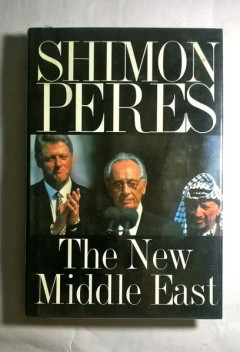
The new Middle East
The late summer headlines of a landmark peace accord between the government of Israel and the Palestine Liberation Organization stunned and delighted citizens of conscience from every walk of life and from all over the world. Here, at last, were the first glimmerings of harmony for a region whose bloody, intractable conflicts between Arab and Jew had outlived hot and cold wars alike to become a…
- Edisi
- ed.1
- ISBN/ISSN
- 0-8050-3323-8
- Deskripsi Fisik
- x, 224 pages ; 24 cm
- Judul Seri
- -
- No. Panggil
- 956 Per n

The modern Middle East: A political history since the first world war
Kamvara provides an in depth analysis not just or political history but also of a variety of other issues that have plagued this part of the world for so many years. - Mahmood Monshipouri. This is an ambitious, stimulating book that analyzes many important issues in the region, emphasizing the challenges countries face in overcoming historical legacie, developing accountable leadership, reco…
- Edisi
- -
- ISBN/ISSN
- 978-0-520-24150-3
- Deskripsi Fisik
- xi, 497 pages : illustrations (black and white) ; 23 cm
- Judul Seri
- -
- No. Panggil
- 956 Kam m
 Karya Umum
  Filsafat
  Agama
Agama  Ilmu-ilmu Sosial
  Bahasa
  Ilmu-ilmu Murni
  Ilmu-ilmu Terapan
  Kesenian, Hiburan, dan Olahraga
  Kesusastraan
  Geografi dan Sejarah