Ditapis dengan
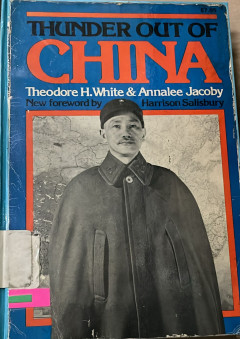
Thunder out of China
From the first outbreak of hostilities in northern China in 1937 to the Japanese surrender aboard the U.S.S. Missouri in 1945, this book recreates the decade of upheaval when China was caught in the grip of revolution and war and torn from its feudal past. The authors, Time-Life correspondents during the war years, report firsthand on the rise and fall of the Kuomintang nationalist government a…
- Edisi
- -
- ISBN/ISSN
- 0-306-80128-0
- Deskripsi Fisik
- viii, 331 pages : illustrations ; 21 cm
- Judul Seri
- -
- No. Panggil
- 951.042 WHI t
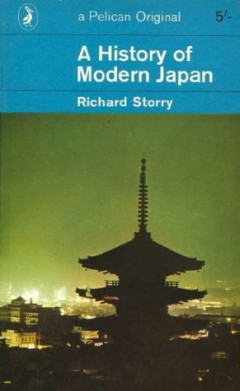
A History of modern Japan
This book provides a concise historical overview of Japan’s transformation from the late Tokugawa period to the post–World War II era. Richard Storry examines the fall of the shogunate, the reforms and modernization of the Meiji Restoration, and Japan’s emergence as an imperial power. The narrative highlights key political, social, and military developments, including Japan’s expansion …
- Edisi
- -
- ISBN/ISSN
- -
- Deskripsi Fisik
- 300 pages ; 18 cm
- Judul Seri
- -
- No. Panggil
- 952.04 STO h
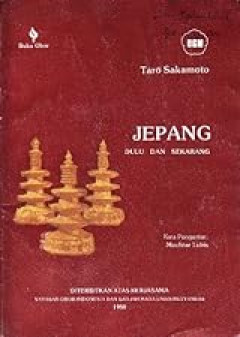
Jepang dulu dan sekarang
Tinjauan ringkas tetapi padat mengenai perjalanan sejarah Jepang, mulai dari era kuno hingga masa modern. Sakamoto membahas bagaimana struktur sosial-politik dan budaya Jepang berubah dari sistem feodal dan keshogunan ke era modern melalui proses modernisasi, kontak dengan Barat, dan transformasi militer serta ekonomi. Dalam buku ini juga dijelaskan dinamika sosial seperti peran samurai, transf…
- Edisi
- -
- ISBN/ISSN
- -
- Deskripsi Fisik
- xxiv, 95 halaman : ilustrasi ; 22 cm
- Judul Seri
- -
- No. Panggil
- 952.031 SAK j
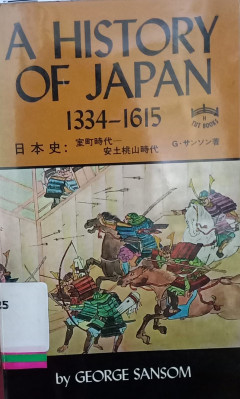
A History of Japan 1334-1615
A History of Japan, 1334–1615 presents a detailed account of Japan’s political, social, and cultural evolution from the fall of the Kamakura shogunate to the establishment of the Tokugawa regime. The book examines the turbulent Nanbokuchō and Muromachi periods, marked by rival imperial courts, shifting samurai alliances, and the rise of powerful regional warlords. It also explores the dyna…
- Edisi
- 5
- ISBN/ISSN
- 4-8053-0375-1
- Deskripsi Fisik
- 442 pages : illustrations ; 18 cm
- Judul Seri
- -
- No. Panggil
- 952.025 SAN h

Studies in the intellectual history of tokugawa Japan
Studies in the Intellectual History of Tokugawa Japan offers an in-depth exploration of the major intellectual trends, scholarly movements, and philosophical debates that shaped Japan during the Tokugawa period (1600–1868). The book examines the development of Confucianism, Neo-Confucianism, Kokugaku (nativist studies), and other schools of thought that influenced political ideology, social e…
- Edisi
- 3
- ISBN/ISSN
- 4-13-027008-7
- Deskripsi Fisik
- xiii, 383 pages ; 23,5 cm
- Judul Seri
- -
- No. Panggil
- 952.025 MAR s

Myths and legends of Japan
A comprehensive compilation of traditional Japanese myths, legends, and folktales drawn from classical texts such as the Kojiki and Nihongi, as well as regional oral traditions. The book explores the rich world of Shinto deities, nature spirits, heroic figures, and supernatural creatures that shape Japan’s cultural heritage. Davis provides cultural, historical, and religious context that help…
- Edisi
- -
- ISBN/ISSN
- 0-486-27045-9
- Deskripsi Fisik
- xx, 432 pages : illustrations ; 21,5 cm
- Judul Seri
- -
- No. Panggil
- 398.0952 DAV m
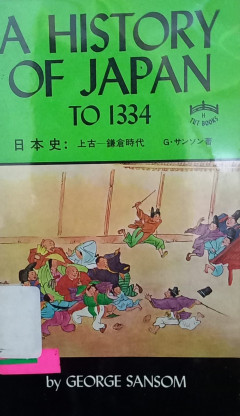
A History of Japan to 1334
A History of Japan to 1334 provides a comprehensive overview of Japan’s political, social, and cultural development from its earliest periods up to the year 1334. The book explores the formation of early Japanese states, the rise of influential clans, and the establishment of imperial and military governance structures. It examines religious, economic, and cultural transformations, including …
- Edisi
- 5
- ISBN/ISSN
- 4-8053-0375-1
- Deskripsi Fisik
- 500 pages : illustrations ; 18 cm
- Judul Seri
- -
- No. Panggil
- 952.025 SAN h
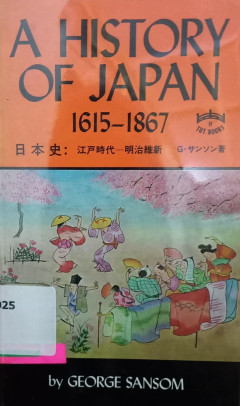
A History of Japan 1615-1867
A History of Japan, 1615–1867 presents a comprehensive account of Japan’s political, social, economic, and cultural development during the Edo period, a long era of stability under Tokugawa rule. The book describes how the Tokugawa shogunate established a centralized feudal system, controlled the daimyo through policies such as sankin-kōtai, and maintained social order through strict class…
- Edisi
- 5
- ISBN/ISSN
- 4-8053-0375-1
- Deskripsi Fisik
- 258 pages : illustrations ; 18 cm
- Judul Seri
- -
- No. Panggil
- 952.025 SAN h

The Japan reader 1: Imperial Japan: 1800-1945
A curated collection of primary documents, essays, and analyses that trace Japan’s transformation from a feudal society into a modern imperial power. The book covers key developments such as the late Tokugawa period, the Meiji Restoration, industrialization, nationalism, and militarization leading up to World War II. Livingston highlights the political, social, and economic forces that shaped…
- Edisi
- -
- ISBN/ISSN
- -
- Deskripsi Fisik
- xix, 517 pages ; 19,5 cm
- Judul Seri
- -
- No. Panggil
- 952 LIV j
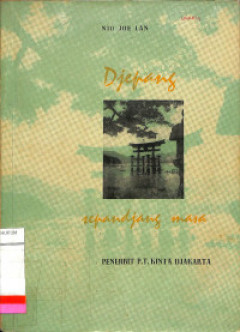
Djepang sepandjang masa
Gambaran ringkas namun informatif mengenai perjalanan sejarah Jepang dari zaman kuno hingga era modern awal. Buku ini membahas perkembangan politik, sosial, dan budaya Jepang, termasuk peranan kaisar, sistem feodalisme samurai, pembaruan Meiji, serta perubahan yang membawa Jepang menjadi negara modern. Melalui penyajian yang mudah dipahami, Nio Joe Lan menyoroti faktor-faktor penting yang membe…
- Edisi
- -
- ISBN/ISSN
- -
- Deskripsi Fisik
- 305 pages ; 20,5 cm
- Judul Seri
- -
- No. Panggil
- 952 LAN d
 Karya Umum
  Filsafat
  Agama
Agama  Ilmu-ilmu Sosial
  Bahasa
  Ilmu-ilmu Murni
  Ilmu-ilmu Terapan
  Kesenian, Hiburan, dan Olahraga
  Kesusastraan
  Geografi dan Sejarah