Ditapis dengan
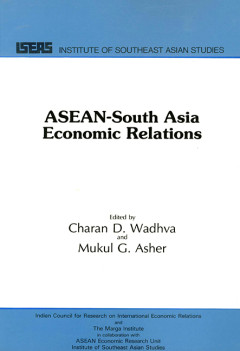
ASEAN-South Asia economic relations
This volume is the result of collaborative research between ASEAN and South Asian scholars and deals with economic relations between two important regions.
- Edisi
- -
- ISBN/ISSN
- 9971-902-98-2
- Deskripsi Fisik
- ix, 384 pages : illustrations (black and white) ; 24 cm
- Judul Seri
- -
- No. Panggil
- 337 Wad a

Creative economy and culture: Challenges, change and futures for the creative…
Creativity, new ideas and innovation – and with them the growth of knowledge – have spilled out of the lab, studio and factory into the street, scene, and social media. Now, everyday life is productive, everyone is creative, and new ideas can come from anywhere around the world. Instead of confining cultural expression to talented artists and expert professionals, this book investigates …
- Edisi
- -
- ISBN/ISSN
- 978-85702-877-8
- Deskripsi Fisik
- xi, 250 pages : illustration (black and white) ; 23,5 cm.
- Judul Seri
- -
- No. Panggil
- 338.9 Har c

Sri Lanka year 2000: Towards the 21st century
This book contains: 1. The Changing context 2. The economy 3.. International Economic Relations 4. The civil society 5. Social cultural dimensions 6. Structural responses 7. Toward the new century
- Edisi
- -
- ISBN/ISSN
- -
- Deskripsi Fisik
- xvi, 307 pages ; 22 cm
- Judul Seri
- -
- No. Panggil
- 338.95493 Stu s
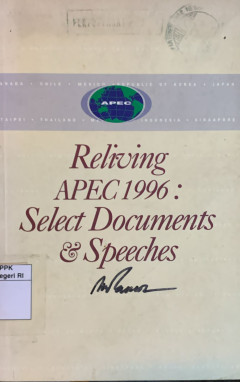
Reliving APEC 1996: Select documents & speeches
This book contains: 1. The President on APEC 2. Building the spirit of community 3. Trade and investment liberalization and facilitation 4. Economic and technical cooperation 5. Select APEC 1996 documents
- Edisi
- -
- ISBN/ISSN
- -
- Deskripsi Fisik
- 165 pages ; 23 cm.
- Judul Seri
- -
- No. Panggil
- 337.1 Mac r

Equilibrium and growth in the world economy
This book contains: 1. Causes and effects of capital movements (1993) 2. The schematic representation of the structure of productiion (1935) 3. Domestic and International equilibrium (1947) 4. International monetary policy and the search for economic stability (1947) 5. A new look at the dollar problem and the United States balance of payments (1954) 6. Period analysis and inventory cycle…
- Edisi
- -
- ISBN/ISSN
- -
- Deskripsi Fisik
- xiii, 380 pages ; 21 cm
- Judul Seri
- -
- No. Panggil
- 338.91 Nur e

Theory and reality of transition to a market economy
The book expounds major theoretical and practical issues facing China during the on-going transition to a market economy. It covers six special topics, namely: 1. Essential issues concerning China's transition to a market economy 2. Macro-control and regulation of the socialist market economy 3. Restructuring state-owned enterprises 4. Issues related to the socialist market economic syste…
- Edisi
- Ed. 1
- ISBN/ISSN
- 7-119-01816-7
- Deskripsi Fisik
- 358 pages ; 20 cm
- Judul Seri
- -
- No. Panggil
- 330.0951 Sha t
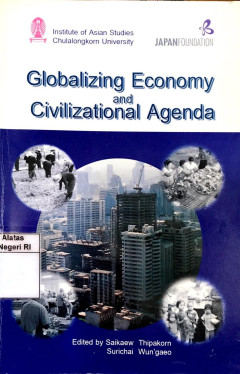
Globalizing economy and civilizational agenda
This book to realizes the necessity that our society understand the impact of the globalizing economy upon our lives and our way of living. When it seems that it is not possible to stop the intrusive force of globalization, we purpose that cultural elements of our society be used to counter its effects.
- Edisi
- -
- ISBN/ISSN
- 974-9990-32-3
- Deskripsi Fisik
- 214 pages ; 20,5 cm.
- Judul Seri
- -
- No. Panggil
- 337 Thi g

ASEAN in a changed regional and international political economy
Economic regionalization and economic regionalism have become an important item in the national, regional and international agenda of almost alla countries in the Asia Pacific region. Economic regionalism has many forms, as it may be driven by different kinds of forces. The ASEAN countries are engaged in a growing number of regional economic cooperation arrangements.
- Edisi
- -
- ISBN/ISSN
- 9798026306
- Deskripsi Fisik
- iii, 242 pages ; 20 cm
- Judul Seri
- -
- No. Panggil
- 337.950 Soe a
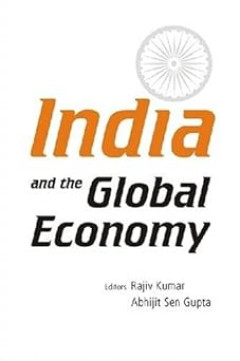
India and the global economy
Number of eminent policymakers, academicians and senior industry representatives address important policy challenges facing India as the country intensifies its engagement with the global economy.
- Edisi
- -
- ISBN/ISSN
- 978-8171886616
- Deskripsi Fisik
- 345 pages ; 23 cm.
- Judul Seri
- -
- No. Panggil
- 338.954 Kum i

Constructing capitalism: The reemergence of civil society and liberal economy…
This is an assessment of the transformation that took place in the Soviet Union and Eastern Europe. The book addresses two central questions: how is the state socialist system of party monopoly and centralized planning dissolving? And how do these societies recreate the communist opposite - civil society and free markets? The contributors attribute the collapse of state socialism to ideological…
- Edisi
- -
- ISBN/ISSN
- 0-8133-1481-X
- Deskripsi Fisik
- vii, 230 pages 23,5 cm.
- Judul Seri
- -
- No. Panggil
- 338.947 Poz c
 Karya Umum
 Filsafat
 Agama
 Ilmu-ilmu Sosial
 Bahasa
 Ilmu-ilmu Murni
 Ilmu-ilmu Terapan
 Kesenian, Hiburan, dan Olahraga
 Kesusastraan
 Geografi dan Sejarah