Ditapis dengan

Southeast Asia: Problems of United States policy
This book examines the major issues faced by the United States in formulating its policy toward Southeast Asia during the early Cold War period. Edited by William Henderson, it analyzes political, economic, and security considerations that shaped American involvement in the region. Through contributions by subject-matter experts, the volume explores regional dynamics, nationalist movements, the…
- Edisi
- -
- ISBN/ISSN
- -
- Deskripsi Fisik
- xiv, 273 pages ; 21 cm
- Judul Seri
- -
- No. Panggil
- 327.59 HEN s
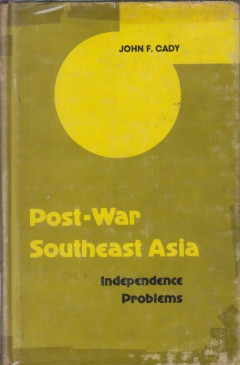
The History of post-war Southeast Asia
The History of Post-War Southeast Asia offers a comprehensive analysis of the political, social, and economic developments that shaped Southeast Asia after World War II. John F. Cady examines the region's transition from colonial rule to independence, the rise of nationalist movements, Cold War influences, and the formation of modern state identities. The book provides detailed country-by-count…
- Edisi
- -
- ISBN/ISSN
- 8214-0175-0
- Deskripsi Fisik
- xxii, 720 pages : illustrations ; 22,5 cm
- Judul Seri
- -
- No. Panggil
- 959.05 CAD h
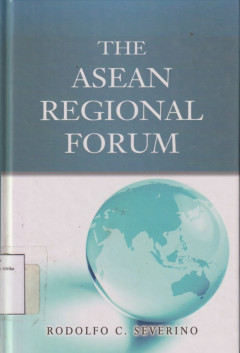
The ASEAN regional forum
The ASEAN Regional Forum by Rodolfo C. Severino provides an in-depth analysis of the origins, development, and role of the ASEAN Regional Forum (ARF) as a key platform for dialogue and cooperation on security issues in the Asia-Pacific region. The book examines the ARF’s objectives, mechanisms, and evolution in addressing regional peace and stability, including discussions on confidence-build…
- Edisi
- -
- ISBN/ISSN
- 978-981-230-990-7
- Deskripsi Fisik
- xiii, 186 pages : illustration ; 23,5 cm
- Judul Seri
- -
- No. Panggil
- 327.17 SEV a
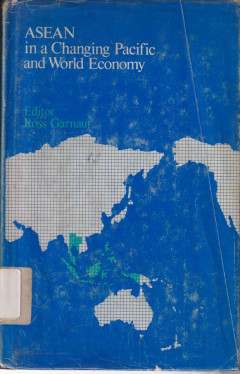
ASEAN in a changing pacific and world economy
This edited volume analyzes the role of ASEAN within a rapidly changing Pacific and global economic environment. The contributors examine the external economic relations of Southeast Asian nations, the development of regional industries, and the broader impact of international economic trends on ASEAN member states. The book discusses shifts in global trade patterns, resource-based industries, …
- Edisi
- -
- ISBN/ISSN
- 0-7081-1304-4
- Deskripsi Fisik
- xxiii, 557 pages ; 24,5 cm
- Judul Seri
- -
- No. Panggil
- 337.59 GAR a
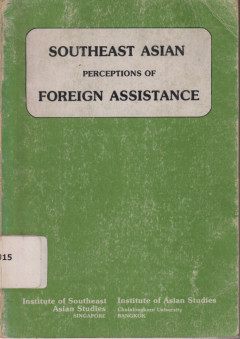
Southeast Asian perceptions of foreign assistance
This volume presents the papers and proceedings of a workshop held at Chulalongkorn University in June 1976, jointly organized by the Institute of Southeast Asian Studies (Singapore) and the Institute of Asian Studies of Chulalongkorn University. The book explores how Southeast Asian countries perceive foreign assistance, examining political, economic, and social dimensions of aid in the region…
- Edisi
- -
- ISBN/ISSN
- -
- Deskripsi Fisik
- x, 185 pages ; 21 cm
- Judul Seri
- -
- No. Panggil
- 337.159 LIM s

East Asian dynamism: Growth, order, and security in the Pacific Region
East Asian Dynamism continues to offer a succinct account of Pacific regional political economy from the dawn of the modern world system to projections of alternative futures. Steve Chan is a master at demystifying the geography, history, and culture of the region while bringing to life the current policy choices and dilemmas facing its people and leaders. In this new edition, he broadens the g…
- Edisi
- -
- ISBN/ISSN
- 0-8133-7932-6
- Deskripsi Fisik
- xv, 134 pages ; 23 cm.
- Judul Seri
- -
- No. Panggil
- 338.95 CHA e
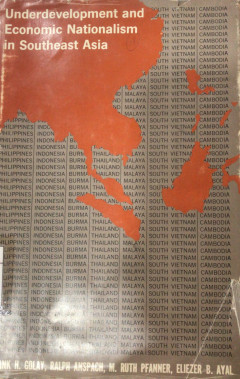
Underdevelopment and economic nationalism in Southeast Asia
This book provides an in-depth analysis of the economic underdevelopment of Southeast Asia and the rise of economic nationalism in the region. The authors examine the historical foundations of Southeast Asia’s economic structures, the legacy of colonialism, and the challenges faced by developing states in pursuing autonomous economic policies. The work evaluates nationalist responses to exter…
- Edisi
- First Published
- ISBN/ISSN
- 8014-0493-2
- Deskripsi Fisik
- xv, 494 pages : index ; 24 cm
- Judul Seri
- -
- No. Panggil
- 330.959 GOL u

South-East Asia between two worlds
This classic study by Tibor Mende examines the geopolitical and social conditions of Southeast Asia during the mid-twentieth century. Written at the height of the Cold War, the book analyzes how the region found itself caught between opposing global powers and competing ideological influences. Mende discusses the political struggles, economic challenges, and emerging national identities of Sout…
- Edisi
- -
- ISBN/ISSN
- -
- Deskripsi Fisik
- viii, 338 pages : illustrations ; 22 cm
- Judul Seri
- -
- No. Panggil
- 959 MEN s
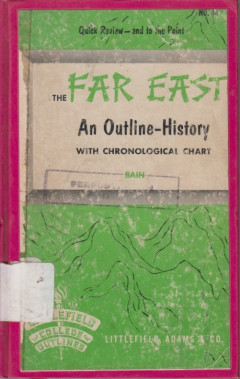
The Far east
This third edition of “The Far East” provides a comprehensive survey of the history, culture, and political development of East Asia. Written by Chester A. Bain and edited by Helmut G. Callis, the book offers an overview of major historical events, social transformations, and regional interactions in China, Japan, Korea, and neighboring areas. The text serves as an introductory guide to Ori…
- Edisi
- -
- ISBN/ISSN
- -
- Deskripsi Fisik
- xv, 248 pages : illustrations ; 20 cm
- Judul Seri
- -
- No. Panggil
- 950 BAI f

Southeast Asia in international politics, 1941-1956
This book provides a comprehensive analysis of Southeast Asia’s position in international politics from 1941 to 1956, a period marked by World War II, Japanese occupation, postwar reconstruction, and the emergence of nationalist movements throughout the region. Evelyn Colbert examines how global power rivalries—particularly between the United States, the United Kingdom, and emerging Asian s…
- Edisi
- -
- ISBN/ISSN
- 0-8014-0971-3
- Deskripsi Fisik
- 372 pages ; 23,5 cm
- Judul Seri
- -
- No. Panggil
- 327.0959 COL s
 Karya Umum
  Filsafat
  Agama
Agama  Ilmu-ilmu Sosial
  Bahasa
  Ilmu-ilmu Murni
  Ilmu-ilmu Terapan
  Kesenian, Hiburan, dan Olahraga
  Kesusastraan
  Geografi dan Sejarah