Ditapis dengan

China's future: Foreign policy and economic development in the post-Mao era
This book analyzes China’s foreign policy and economic development in the period following the death of Mao Zedong. Written within the framework of the Council on Foreign Relations’ 1980s Project, the study examines how domestic economic reforms and international strategic considerations shaped China’s evolving role in global politics. The authors explore policy choices, external relation…
- Edisi
- -
- ISBN/ISSN
- 0-07-069958-5
- Deskripsi Fisik
- xiv, 202 pages ;23 cm
- Judul Seri
- -
- No. Panggil
- 327.51 WHI c
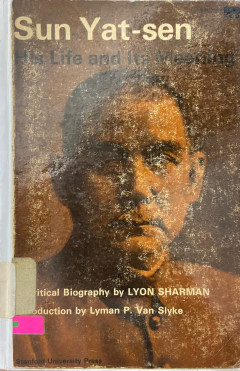
Sun Yat-sen : His life and its meaning
Sun Yat-sen: His Life and Its Meaning is a political biography written by Lyon Sharman that examines the life, ideas, and historical significance of Sun Yat-sen, the founding father of modern China. The book explores Sun Yat-sen’s revolutionary activities, political thought, and leadership in the movement that led to the overthrow of the Qing dynasty and the establishment of the Republic of C…
- Edisi
- -
- ISBN/ISSN
- -
- Deskripsi Fisik
- 420 pages; 24 cm
- Judul Seri
- -
- No. Panggil
- 951.092 SHA s
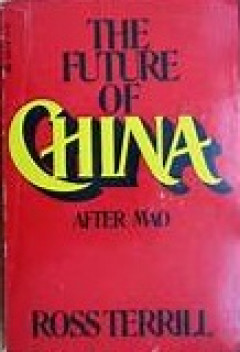
The Future of China After Mao
Examines China's future and political balance of power by analyzing the goals and methods of Hua Kuo-feng, Mao's successor, together with domestic problems, social and economic developments, and foreign relations
- Edisi
- -
- ISBN/ISSN
- 0-440-52612-4
- Deskripsi Fisik
- xiv, 331 pages : illustration ; 20 cm
- Judul Seri
- -
- No. Panggil
- 323.531 TER f

Quick access to the People’s Republic of China : The First sixty years (194…
Quick Access to the People’s Republic of China: The First Sixty Years (1949–2009) provides a comprehensive overview of the political, economic, social, and cultural development of the People’s Republic of China since its founding in 1949. The book presents key historical milestones, major reforms, and significant achievements over six decades, offering readers a concise reference to moder…
- Edisi
- -
- ISBN/ISSN
- 978-7-119-05990-7
- Deskripsi Fisik
- 183 pages; illustrations: 24 cm
- Judul Seri
- -
- No. Panggil
- 951.05 FOR q

The Chinese military system: An Organizational study of the Chinese people's …
This book provides a comprehensive organizational analysis of the Chinese People’s Liberation Army (PLA). It examines the structure, command system, political control, and functional roles of China’s military within the framework of a socialist state. The study explores the relationship between the Communist Party and the armed forces, highlighting how ideology, organization, and civil–mi…
- Edisi
- -
- ISBN/ISSN
- 0-89158-221-5
- Deskripsi Fisik
- xi, 266 pages ; 23 cm
- Judul Seri
- -
- No. Panggil
- 355.00951 NEL c
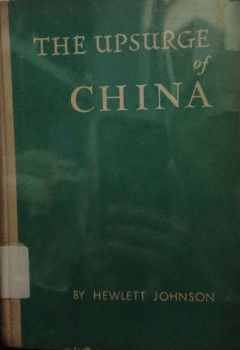
The Upsurge of China
The Upsurge of China is a firsthand account written by Hewlett Johnson—known as the “Red Dean of Canterbury”—documenting his travels and observations in the People’s Republic of China during the early years of the Communist era. Supported by the diaries and drawings of his wife Nowell Johnson and his daughters Kezia and Keren, the book offers a sympathetic portrayal of China’s polit…
- Edisi
- -
- ISBN/ISSN
- -
- Deskripsi Fisik
- 372 pages : Ilustration ; 21 cm
- Judul Seri
- -
- No. Panggil
- 951 JOH t

The Messiah and the mandarins : Mao Tsetung and the ironies of power
The Messiah and the Mandarins shows how the very qualities that enabled Mao to become master of all China, after starting out with a few hundred ragged fugitives, prompted him to half-wreck his own creation once the fighting ended. With the People's Republic established, China needed mandarins to mend the ravages of three decades of civil war, but was stuck with the Messiah who had "liberated" …
- Edisi
- -
- ISBN/ISSN
- 0-689-11297-1
- Deskripsi Fisik
- xvi, 331 pages ; 24 cm
- Judul Seri
- -
- No. Panggil
- 951.05 BLO m

Deng Xiao Ping and the making of modern China
This comprehensive biography of Deng Xiaoping, written by Richard Evans, a longtime Western diplomat and researcher in China, traces Deng Xiaoping's life from his youth, involvement in the revolution, his role in the Chinese Communist Party, and his role as a key architect of China's economic modernization. With a thorough and historically researched writing style, this book depicts how Deng sh…
- Edisi
- -
- ISBN/ISSN
- 978-7-5125-0483-7
- Deskripsi Fisik
- 388 pages : illustrations ; 24 cm
- Judul Seri
- -
- No. Panggil
- 951.056092 EVA d
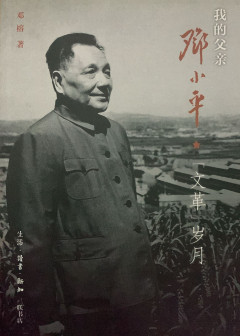
Wo de fuqin Deng Xiaoping wenge suiyue
This book is a memoir and family diary written by Deng Rong (邓榕), Deng Xiaoping's daughter. The book focuses on the "Cultural Revolution" period (1966–1976) — describing the Deng family's personal experiences during the father's two-fold criticism and purge, the family's suffering, details of political events that affected their domestic life, and reflections on Deng Xiaoping's position…
- Edisi
- -
- ISBN/ISSN
- 978-7-108-04322-1
- Deskripsi Fisik
- 496 pages : illustrations ; 24 cm
- Judul Seri
- -
- No. Panggil
- 923.1 DEN w
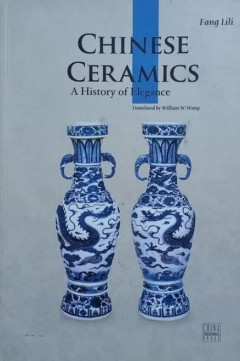
Chinese ceramics: A History of elegance
This book presents a comprehensive overview of the development of ceramics in China, from the prehistoric period (primitive pottery) to classical porcelain, complete with color illustrations. The book not only discusses manufacturing techniques, types of ceramics, and the development of styles and decorations (such as celadon, blue-and-white ware, wucai, fencai, and others), but also examines t…
- Edisi
- 2
- ISBN/ISSN
- 978-7-5085-1673-8
- Deskripsi Fisik
- 156 pages : illustrations ; 23 cm
- Judul Seri
- -
- No. Panggil
- 738.0951 FAN c
 Karya Umum
  Filsafat
  Agama
Agama  Ilmu-ilmu Sosial
  Bahasa
  Ilmu-ilmu Murni
  Ilmu-ilmu Terapan
  Kesenian, Hiburan, dan Olahraga
  Kesusastraan
  Geografi dan Sejarah