Ditapis dengan

Rabble-Rouser for peace: The Authorized biography of Desmond Tutu
Rabble-Rouser for Peace is the official biography of Bishop Desmond Tutu, written by John Allen, who worked closely with Tutu for many years. The book chronicles Tutu's life as a spiritual leader, anti-apartheid activist, Nobel Peace Prize winner, and figure of national reconciliation in South Africa. Exploring Tutu's personal story, political role, and moral contributions to the fight against …
- Edisi
- -
- ISBN/ISSN
- 978-0-7432-6937-7
- Deskripsi Fisik
- 481 pages : illustrations ; 24 cm
- Judul Seri
- -
- No. Panggil
- 283.092 ALL r

Undaunted courage: Meriwether Lewis, Thomas Jefferson, and the opening of the…
Undaunted Courage is a comprehensive biography and historical narrative that follows Meriwether Lewis, Thomas Jefferson’s trusted secretary, and his role in leading the Lewis and Clark Expedition across the uncharted American West from 1804 to 1806. Stephen E. Ambrose explores Lewis’s personal life, his relationship with Jefferson, the expedition’s challenges, interactions with Native Ame…
- Edisi
- -
- ISBN/ISSN
- 0-684-82697-6
- Deskripsi Fisik
- 521 pages : illustrations ; 23,5 cm
- Judul Seri
- -
- No. Panggil
- 917.8042 AMB u
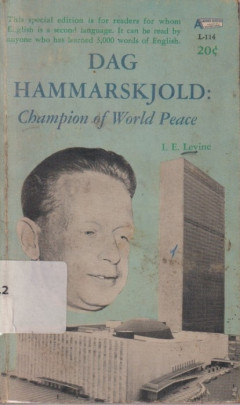
Dag hammarskjold; Champion of world peace
This biographical work by I. E. Levine tells the story of Dag Hammarskjöld, the second Secretary-General of the United Nations and one of the most influential figures in modern diplomacy. The book highlights his early life, intellectual background, and rise to international prominence. It examines his leadership in the UN, his efforts to promote peace and resolve global conflicts, and the idea…
- Edisi
- -
- ISBN/ISSN
- -
- Deskripsi Fisik
- 128 pages ; 18 cm
- Judul Seri
- -
- No. Panggil
- 921 LEV d
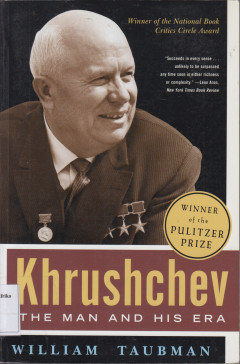
Khrushchev: The Man and His era
This Pulitzer Prize–winning biography offers an extensive and deeply researched portrait of Nikita Khrushchev, one of the most pivotal leaders of the Soviet Union. William Taubman reconstructs Khrushchev’s life—from his rise through the Communist Party under Stalin, to his surprising emergence as premier, and his attempts to reform the Soviet system while managing the dangers of the Cold …
- Edisi
- -
- ISBN/ISSN
- 978-0-393-05279-5
- Deskripsi Fisik
- xx, 871 pages : illustrations ; 23,5 cm
- Judul Seri
- -
- No. Panggil
- 947.084092 TAU k
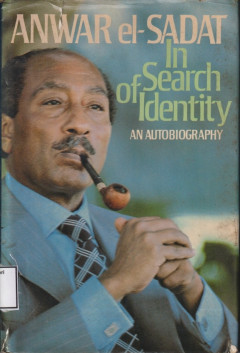
Anwar el-Sadat in search identify: An Autobiography
In Search of Identity is the autobiography of Anwar el-Sadat, the third president of Egypt and one of the most influential leaders in modern Middle Eastern history. In this compelling narrative, Sadat recounts his early life in Mit Abul-Kum, his involvement in the Free Officers Movement, and his rise to national leadership following the 1952 revolution. The book offers a firsthand account of Eg…
- Edisi
- -
- ISBN/ISSN
- 0-06-013742-8
- Deskripsi Fisik
- viii, 360 pages : illustration ; 24 cm
- Judul Seri
- -
- No. Panggil
- 962.053 ELS a
Soviet policy in the Third World
The book Soviet Policy in the Third World, edited by W. Raymond Duncan, is a collection of essays and analytical studies on the Soviet Union's foreign policy toward Third World countries during the Cold War. The authors in this volume discuss the political, economic, military, and ideological strategies used by the Soviets to expand their global influence, particularly in Asia, Africa, and Lati…
- Edisi
- -
- ISBN/ISSN
- 0-08-025125-0
- Deskripsi Fisik
- vi, 322 pages ; 23,5 cm
- Judul Seri
- -
- No. Panggil
- 327.4701724 RAY s
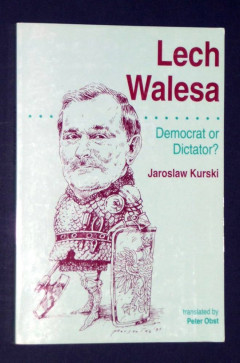
Lech Walesa: Democrat or dictator?
Drawing on his unique insider's perspective as press spokesman for Lech Walesa from October 1989 to July 1990, Jaroslaw Kurski has written the first critical, clear-eyed account of the Polish leader's personal and political style. During his time in Walesa's office, Kurski became acquainted with the many forces and ambitions which were unknown to the general. public that drove the Solidarity he…
- Edisi
- Cet. 1
- ISBN/ISSN
- 0-8133-1789-4
- Deskripsi Fisik
- xx, 178 pages : illustrations (black and white) ; 23 cm
- Judul Seri
- -
- No. Panggil
- 943.8 KUR l
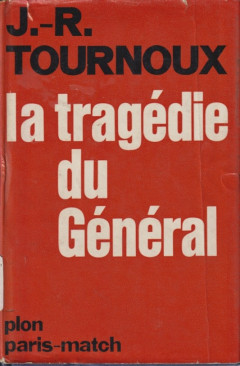
La tragédie du général
This book is an investigative work by J.-R. Tournoux, examining the life, political role, and conflicts surrounding a key general in modern French history. Using a documentary approach, Tournoux explores the political events, intrigues, and personal tragedies that shaped his journey. This book presents an in-depth look at the dynamics of power in 20th-century France, written by one of France's …
- Edisi
- -
- ISBN/ISSN
- -
- Deskripsi Fisik
- 697 pages ; 21 cm
- Judul Seri
- -
- No. Panggil
- 944.081 TOU l
Divided loyalties
This book is the memoir of Janet Teissier du Cros, a Scottish woman who lived in southern France during World War II. Through a powerful personal narrative, she describes daily life under German occupation, the struggle for survival, political tensions, and the inner struggle between identity and loyalty to two homelands. With a foreword by D. W. Brogan, this work offers a humanistic perspectiv…
- Edisi
- -
- ISBN/ISSN
- -
- Deskripsi Fisik
- xxvii, 350 pages :; 21 cm
- Judul Seri
- -
- No. Panggil
- 940.53 TEI d
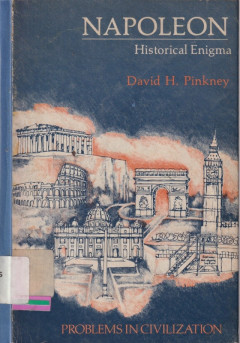
Napoleon: Historical enigma
This book is a collection of essays compiled and introduced by David H. Pinkney on Napoleon Bonaparte, one of the most complex and controversial figures in European history. Through analyses by various historians, this work examines historical conundrums regarding Napoleon's leadership, political strategy, reforms, and long-term impact on France and the world. This book provides a comprehensive…
- Edisi
- -
- ISBN/ISSN
- 0-88273-403-2
- Deskripsi Fisik
- 96 pages : illustration ; 23,5 cm
- Judul Seri
- -
- No. Panggil
- 944.05 PIN n
 Karya Umum
 Filsafat
 Agama
 Ilmu-ilmu Sosial
 Bahasa
 Ilmu-ilmu Murni
 Ilmu-ilmu Terapan
 Kesenian, Hiburan, dan Olahraga
 Kesusastraan
 Geografi dan Sejarah