Ditapis dengan
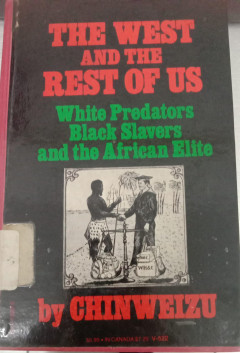
The West and the rest of us: White predators, black slavers, and the African …
This book examines the historical relationship between Western countries and the African world, focusing on colonialism, economic exploitation, and its cultural impact on African societies. Chinweizu highlights patterns of Western domination, the mechanisms of modern colonialism, and African responses to global political and economic pressures. This work is an important reference in the study o…
- Edisi
- -
- ISBN/ISSN
- 0-394-71522-5
- Deskripsi Fisik
- 520 pages; 20 cm
- Judul Seri
- -
- No. Panggil
- 960 CHI t
African one-party states
This book examines the development and characteristics of single-party political systems in several African countries during the early years of independence. Contributors analyze the political dynamics, government structures, the influence of colonialism, and the social challenges that shaped the emergence of single-party regimes in Sub-Saharan Africa. This work serves as an important reference…
- Edisi
- cet 1
- ISBN/ISSN
- -
- Deskripsi Fisik
- xii, 529 pages ; 24 cm
- Judul Seri
- -
- No. Panggil
- 960 CAR a

Five African states: Responses to diversity
This book examines the political, social, and ethnic dynamics of five African countries at the beginning of independence: Congo, Dahomey, the Federal Republic of Cameroon, Rhodesia and Nyasaland, and South Africa. Through expert analysis, the book explains how ethnic diversity, colonialism, and governmental structures influenced political stability and societal development in each country. This…
- Edisi
- -
- ISBN/ISSN
- -
- Deskripsi Fisik
- xiv, 643 pages : illustration ; 24 cm
- Judul Seri
- -
- No. Panggil
- 320.96 CAR f
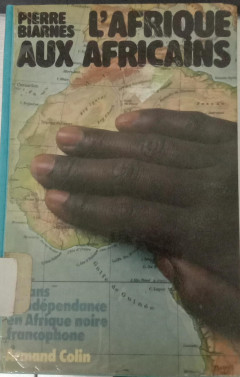
L'Afrique aux Africains
This book examines the first two decades of independence in Francophone Black Africa—the political, social, and economic changes from the 1960s to the 1980s. The author describes issues of inequality, development challenges, and the realities of life in post-colonial societies in Francophone Sub-Saharan Africa, drawing on historical perspectives and contemporary conditions. (Based on a synops…
- Edisi
- -
- ISBN/ISSN
- -
- Deskripsi Fisik
- 479 pages; 21 cm
- Judul Seri
- -
- No. Panggil
- 960 BIA l
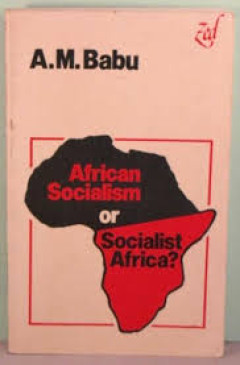
African socialism or socialist Africa
Abdul Rahman Mohamed Babu's book, "African Socialism or Socialist Africa?" is a critical analysis of the concept of "African socialism," widely promoted by African leaders in the post-colonial era. Babu argues that the term is often used to encapsulate nationalist policies that do not fully lead to genuine social transformation. He compares various models of socialism implemented in Africa and …
- Edisi
- cet.2
- ISBN/ISSN
- 9976-1-0053-1
- Deskripsi Fisik
- 174 pages; 22 cm
- Judul Seri
- -
- No. Panggil
- 960 BAB a
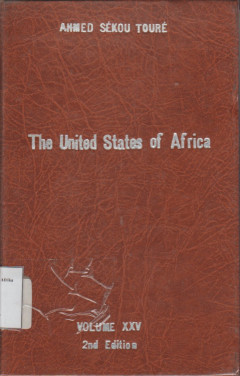
The United States of Africa
The book "The United States of Africa" is a collection of political thoughts by Guinean President Ahmed Sékou Touré on the unity of the African continent. In this work, he outlines a vision for the formation of a unified African nation-state as a path to true independence, solidarity, and development. The book discusses the concept of African political, economic, and social integration,…
- Edisi
- -
- ISBN/ISSN
- -
- Deskripsi Fisik
- 352 pages ; 24 cm
- Judul Seri
- -
- No. Panggil
- 320.96 TOU u

Clash of titans: Africa and U.S. foreign policy
This book examines the dynamics of relations between the United States and African countries during the Cold War. Edward W. Chester analyzes America's strategic, political, and economic interests in Africa, and how US foreign policy shaped African political developments. This work evaluates global conflicts of interest, the influence of great powers, and the responses of African countries to in…
- Edisi
- -
- ISBN/ISSN
- 0-88344-065-2
- Deskripsi Fisik
- ix, 361 pages ; 24 cm
- Judul Seri
- -
- No. Panggil
- 327.7306 CHE c
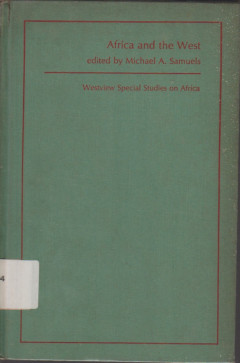
Africa and the west
"Africa and the West" is a collection of academic writings edited by Michael A. Samuels, examining the dynamics of political, economic, and strategic relations between African countries and the Western world. Published as part of the Westview Special Studies on Africa, this book explores the role of Western powers in the development of African countries, the impact of colonialism and postcoloni…
- Edisi
- -
- ISBN/ISSN
- 0-89158-764-0
- Deskripsi Fisik
- xiii, 114 pages ; 23,5 cm
- Judul Seri
- -
- No. Panggil
- 327.096 SAM a

Vieille Afrique, jeunes nations : Le continent noir au seuil de la troisième…
This book examines the political, social, and economic dynamics of Africa during the first three decades after the great wave of African independence. Philippe Decraene outlines the challenges of nation-state formation, internal conflicts, economic development, and international relations of newly independent African states. Using an analytical style, this book provides a comprehensive overview…
- Edisi
- -
- ISBN/ISSN
- 2-13-037189-2
- Deskripsi Fisik
- 301 pages ; 22 cm
- Judul Seri
- -
- No. Panggil
- 960.3 DEC v
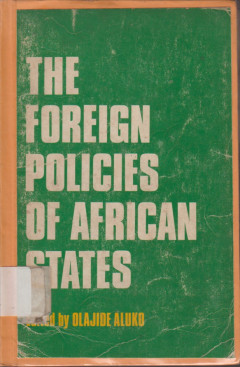
The Foreign policies of African States
The Foreign Policies of African States, edited by Olajide Aluko, is a collection of scholarly studies on the dynamics of African countries' foreign policies after independence. The contributors discuss the internal and external factors that shaped the foreign policies of various countries on the continent, including the influence of colonialism, regional interests, Africa's relations with great…
- Edisi
- -
- ISBN/ISSN
- 0-340-21030-3
- Deskripsi Fisik
- vi, 243 pages ; 24 cm
- Judul Seri
- -
- No. Panggil
- 327.096 ALU f
 Karya Umum
  Filsafat
  Agama
Agama  Ilmu-ilmu Sosial
  Bahasa
  Ilmu-ilmu Murni
  Ilmu-ilmu Terapan
  Kesenian, Hiburan, dan Olahraga
  Kesusastraan
  Geografi dan Sejarah