Ditapis dengan

Nationhood and the African road to socialism
"Nationhood and the African Road to Socialism" is a collection of political essays by Léopold Sédar Senghor that examines the concepts of African socialism, nation-building, and postcolonial African cultural identity. Senghor emphasizes the importance of developing a model of socialism grounded in African values, traditions, and humanism. Through his ideas, the book provides in-depth insights…
- Edisi
- -
- ISBN/ISSN
- -
- Deskripsi Fisik
- 130 pages : illustration ; 21,5 cm
- Judul Seri
- -
- No. Panggil
- 320.56096 SEN n

The Lost peace: Leadership in a time of horror and hope, 1945–1953
This book examines the crucial transition period in world history following the end of World War II, when global leaders faced the enormous challenge of building peace and a new international order. Robert Dallek explores the political decisions, conflicts of interest, and the origins of tensions that fueled the Cold War. Through in-depth analysis of major figures such as Truman, Churchill, Sta…
- Edisi
- -
- ISBN/ISSN
- 978-0-06-162866-5
- Deskripsi Fisik
- xii, 420 pages : illustration ; 24 cm
- Judul Seri
- -
- No. Panggil
- 909.82 DAL l
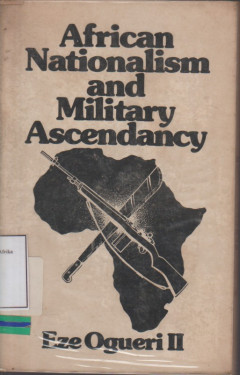
African nationalism and military ascendancy
Eze Ogueri II's book, "African Nationalism and Military Ascendancy," examines the development of African nationalism and the role of the military in the political dynamics of African countries after independence. The author explores the relationship between nationalist movements, political leadership, and the increasing dominance of the military in various African countries, particularly during…
- Edisi
- -
- ISBN/ISSN
- 0-914970-13-5
- Deskripsi Fisik
- vi, 85 pages : illustration ; 20,5 cm
- Judul Seri
- -
- No. Panggil
- 320.54096 OGU a

Nationalism and new states in Africa: From about 1935 to the present
Ali A. Mazrui and Michael Tidy's book, "Nationalism and New States in Africa," examines the development of African nationalism from approximately 1935 to the modern era. The authors outline the historical background of colonialism, the rise of nationalist movements, the struggle for independence, and the political dynamics of new states after independence. The book provides an in-depth analysis…
- Edisi
- -
- ISBN/ISSN
- 0-435-94146-1
- Deskripsi Fisik
- xxix, 401 pages : illustration ; 23,5 cm
- Judul Seri
- -
- No. Panggil
- 320.54096 MAZ n

Not by war alone: Security and arms control in the Middle East
Paul Jabber's Not by War Alone examines the dynamics of security and arms control in the Middle East in the post-World War II era. Through analysis of politics, military strategy, and international relations, Jabber highlights how regional conflicts are influenced not only by military power, but also by diplomatic efforts, security agreements, and arms control mechanisms. The book describes the…
- Edisi
- -
- ISBN/ISSN
- 0-520-04050-3
- Deskripsi Fisik
- xii, 212 pages : illustration ; 23,5 cm
- Judul Seri
- -
- No. Panggil
- 327.174 JAB n
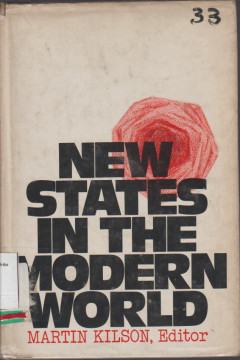
New States in the modern world
"New States in the Modern World," edited by Martin Kilson, is a collection of essays and lectures on the development of new states that emerged in the 20th century, primarily in Africa. Contributors discuss the political dynamics, governance challenges, national development, international relations, and ideological issues facing postcolonial states. This work provides an in-depth academic persp…
- Edisi
- -
- ISBN/ISSN
- 0-674-62261-8
- Deskripsi Fisik
- xi, 254 pages : illustration ; 24 cm
- Judul Seri
- -
- No. Panggil
- 320.17096 KIL s
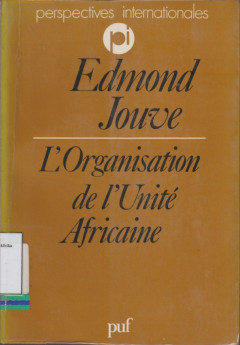
L’Organisation de l’Unité Africaine
Edmond Jouve's book, L’Organisation de l’Unité Africaine, examines the history, structure, objectives, and political dynamics of the Organization of African Unity (OAU), a regional institution established in 1963 to promote unity, solidarity, and liberation among African nations. Jouve examines the OAU's role in conflict resolution, interstate relations, anti-colonial struggles, and its co…
- Edisi
- -
- ISBN/ISSN
- 2-13-038778-0
- Deskripsi Fisik
- 284 pages ; 21,5 cm
- Judul Seri
- -
- No. Panggil
- 341.24 JOU l
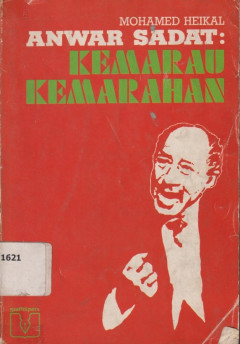
Anwar Sadat: Kemarau emarahan
Anwar Sadat: Kemarau Kemarahan, translated from Mohamed Heikal’s Autumn of Fury, offers an in-depth and critical examination of the final years of President Anwar Sadat’s rule. As one of Egypt’s leading journalists and a close observer of political developments, Heikal analyzes the political, social, and regional tensions that shaped Sadat’s leadership. The book discusses Sadat’s dome…
- Edisi
- -
- ISBN/ISSN
- -
- Deskripsi Fisik
- xiii, 250 pages : illustration ; 21 cm
- Judul Seri
- -
- No. Panggil
- 962.053092 HEI a
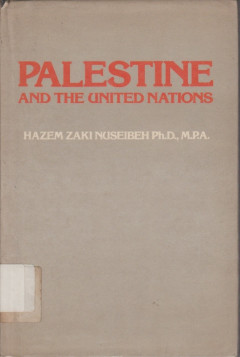
Palestine and the United Nations
This book examines the relationship between Palestine and the United Nations (UN), and how the Palestinian issue has evolved in international forums from the mandate period to the modern era. Hazem Zaki Nuseibeh outlines various UN resolutions, the positions of member states, the dynamics of diplomacy, and international efforts to find a solution to the Palestine–Israel conflict. The book pro…
- Edisi
- -
- ISBN/ISSN
- -
- Deskripsi Fisik
- 200 pages ; 24 cm
- Judul Seri
- -
- No. Panggil
- 341.232 NUS p

Palestinians: From peasants to revolutionaries
This is Rosemary Sayigh's seminal work, chronicling the history of the Palestinian people through in-depth interviews with refugees in Lebanese camps. Using an anthropological and political approach, Sayigh traces the transformation of Palestinian society from traditional peasants to a group involved in a modern revolutionary movement. The book depicts the experiences, struggles, identities, an…
- Edisi
- -
- ISBN/ISSN
- 0-905762-25-8
- Deskripsi Fisik
- 206 pages : illustration ; 21,5 cm
- Judul Seri
- -
- No. Panggil
- 956.953 SAY p
 Karya Umum
  Filsafat
  Agama
Agama  Ilmu-ilmu Sosial
  Bahasa
  Ilmu-ilmu Murni
  Ilmu-ilmu Terapan
  Kesenian, Hiburan, dan Olahraga
  Kesusastraan
  Geografi dan Sejarah