Ditapis dengan
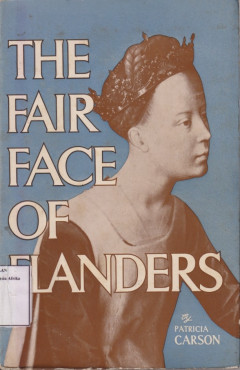
The Fair face of Flanders
Patricia Carson's The Fair Face of Flanders depicts the history, culture, art, and social development of the Belgian region of Flanders. It provides an in-depth look at Flemish identity throughout history, complemented by illustrations by Herman Verbaere. Carson positions Flanders as a region rich in tradition, fine art, architecture, and historical significance, which have influenced the forma…
- Edisi
- -
- ISBN/ISSN
- -
- Deskripsi Fisik
- 284 pages : illustration ; 24 cm
- Judul Seri
- -
- No. Panggil
- 949.3 CAR f
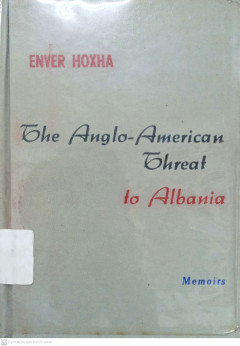
The Anglo-American threat to Albania : Memoirs of the national liberation war
The Anglo-American Threat to Albania by Enver Hoxha, First Secretary of the Central Committee of the Party of Labour of Albania, reflects events he lived through, his personal impressions, and gives conclusions, which provide lessons for all periods, drawn from the hostile activity carried out openly or behind the scenes by the Anglo Bourgeois attempts to put Albania under its imperialistic swa…
- Edisi
- -
- ISBN/ISSN
- -
- Deskripsi Fisik
- 446 pages, 20 x 14 cm
- Judul Seri
- -
- No. Panggil
- 973 HOX t
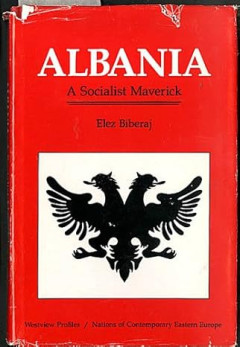
Albania: A socialist maverick
By focusing on the land, the people, the history, and the recent development of Albania, Elez Biberaj dispels much of the mystery created by its isolation. He addresses the major problems facing the post-Hoxha government in its efforts to return to the mainstream of international relations.
- Edisi
- -
- ISBN/ISSN
- 0-8133-0513-6
- Deskripsi Fisik
- viii, 157 pages : illustrations (black and white) ; 23 cm
- Judul Seri
- -
- No. Panggil
- 949.65 BIB a
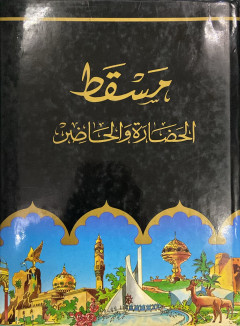
Muscat: Civilization and the present
Muscat: Civilization and the Present presents an in-depth study of the development of Muscat's civilization from ancient times to the modern era. Abu Bakar Abdul Rahman Ahmed traces the city's history as a maritime trade hub, a gateway to diplomacy, and a meeting place for diverse cultures that shaped Oman's unique identity. Through discussions of Muscat's architectural heritage, social develop…
- Edisi
- -
- ISBN/ISSN
- -
- Deskripsi Fisik
- 205 pages; illustration; 30 cm
- Judul Seri
- -
- No. Panggil
- 953.53 AHM m
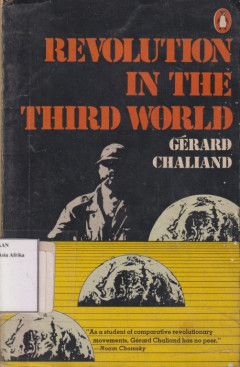
Revolution in the third world
Revolution in the Third World provides a comprehensive analysis of revolutionary movements across Asia, Africa, and Latin America during the post–World War II era. Gérard Chaliand examines the historical conditions, political dynamics, and strategies that shaped guerrilla struggles and socialist-oriented revolutions in developing regions. Drawing on comparative cases, the book explores the i…
- Edisi
- -
- ISBN/ISSN
- 0-14-04796-4
- Deskripsi Fisik
- xxii, 202 pages ; 20 cm
- Judul Seri
- -
- No. Panggil
- 320.5 CHA r
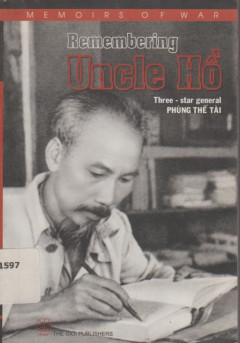
Remembering Uncle Ho: Three-star general Phung The Tai
Remembering Uncle Ho: Memories in War Years is a memoir written by Three-Star General Phùng Thế Tài, recounting his personal experiences working alongside Hồ Chí Minh during the years of the Vietnamese revolutionary struggle. The book offers intimate stories, reflections, and eyewitness accounts of the daily life, leadership, and character of Hồ Chí Minh, as seen through the eyes of o…
- Edisi
- -
- ISBN/ISSN
- -
- Deskripsi Fisik
- vii, 225 pages : illustration ; 20,5 cm
- Judul Seri
- -
- No. Panggil
- 959.704 TAI r

Soekarno Tabeh
Buku Peringatan 100 Tahun Prof. Mr. Sunario: Semangat Kebangsaan dan Politik Luar Negeri Indonesia disusun untuk mengenang seratus tahun kelahiran Prof. Mr. Sunario, Menteri Luar Negeri Republik Indonesia dan tokoh perintis kemerdekaan. Buku ini memuat beragam tulisan mengenai kontribusi Sunario dalam membentuk arah diplomasi Indonesia pada masa awal kemerdekaan, pandangan-pandangannya tentang …
- Edisi
- -
- ISBN/ISSN
- -
- Deskripsi Fisik
- 189 pages: illustrations ; 21 cm
- Judul Seri
- -
- No. Panggil
- 327.598 VEE s

Les Villes impériales du Maroc: Fès, marrakech, meknès, rabat-salé
Les Villes Imperiales du Maroc offers an in-depth look at four of Morocco's major historic cities: Fès, Marrakech, Meknès, and the twinned Rabat-Salé region. Through text by Samuel Pickens and photographic documentation by Philippe Saharoff, the book explores the cultural heritage, architecture, and historical developments that shaped the identities of these imperial cities. Richly illustrat…
- Edisi
- -
- ISBN/ISSN
- -
- Deskripsi Fisik
- 239 pages : illustration ; 28,5 cm
- Judul Seri
- -
- No. Panggil
- 964.5 PIC l
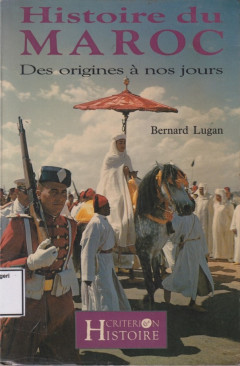
Histoire du maroc
This book presents a comprehensive history of Morocco from ancient times to the modern period. Bernard Lugan, a North African historian, outlines Morocco's political, social, economic, and cultural evolution, including the influence of Berber tribes, the heyday of Islamic dynasties, Morocco's relations with Europe, the French and Spanish colonial eras, and the path to independence. Using a hist…
- Edisi
- -
- ISBN/ISSN
- -
- Deskripsi Fisik
- 390 pages : illustration ; 23,5 cm
- Judul Seri
- -
- No. Panggil
- 964.5 LUG h

The Maghreb in the modern world: Algeria, Tunisia, Morocco
This book is an in-depth study of the political, economic, and social dynamics of the Maghreb region, encompassing Algeria, Tunisia, and Morocco, in the modern era. Samir Amin, a leading economist and thinker, analyzes the legacies of colonialism, the process of state-building, economic challenges, and the social and political movements that shaped the Maghreb's regional identity. Using a polit…
- Edisi
- First published
- ISBN/ISSN
- 0140211182
- Deskripsi Fisik
- 256 pages ; 18 cm
- Judul Seri
- -
- No. Panggil
- 960.4 AMI m
 Karya Umum
  Filsafat
  Agama
Agama  Ilmu-ilmu Sosial
  Bahasa
  Ilmu-ilmu Murni
  Ilmu-ilmu Terapan
  Kesenian, Hiburan, dan Olahraga
  Kesusastraan
  Geografi dan Sejarah