Ditapis dengan

Blood money: Wasted billions, lost lives, and corporate greed in Iraq
An explosive indictment of how the Bush Administration wasted billions in Iraq--through sweetheart deals to G.O.P. supporters, outrageous contracts to corrupt companies, and absurdly naïve assumptions. It was supposed to be quick and easy. The Bush Administration even promised that it wouldn't cost American taxpayers a thing Iraqi oil revenues would pay for it all. But billions and billions of…
- Edisi
- -
- ISBN/ISSN
- 978-0-316-16628-7
- Deskripsi Fisik
- xviii, 340 pages ; 21 cm
- Judul Seri
- -
- No. Panggil
- 956.7 Mil b
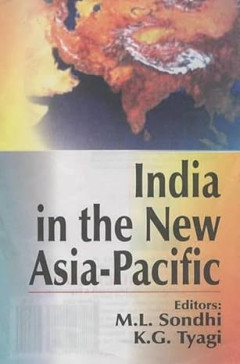
India in the new Asia-Pacific
Privatisation, liberalisation and globalisation have become the main features of the new world order, which means closer economic, social and cultural ties, transfer of technology and restructuring of internal priorities etc. in the various countries. In the era of globalisation and economic reforms, Asia- Pacific is the most vibrant region in the world. This book provides a diverse and vivi…
- Edisi
- Cet. 1
- ISBN/ISSN
- 81-7049-130-4
- Deskripsi Fisik
- 432 pages : illustrations (black and white) ; 22 cm
- Judul Seri
- -
- No. Panggil
- 337 Son i

What is our policy on North Korea?: A report on the evaluation of alternative…
Contents: 1. The socioeconomic and political background of the reforms 2. The DPRK's domestic economy 3. The DPRK's foreign economic relations and their dependence on the outcome of the nuclear dispute
- Edisi
- -
- ISBN/ISSN
- -
- Deskripsi Fisik
- 207 pages : illustrations (black and white) ; 25 cm
- Judul Seri
- -
- No. Panggil
- 337 Let w
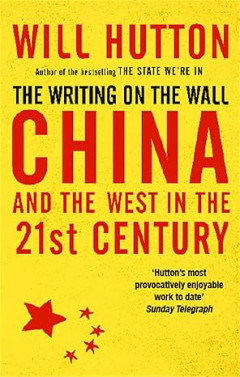
The writing on the wall: China and the west in the 21st century
China constitutes a fifth of the world's population. Over the last twenty years its economy has doubled to make it the fifth largest economy in the world; if the pace is repeated over the next twenty it is set to become second only to the US. The speed of its development is stunning, a combination of cheap labour and commitment to science and technology that has never been matched by a developi…
- Edisi
- -
- ISBN/ISSN
- 978-0-349-11882-6
- Deskripsi Fisik
- xii, 436 pages ; 20 cm
- Judul Seri
- -
- No. Panggil
- 338.9 Hut w
The low sky: Understanding the Dutch
Dutch society's behavioral eccentricities are unveiled in this insider's guide to Holland and its people. For business people and sightseers making a long or brief visit to Holland, Dutch society might be difficult to navigate without this examination of egalitarianism and utilitarianism, organization and trade, and honor and privacy. This eye-opening guide offers insight into why drugs may be …
- Edisi
- -
- ISBN/ISSN
- 90-5594-039-9
- Deskripsi Fisik
- 299 pages : illustrations (black and white) ; 22 cm
- Judul Seri
- -
- No. Panggil
- 330.9 Hor l
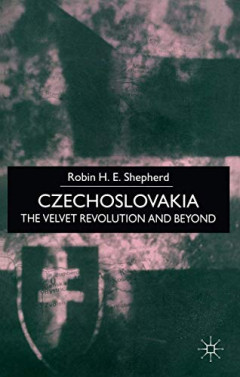
Czechoslovakia: The velvet revolution and beyond
Czechoslovakia, one of the most rigid and authoritarian of the former Soviet Union's satellite states, started the transition from communism with high hopes. But a decade of change has exposed the full extent of the damage wrought to the country through decades of communist rule. For one thing, the country could not hold together, splitting apart into two independent states in 1993. This book l…
- Edisi
- -
- ISBN/ISSN
- 0-333-92048-1
- Deskripsi Fisik
- ix, 204 pages ; 21 cm
- Judul Seri
- -
- No. Panggil
- 943.705 She c
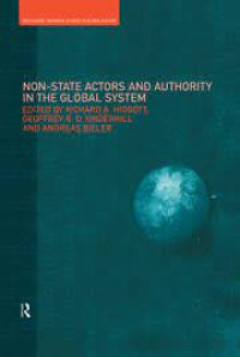
Non-State actors and authority in the global system
Traditionally in international relations, power and authority were considered to rest with states. But recently, in the light of changes associated with globalisation, this has come under scrutiny both empirically and theoretically. This book analyses the continuing but changing role of states in the international arena, and their relationships with a wide range of non-state actors, which poss…
- Edisi
- -
- ISBN/ISSN
- 0-415-22085-8
- Deskripsi Fisik
- xvii, 301 pages : illustrations (black and white) ; 23 cm
- Judul Seri
- -
- No. Panggil
- 337 Hig n
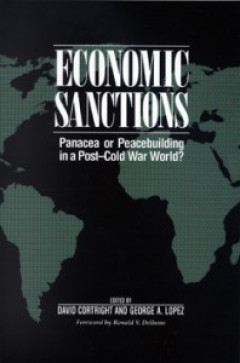
Economic sanctions: Panacea or peacebuilding in a post-cold war world?
As the challenge of preventing military conflict has become increasingly complex in the post-Cold War era, economic sanctions are being applied with growing frequency. Sanctions are also being used to enforce international law, to deter aggression and terrorism, to defend democracy and human rights, and to prevent nuclear proliferation. This study addresses questions about the utility, appropri…
- Edisi
- -
- ISBN/ISSN
- 0-8133-8908-9
- Deskripsi Fisik
- xvii, 231 pages : illustration (black and white) ; 22 cm
- Judul Seri
- -
- No. Panggil
- 337 Cor e
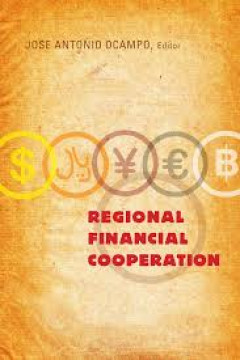
Regional financial cooperation
Assesses how regional financial institutions can help developing countries, often at a disadvantage within the global financial framework, finance their investment needs, counteract the volatility of private capital flows, and make their voices heard.
- Edisi
- -
- ISBN/ISSN
- 978-0-8157-6419-9
- Deskripsi Fisik
- viii, 375 pages : illustrations (black and white) ; 23 cm
- Judul Seri
- -
- No. Panggil
- 332.042 Oca r
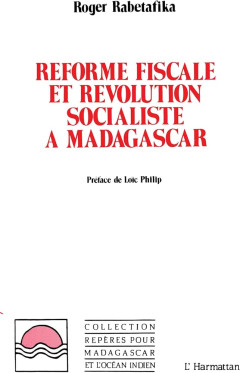
Reforme fiscale et revolution socialiste a Madagascar = Tax reform and the so…
Often the real questions that arise regarding the role of taxation in financing the economic development of developing countries are often hidden by seemingly technical discussions or simply demagogic statements.
- Edisi
- -
- ISBN/ISSN
- 2-7384-0547-9
- Deskripsi Fisik
- 189 pages : illustration (black and white) ; 23 cm
- Judul Seri
- -
- No. Panggil
- 336.395 Rab r
 Karya Umum
 Filsafat
 Agama
 Ilmu-ilmu Sosial
 Bahasa
 Ilmu-ilmu Murni
 Ilmu-ilmu Terapan
 Kesenian, Hiburan, dan Olahraga
 Kesusastraan
 Geografi dan Sejarah