Ditapis dengan

An introduction to contemporary international law: A policy-oriented perspective
This book introduces the reader to all major aspects of contemporary international law. It applies a policy-oriented perspective, a highly acclaimed approach developed by a group known as the New Haven School that views international law not as a fixed set of rules but as an ongoing process of decision making through which the members of the world community identify, clarify, and secure their c…
- Edisi
- Ed. 2
- ISBN/ISSN
- 0-300-08477-3
- Deskripsi Fisik
- xiv, 493 pages ; 23 cm
- Judul Seri
- -
- No. Panggil
- 341 Che i

Handbook of international law
A concise account of international law by an experienced practitioner, this book explains how states and international organisations, especially the United Nations, make and use international law. The nature of international law and its fundamental concepts and principles are descibed. The difference and relationship between various areas of international law which are often misunderstood (such…
- Edisi
- Cet. 1
- ISBN/ISSN
- 978-0-521-82349-4
- Deskripsi Fisik
- xlvii, 505 pages ; 23 cm
- Judul Seri
- -
- No. Panggil
- 341 Aus h
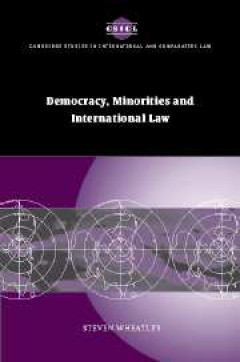
Democracy, minorities and international law
This book explores the contribution that international law may make to the resolution of culture conflicts--political disputes between the members of different ethno-cultural groups--in democratic States. International law recognizes that persons belonging to minorities have the right to enjoy their own culture and peoples have the right to self-determination without detailing how these princip…
- Edisi
- Cet. 1
- ISBN/ISSN
- 978-0-521-84898-5
- Deskripsi Fisik
- xxii, 201 pages ; 23 cm
- Judul Seri
- -
- No. Panggil
- 341 Whe d

Necessity, proportionality, and the use of force by States
There has been considerable debate in the international community as to the legality of the forceful actions in Kosovo in 1999, Afghanistan in 2002 and Iraq in 2003 under the United Nations Charter. There has been consensus, however, that the use of force in all these situations had to be both proportional and necessary. Against the background of these recent armed conflicts, this book offers t…
- Edisi
- Cet. 1
- ISBN/ISSN
- 0-521-83752-9
- Deskripsi Fisik
- xxiii, 259 pages ; 23 cm
- Judul Seri
- -
- No. Panggil
- 341.6 Gar n
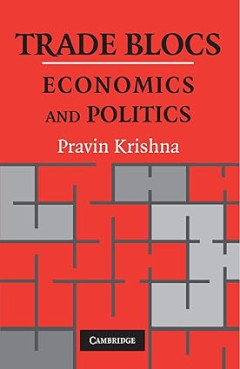
Trade blocs: Economic and politics
The first section of this 2005 book presents a rudimentary and intuitive introduction to the economics of preferential trade agreements. The following chapters present the author's theoretical and empirical research on a number of questions surrounding the issue of preferential trade agreements including the design of necessarily welfare-improving trade blocs, the quantitative (econometric) eva…
- Edisi
- -
- ISBN/ISSN
- 978-0-521-77066-8
- Deskripsi Fisik
- xv, 200 pages ; 23 cm
- Judul Seri
- -
- No. Panggil
- 382.9 Kri t

Imperialism, sovereignty and the making of international law
This book argues that the colonial confrontation was central to the formation of international law and, in particular, its founding concept, sovereignty. Traditional histories of the discipline present colonialism and non-European peoples as peripheral concerns. By contrast, Anghie argues that international law has always been animated by the 'civilizing mission' - the project of governing non-…
- Edisi
- -
- ISBN/ISSN
- 0-521-82892-9
- Deskripsi Fisik
- xix, 356 pages ; 23 cm
- Judul Seri
- -
- No. Panggil
- 341 Ang i

The final test: A history of the comprehensive nuclear-test-ban treaty negoti…
Contents: 1. Introduction 2. The mandate 3. Preamble 4. Article 1: Basic obligation 5. Article 2: The organization 6. Article 3: National implementation measures etc.
- Edisi
- -
- ISBN/ISSN
- -
- Deskripsi Fisik
- 291 pages : illustrations ; 23 cm
- Judul Seri
- -
- No. Panggil
- 341.7 Ram f

IMF dan stabilitas keuangan internasional: Suatu tinjauan kritis
Buku yang ditulis oleh sejumlah analis Bank Indonesia ini membahas sepak terjang IMF dalam menjaga kestabilan keuangan internasional, lengkap dengan teori atau pendekatan maupun konsep yagn mendasarinya. Peranan IMF dalam membantu menangani berbagai krisis keuanagn di sejumlah negara, termasuk Indonesia, digambarkan dengan sistematis, dianalisis secara rinci dan berimbang mengenai keberhasilan …
- Edisi
- -
- ISBN/ISSN
- 978-979-27-0276-7
- Deskripsi Fisik
- xxv, 311 halaman : ilustrasi ; 23 cm
- Judul Seri
- -
- No. Panggil
- 332.152 Ari i

The UN and global political economy : Trade, finance, and development
Contents: 1. The UN trade and development debates of the 194os 2. The UN recruits economists 3. Michal Kalecki, the world economic report, and McCarthyism 4. From full employment to economic development 5. The early terms-of-trade controversy 6. ECLA, Industralization, and inflation, etc.
- Edisi
- -
- ISBN/ISSN
- 0-253-21686-9
- Deskripsi Fisik
- xv, 390 pages ; 23 cm
- Judul Seri
- -
- No. Panggil
- 337 Toy u
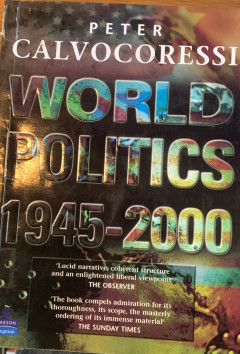
World politics 1945-2000
This book contains: 1. The immediate aftermath of the disintegration of the Soviet empire in Europe and the Soviet Union itself 2. The convulsive collapse of the former Yugoslavia and the wars in Bosnia and Kosovo 3. The Gulf War against Iraq and its various sequels 4. The Maastrhict Treaty for the furthering of the Europen Union 5. The tensions in China between economic liberalisation and…
- Edisi
- Ed. 8
- ISBN/ISSN
- 0-582-38122-3
- Deskripsi Fisik
- xx, 900 pages ; 24 cm
- Judul Seri
- -
- No. Panggil
- 909.82 Cal w
 Karya Umum
 Filsafat
 Agama
 Ilmu-ilmu Sosial
 Bahasa
 Ilmu-ilmu Murni
 Ilmu-ilmu Terapan
 Kesenian, Hiburan, dan Olahraga
 Kesusastraan
 Geografi dan Sejarah