Ditapis dengan

The unraveling: Pakistan in the age of jihad
How did a nation founded as a homeland for South Asian Muslims, most of whom follow a tolerant nonthreatening form of Islam, become a haven for Al Qaeda and a rogues gallery of domestic jihadist and sectarian groups? In this groundbreaking history of Pakistans involvement with radical Islam, John R. Schmidt, the senior U.S political analyst in Pakistan in the years before 9/11, places the blam…
- Edisi
- -
- ISBN/ISSN
- 978-0-374-28043-7
- Deskripsi Fisik
- 279 pages ; 23 cm
- Judul Seri
- -
- No. Panggil
- 954.91 Sch u

US relations with South Asia (since Christopher Columbus) and Pakistan-India …
This study has been undertaken in the context of this peculiar nature of the complex interaction, and the American interest in South Asia. All important milestones have been focused upon in this study from 1492, when Christopher Columbus managed to obtain the patronage of the Spanish crown to discover a sea route to India, down to the years just before the Partition of 1947. The visit to India …
- Edisi
- -
- ISBN/ISSN
- -
- Deskripsi Fisik
- ix, 504 pages ; 22 cm
- Judul Seri
- -
- No. Panggil
- 327.73054 Afr u
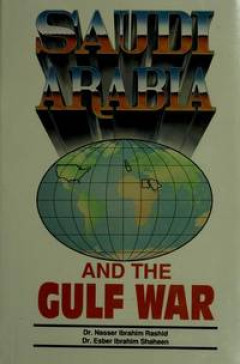
Saudi Arabia and the gulf war
Contents: 1. Brief history of the Kingdom of Saudi Arabia 2. Phenomenal progress at home and spreading godwill abroad 3. Historical perspective on Iraq and the gulf 4. The invasion of Kuwait 5. Occupation of Kuwait and atrocities of an aggressor 6. Coutdown to war in the gulf.
- Edisi
- -
- ISBN/ISSN
- 0-940485-01-X
- Deskripsi Fisik
- xi, 564 pages : illustrations (black and white) ; 23 cm
- Judul Seri
- -
- No. Panggil
- 956.7 Ras s

Out of control: Global turmoil on the eve of the twenty-first century
This book is not a prediction but an urgent warning. It is about the state of global politics today, about what may happen by the onset of the twenty-first century, and also about what must not be allowed to happen. My concern that global change is out of control involves a necessarily subjective interpretation of the political meaning and message of our time.
- Edisi
- -
- ISBN/ISSN
- 0-684-19630-1
- Deskripsi Fisik
- 240 pages : index ; 21 cm
- Judul Seri
- -
- No. Panggil
- 909.829 Brz o

Forward engagement: RSIS as a think tank of international studies and securit…
In many ways, the S. Rajaratnam School of International Studies (RSIS) is a microcosm of the Singapore brand of government. The DNA of Singapore's policymaking is its forward-looking nature. S. Rajaratnam's trademark is taking the long view while Lee Kuan Yew articulated his wish for leadership foresight and the admiration for 'helicopter quality' candidates in policymaking. This was how RSIS' …
- Edisi
- -
- ISBN/ISSN
- 978-0-00-098716-7
- Deskripsi Fisik
- xviii, 155 pages ; 23 cm
- Judul Seri
- -
- No. Panggil
- 355.03 Cho f

Foreign policy making and the American political system
The contents of this book: 1. The Foreign Policy Presidency: Power and Problems 2. The Development of the National Security Council System 3. The National Security Council System at the End of the Cold War 4. Congress and Foreign Policy, etc.
- Edisi
- ed. 3
- ISBN/ISSN
- 0-8018-4772-9
- Deskripsi Fisik
- ix, 323 pages ; 25 cm
- Judul Seri
- -
- No. Panggil
- 353.0089 Nat f
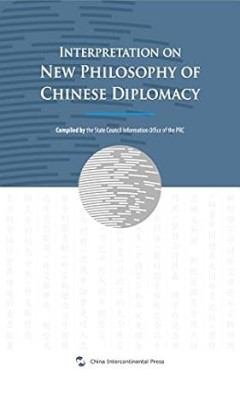
Interpretation on new philosophy of Chinese diplomacy
After the successful conclusion of the 18th National Congress of the Communist Party of China in 2012 as well as the National People's Congress and the Chinese People's Political Consultative Conference in 2013, Chinese diplomacy has stepped into a new phrase under the guidance of the new core leadership of China. With many achievements, China focuses on long-term interests and strategic overal…
- Edisi
- Ed. 1 ; Cet. 1
- ISBN/ISSN
- 978-7-5085-2468-9
- Deskripsi Fisik
- 226 pages : illustrations ; 23 cm
- Judul Seri
- -
- No. Panggil
- 327.51 Prc i
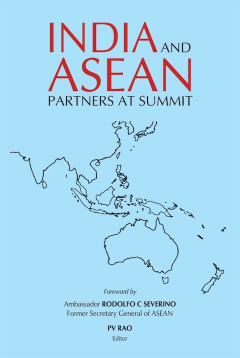
India and ASEAN : Partners at Summit
This book is an exercise, by regional specialists, in assessing the different dimensions of India-ASEAN relations. As the Asia-Pacific has become the foci of great power involvement, one cannot ignore the relevance of such involvement to India-ASEAN relations. Dealing with ASEAN means engaging its individual member countries as well as those other powers and forums affiliated with that organiza…
- Edisi
- ed.1
- ISBN/ISSN
- 978-981-4311-92-2
- Deskripsi Fisik
- xvi, 438 pages ; 23 cm
- Judul Seri
- -
- No. Panggil
- 352.1154 Rao i

A question of balance: The president, the congress, and foreign policy
In recent years, a more active and aggressive Congress has often sharply disagreed with the president over the ends and means of American foreign policy. The normal tensions that arise in the U.S. system of separate institutions sharing power have been exacerbated by the contemporary pattern of split-party control of the two branches. The ensuing conflict in areas ranging from Central America t…
- Edisi
- -
- ISBN/ISSN
- 0-8157-5453-1
- Deskripsi Fisik
- ix, 265 pages ; 23 cm
- Judul Seri
- -
- No. Panggil
- 353.0089 Man q

Agents of influence: How Japan's lobbyists in the United States manipulate Am…
Assesses the impact of Japanese lobbyists on American politics, economics, and public opinion, discussing why Japan is spending money on lobbyists and analyzing the long-term policy implications for the U.S. government. 1. Japanese Influence 2. Japanese Lobbying 3. Japanese Politicking
- Edisi
- ed. 1
- ISBN/ISSN
- 0-394-57901-1
- Deskripsi Fisik
- xxii, 295 pages : illustrations (black and white) ; 24 cm
- Judul Seri
- -
- No. Panggil
- 337.73052 Cho a
 Karya Umum
  Filsafat
  Agama
Agama  Ilmu-ilmu Sosial
  Bahasa
  Ilmu-ilmu Murni
  Ilmu-ilmu Terapan
  Kesenian, Hiburan, dan Olahraga
  Kesusastraan
  Geografi dan Sejarah