Ditapis dengan
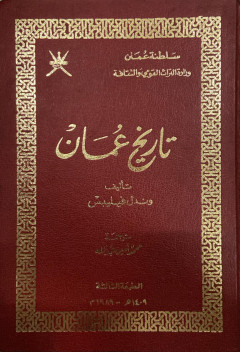
Tarikh Oman
History, with its turbulent events and diverse characters, is one of the most fascinating stories, and history books are among the best narratives. The History of Oman is no exception; the author attempts to recount the events one by one, with concise commentary, in such a way that you can feel them unfold as you turn the pages. This book covers the rich history of the Arab nation of the Indian…
- Edisi
- third edition
- ISBN/ISSN
- -
- Deskripsi Fisik
- 208 pages; 25 cm
- Judul Seri
- -
- No. Panggil
- 953.53 PHI t
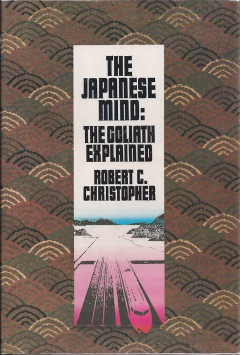
The Japanaese mind : The Goliath explained
The Japanese Mind: The Goliath Explained by Robert C. Christopher offers a concise analysis of the cultural values and social behaviors that shape Japanese thinking. The book explains how tradition, group orientation, discipline, and implicit communication influence Japan’s society, education, and work culture. Christopher highlights the contrast between modern industrial success and enduring…
- Edisi
- -
- ISBN/ISSN
- 0-671-44947-8
- Deskripsi Fisik
- 352 pages ; 24 cm
- Judul Seri
- -
- No. Panggil
- 952.04 CHR j

Divided Korea: The politics of development 1945-1972
This book offers a comparative political analysis of North and South Korea from the end of Japanese colonial rule in 1945 up to 1972, focusing on how two antagonistic regimes—backed by the Soviet Union and the United States sought to consolidate power and direct national development. Kim argues that political leadership, institutional design, and externally driven pressures shaped divergent t…
- Edisi
- -
- ISBN/ISSN
- 674-21287-8
- Deskripsi Fisik
- ix, 471 pages : illustrations ; 23,5 cm
- Judul Seri
- -
- No. Panggil
- 951.904 KIM d
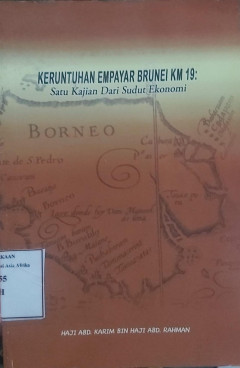
Keruntuhan empayar Brunei km 19: Satu kajian dari sudut ekonomi
Bermula pada pertengahan KM XIX selayaknya wilayah barat laut Borneo telah jatuh ke tangan James Brooke. Sultan gagal mempertahankan pengarahan berkenaan. Matlamat ekonomi telah mendorong mengambil kesempatan daripada kelemahan Sultan dengan wilayahnya dengan membina empayar mereka. Brunei itu mereka telah berjaya mengeksploitasi kekayaan di wilayah-wilayah tersebut semata-mata untuk mendap…
- Edisi
- -
- ISBN/ISSN
- 99917-34-58-9
- Deskripsi Fisik
- 198 halaman : ilustrasi ; 21 cm
- Judul Seri
- -
- No. Panggil
- 959.55 RAH k

A History of political institutions in Japan
A historical examination of the major political institutions in Japan, from the early modern period through the Meiji Restoration and into more recent eras. Ishii analyzes the development of governance structures, the relationship between the imperial system, the bureaucracy, and emerging representative bodies, as well as how these institutions evolved in response to internal and external press…
- Edisi
- -
- ISBN/ISSN
- 0-86008-261-X
- Deskripsi Fisik
- x, 172 pages : illustrations ; 23 cm
- Judul Seri
- -
- No. Panggil
- 952.04 ISH a

Democracy without consensus : Communism and political stability in Malaysia
Since World War II the democratic systems adopted by states emerging from colonial rule have in some cases been abandoned and in others suspended or transformed. Two questions arise: Can democracy succeed in newly independent states dominated by communal cleavages? If so, what adjustments are necessary in Western models of democracy? Karl von Vorys contributes new answers by examining the polit…
- Edisi
- -
- ISBN/ISSN
- -
- Deskripsi Fisik
- xiii, 443 pages : 20 cm
- Judul Seri
- -
- No. Panggil
- 320.532 595 VOR d
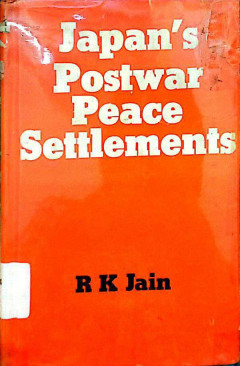
Japan's postwar peace settlements
Examines the diplomatic, legal, and geopolitical dimensions of Japan’s postwar peace settlements from 1945 onwards. Jain explores how Japan negotiated with various countries to reestablish its international relations, focusing on treaties, reparations, and reconciliation. He analyzes key agreements such as the San Francisco Peace Treaty as well as bilateral pacts with nations including Korea …
- Edisi
- -
- ISBN/ISSN
- -
- Deskripsi Fisik
- xvi, 399 pages ; 22 cm
- Judul Seri
- -
- No. Panggil
- 952.04 JAI j
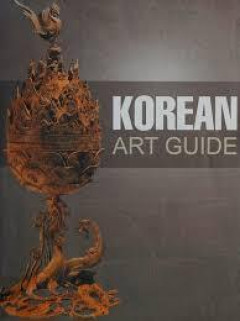
Korean art guide
The Korean Art Guide, published by the Korean Information Service, provides an accessible overview of the rich artistic heritage of Korea. The book introduces major forms of Korean art, including traditional painting, calligraphy, ceramics, sculpture, architecture, and decorative crafts. It highlights the historical development of each art form, key aesthetic principles, and notable masterpiece…
- Edisi
- -
- ISBN/ISSN
- -
- Deskripsi Fisik
- 256 pages : illustrations ; 29 cm
- Judul Seri
- -
- No. Panggil
- 915.19 TIM k

The cultural background of the peoples of Malaya
This book presents an anthropological and sociological analysis of cultural diversity in the Malay Peninsula. N. J. Ryan reviews the social and cultural background of the main ethnic groups, namely the Malay, Chinese, and Indian, as well as Western influences, in the development of Malay society. Through a historical approach, he explores the social structures, customs, traditional values, beli…
- Edisi
- -
- ISBN/ISSN
- -
- Deskripsi Fisik
- xiii, 184 pages: illustrations ; 19 cm
- Judul Seri
- -
- No. Panggil
- 306.595 RYA c
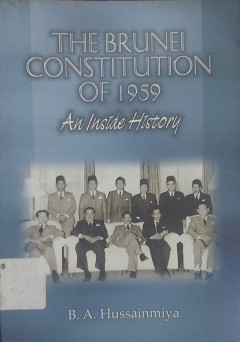
The Brunei constitution of 1959: An Inside history
The 20th century history of Brunei Darussalam provides a unique case of decolonisation in the British Empire. The main arena for the tug-of-war between colonial and nationalist forces was the series of negotiations which culminated in the promulgation of the 1959 constitution. The struggle for supremacy between British colonialism and the traditional Malay monarchy was not only a struggle betwe…
- Edisi
- -
- ISBN/ISSN
- 99917-32-04-7
- Deskripsi Fisik
- xv, 81 pages : illustrations ; 21 cm
- Judul Seri
- -
- No. Panggil
- 959.55 HUS b
 Karya Umum
  Filsafat
  Agama
Agama  Ilmu-ilmu Sosial
  Bahasa
  Ilmu-ilmu Murni
  Ilmu-ilmu Terapan
  Kesenian, Hiburan, dan Olahraga
  Kesusastraan
  Geografi dan Sejarah