Ditapis dengan

Korean scenery
This pictorial book presents a collection of photographic images showcasing the natural landscapes of the Democratic People’s Republic of Korea. Published in Pyongyang in 1992, the volume highlights mountains, rivers, seasonal scenery, and notable natural sites throughout the country. The book aims to provide visual appreciation of Korea’s natural beauty through high-quality landscape photo…
- Edisi
- -
- ISBN/ISSN
- -
- Deskripsi Fisik
- 184 pages : illustrations ; 26,5 cm
- Judul Seri
- -
- No. Panggil
- 915.193 HUI k
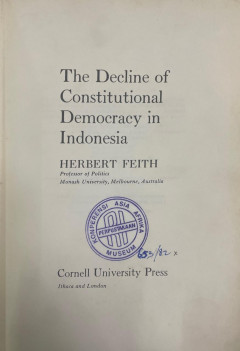
The Decline constitutional democracy in Indonesia
The Decline of Constitutional Democracy in Indonesia analyzes the erosion of democratic principles and constitutional governance in Indonesia. The book examines how political power has gradually shifted away from democratic accountability, highlighting the roles of state institutions, political elites, and legal mechanisms in weakening constitutional safeguards. Through a detailed assessment of…
- Edisi
- 5
- ISBN/ISSN
- 0-8014-0126-7
- Deskripsi Fisik
- xx, 608 pages : illustrations ; 24 cm
- Judul Seri
- -
- No. Panggil
- 320.959 FEI d

Thunder out of China
From the first outbreak of hostilities in northern China in 1937 to the Japanese surrender aboard the U.S.S. Missouri in 1945, this book recreates the decade of upheaval when China was caught in the grip of revolution and war and torn from its feudal past. The authors, Time-Life correspondents during the war years, report firsthand on the rise and fall of the Kuomintang nationalist government a…
- Edisi
- -
- ISBN/ISSN
- 0-306-80128-0
- Deskripsi Fisik
- viii, 331 pages : illustrations ; 21 cm
- Judul Seri
- -
- No. Panggil
- 951.042 WHI t
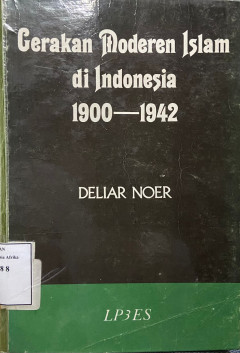
Gerakan moderen islam di Indonesia 1900-1942
Buku 'Gerakan Modern Islam di Indonesia, 1900-1942' karya Deliar Noer mengkaji perkembangan gerakan Islam modern di Indonesia sebagai respons terhadap kondisi sosial, ekonomi, dan politik pada awal abad ke-20. Noer menyoroti dampak signifikan gerakan ini dalam membentuk konteks sosial dan politik Indonesia, serta interaksi antara tradisi lokal dan pengaruh global. Meskipun buku ini memberikan a…
- Edisi
- -
- ISBN/ISSN
- -
- Deskripsi Fisik
- xiv, 356 halaman; 23 cm
- Judul Seri
- -
- No. Panggil
- 297.930958 NOE g

Surat-surat Kartini: Renungan tentang dan untuk bangsanya
uku ini memungkinkan pembaca melihat Kartini bukan sekedar sebagai pahlawan nasional, melainkan sebagai intelektual wanita yang menulis secara personal: merekam pergulatan batin, kritik sosial, harapan, dan idealisme tentang kebebasan, pendidikan, dan martabat manusia. Surat-surat itu juga menunjukkan kompleksitas identitas pribumi dalam menghadapi modernitas, kolonialisme, dan tradisi adat.
- Edisi
- -
- ISBN/ISSN
- -
- Deskripsi Fisik
- xxii, 406 halaman ; 21 cm
- Judul Seri
- -
- No. Panggil
- 323.4 SUK s

Islamic courts in Indonesia: A Study in the political bases of legal institut…
Islamic Courts in Indonesia by Daniel S. Lev examines the political foundations of Indonesia’s Islamic legal institutions. The book analyzes how religious courts evolved under colonial and post-independence governments, showing how political power shaped their authority, structure, and role in society. Lev highlights the tension between state control and Islamic legal tradition, illustrating …
- Edisi
- -
- ISBN/ISSN
- 0-520-02173-8
- Deskripsi Fisik
- xii, 281 halaman ; 24 cm.
- Judul Seri
- -
- No. Panggil
- 2X4.69598 LEV i
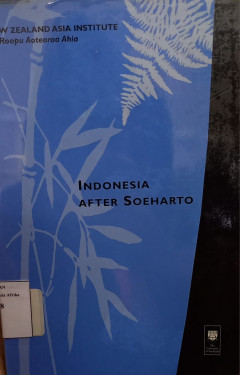
Indonesia after Soeharto
Indonesia’s political, social, and economic transformation following the end of the New Order regime in 1998. The book discusses the transition toward democratic governance, decentralization, and the rise of new political actors. It also explores challenges such as corruption, institutional reform, regional conflicts, and evolving civil society dynamics. Through multidisciplinary perspectives…
- Edisi
- -
- ISBN/ISSN
- 0-908689-63-2
- Deskripsi Fisik
- 167 pages ; 22 cm
- Judul Seri
- -
- No. Panggil
- 320.1598 NEW i
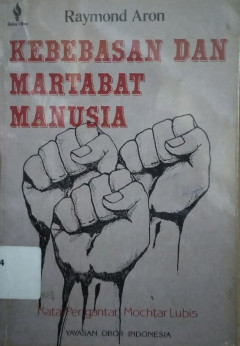
Kebebasan dan martabat manusia
Buku Kebebasan dan Martabat Manusia mengulas konsep kebebasan dan martabat manusia secara mendasar dalam perspektif filosofis dan sosial. Aron membahas perdebatan antara kebebasan formal dan kebebasan riil; ia menunjukkan bahwa kebebasan tidak cukup hanya diberikan dalam bentuk prosedural atau hukum, tetapi harus bersifat nyata — memungkinkan manusia untuk berkembang secara autentik, memperta…
- Edisi
- Cetakan pertama
- ISBN/ISSN
- 979-461-152-2
- Deskripsi Fisik
- xvi, 196 halaman : 21 cm
- Judul Seri
- -
- No. Panggil
- 323.44 ARO k
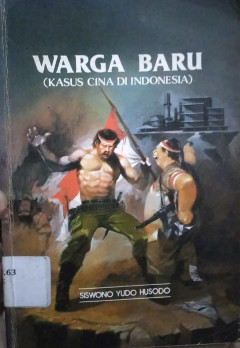
Warga baru: Kasus Cina di Indonesis
Melalui uraian historis dan analitis, buku ini menggambarkan posisi ambigu masyarakat Tionghoa yang sering ditempatkan di antara dua dunia: di satu sisi dianggap bagian dari bangsa Indonesia, namun di sisi lain dipandang sebagai kelompok “asing” yang berbeda dari masyarakat pribumi. Penulis menyoroti beragam kebijakan pemerintah yang berdampak pada kehidupan sosial mereka, termasuk kebijaka…
- Edisi
- Cetakan kedua
- ISBN/ISSN
- -
- Deskripsi Fisik
- x, 162 halaman ; 22 cm
- Judul Seri
- -
- No. Panggil
- 323.63 HUS w

Ketahanan nasional dalam situasi baru di Asia Tenggara
Menyajikan refleksi dan analisis tentang konsep “ketahanan nasional” dalam konteks geopolitik dan dinamika di kawasan Asia Tenggara. Simatupang menjelaskan bahwa ketahanan nasional bukan sekadar soal kekuatan militer atau pertahanan semata, tetapi sebuah kondisi atau struktur nasional yang memungkinkan sebuah negara untuk menghadapi dan mengatasi berbagai ancaman, tantangan, gangguan, dan h…
- Edisi
- -
- ISBN/ISSN
- -
- Deskripsi Fisik
- 44 halaman ; 21 cm
- Judul Seri
- -
- No. Panggil
- 320.12 SIM k
 Karya Umum
  Filsafat
  Agama
Agama  Ilmu-ilmu Sosial
  Bahasa
  Ilmu-ilmu Murni
  Ilmu-ilmu Terapan
  Kesenian, Hiburan, dan Olahraga
  Kesusastraan
  Geografi dan Sejarah