Ditapis dengan

The Foundations of "Africanite" or "Negritude" and "Arabite"
The book The Foundations of Africanité or Négritude and Arabité by Léopold Sédar Senghor outlines the philosophical, cultural, and historical foundations of the concepts of Africanité (African-ness) and Négritude, two core ideas in modern African identity thinking. Senghor discusses the complex relationship between black African heritage and Arab traditions, and how these two elements sh…
- Edisi
- -
- ISBN/ISSN
- -
- Deskripsi Fisik
- 89 pages : 18 cm
- Judul Seri
- -
- No. Panggil
- 306 SEN f

Social change and the individual: Japan before and after defeat in world war II
A distinguished Japanese scholar counterbalances the current preoccupation among sociologists with childhood socialization by exploring the changes in values and attitudes among adults in Japan before and after World War II. Originally published in 1970. The Princeton Legacy Library uses the latest print-on-demand technology to again make available previously out-of-print books from the disting…
- Edisi
- -
- ISBN/ISSN
- 0-691-09347-4
- Deskripsi Fisik
- 441 pages ; 24 cm
- Judul Seri
- -
- No. Panggil
- 303.452 TSU s

Death to the dictator!: A Young man casts a vote in Iran's 2009 election and …
Death to the Dictator!: A Young Man Casts a Vote in Iran's 2009 Election and Pays a Devastating Price by Afsaneh Moqadam (a pseudonym) offers an essential insider's account of the tumultuous events in Iran following the contested 2009 presidential election. Providing a window into a country from which Western journalists had been expelled, the book chronicles the experience of a young voter who…
- Edisi
- -
- ISBN/ISSN
- 978-0-374-13963-6
- Deskripsi Fisik
- 148 pages ; 22 cm
- Judul Seri
- -
- No. Panggil
- 320.9 MOQ y

Japanese society
The social structures that shape everyday life in Japan. She argues that Japanese society is organized around “frames,” or group-based affiliations, rather than class. These group ties influence authority, loyalty, and social behavior, helping explain how cohesion and hierarchy function within Japanese institutions. The book offers a concise framework for understanding the foundations of Ja…
- Edisi
- -
- ISBN/ISSN
- 0-14-02-1682-0
- Deskripsi Fisik
- 162 pages : illustrations ; 18 cm
- Judul Seri
- -
- No. Panggil
- 301.52 NAK j

Le Senegal sous Abdou Diouf : Etat et Societe
Senegalese democracy is considered exemplary by foreign observers and by a large section of the African intelligentsia, which is under siege from multifaceted forms of state terrorism. Given the democratic demands currently shaking Africa, it is tempting to view Senegal as a model. And yet, for a large majority of Senegalese, more and better democracy has become the central demand that mobilize…
- Edisi
- -
- ISBN/ISSN
- 2-86537-275-8
- Deskripsi Fisik
- 436 pages ; 21 cm
- Judul Seri
- -
- No. Panggil
- 324.2663 DIO l

History of Japanese religion
An overview of the development of religious traditions in Japan from ancient to modern times. The book outlines the evolution of Shinto, Buddhism, Confucian influences, and various syncretic practices, showing how these traditions interacted with major historical and cultural changes. Anesaki highlights key periods of religious transformation and explains how religion has influenced Japanese so…
- Edisi
- -
- ISBN/ISSN
- 0-8048-0248-3
- Deskripsi Fisik
- xxi, 423 pages : illustrations ; 23,5 cm
- Judul Seri
- -
- No. Panggil
- 294.30952 ANE h
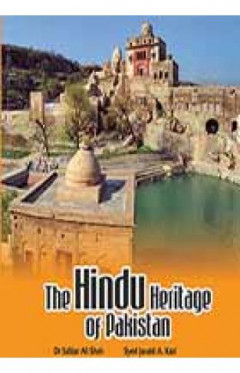
The Hindu heritage of Pakistan
This book encompass historical perspective of respective communities, their contribution at the national level and elaborate coverage of their places of worship and sacred sites. The text has been written by Dr Safdar Ali Shah, a well-known researcher and scholar; and the photography have been done by Syed Javaid A Kazi, President Pakistan Photographic Society and recipient of Presidential Prid…
- Edisi
- -
- ISBN/ISSN
- 978-969-9532-02-3
- Deskripsi Fisik
- ix, 121 pages: illustration; 35 cm
- Judul Seri
- -
- No. Panggil
- 294.554 SHA h
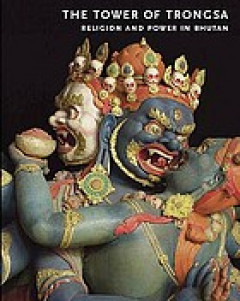
The Tower of trongsa: Religion and power in Bhutan
The Tower of Trongsa: Religion and Power in Bhutan explores the historical, political, and spiritual significance of Trongsa Dzong, one of Bhutan’s most important religious and administrative centers. The book traces the development of the Tower of Trongsa, highlighting its role in shaping Bhutanese governance, monastic life, and national identity. Through historical records, cultural interpr…
- Edisi
- -
- ISBN/ISSN
- 978-90-5349-711-1
- Deskripsi Fisik
- 176 pages : illustrations ; 28 cm
- Judul Seri
- -
- No. Panggil
- 322.1 SCH t

Japanese religion: A Survey by the agency for cultural affairs
An extensive overview of the historical development, structure, and contemporary practice of religion in Japan. The book examines major religious traditions—such as Shinto, Buddhism, Christianity, and various new religious movements—while analyzing their beliefs, rituals, institutions, and social roles. It highlights how religious practices have adapted over time in response to cultural cha…
- Edisi
- -
- ISBN/ISSN
- 0-87011-467-0
- Deskripsi Fisik
- 263 pages : illustrations ; 18 cm
- Judul Seri
- -
- No. Panggil
- 200.952 ICH j

L'islam au Senegal : Demain les mollahs? la "question" musulmane et les parti…
Record crowds at the “holy places” of Senegalese Islam in Tivaouane and Touba, the creation of cultural associations, “fundamentalist” Arab schools, and the appearance of “integrist” magazines—events related to Muslim affairs in Senegal have unfolded at an astonishing pace in recent years. Some believe they have detected in this spectacular rise of Islamic activism traces of an…
- Edisi
- -
- ISBN/ISSN
- 2-86537-144-1
- Deskripsi Fisik
- 219 pages : ilustrations ; 21 cm
- Judul Seri
- -
- No. Panggil
- 297.663 MAG l
 Karya Umum
  Filsafat
  Agama
Agama  Ilmu-ilmu Sosial
  Bahasa
  Ilmu-ilmu Murni
  Ilmu-ilmu Terapan
  Kesenian, Hiburan, dan Olahraga
  Kesusastraan
  Geografi dan Sejarah