Ditapis dengan
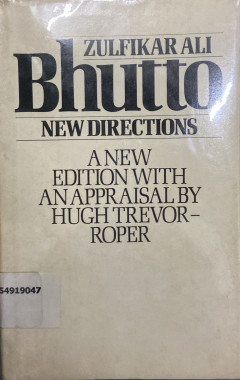
New directions
New Directions is a compilation of the political thoughts and state vision of Zulfikar Ali Bhutto, one of the most influential figures in modern Pakistani political history. In this work, Bhutto outlines his ideas on a new direction for national development, democratic reform, social justice, and Pakistan's role in the international geopolitical order. Through incisive analysis and compelling a…
- Edisi
- -
- ISBN/ISSN
- -
- Deskripsi Fisik
- 144 pages; 22 cm
- Judul Seri
- -
- No. Panggil
- 320.954 BHU n

Burma's constitution
This book discusses the constitution of Burma (now Myanmar), presenting a legal and historical analysis of the country's constitutional system. The author, Maung Maung, a barrister and legal expert, offers insights into the structure of government, citizens' rights, and the legal principles that underpin the 1959 Burmese constitution. The book also discusses the process of drafting the cons…
- Edisi
- -
- ISBN/ISSN
- -
- Deskripsi Fisik
- x, 323 pages : ilustrations ; 24 cm
- Judul Seri
- -
- No. Panggil
- 342.59 MAU b
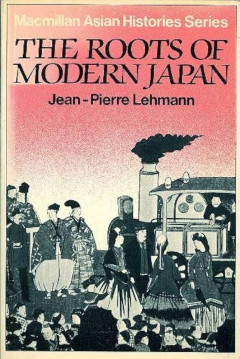
The Roots of modern Japan
Explores the historical foundations that shaped Japan’s transformation into a modern nation. Lehmann examines key developments from the late Tokugawa period, the Meiji Restoration, and Japan’s rapid modernization, emphasizing the social, political, and economic forces that influenced the country’s evolution. The book highlights how traditional values interacted with Western ideas to creat…
- Edisi
- -
- ISBN/ISSN
- 0-333-26604-8
- Deskripsi Fisik
- xviii, 352 pages ; 23,5 cm
- Judul Seri
- -
- No. Panggil
- 952 LEH r
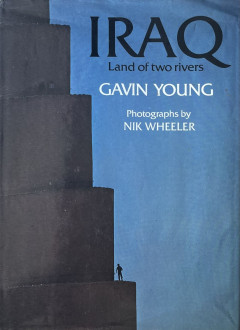
Iraq: Land of two rivers
Buku Iraq: Land of Two Rivers oleh Gavin Young menghadirkan sebuah potret komprehensif dan berilustrasi tentang negara Irak, “tanah dua sungai” (Tigris dan Euphrates). Penulis menjelajahi berbagai wilayah Irak — mulai dari Baghdad dan tengah negeri hingga selatan Basra dan rawa-reed-beds di selatan — sambil menggambarkan sejarah, geografi, masyarakat, dan budaya. Buku ini juga menyajika…
- Edisi
- Illustrated edition
- ISBN/ISSN
- 0002161370
- Deskripsi Fisik
- 280 pages : ilustarsi ; 26 cm
- Judul Seri
- -
- No. Panggil
- 957.7 YOU i
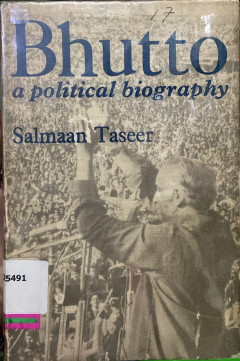
Bhutto: A Political biography
Salmaan Taseer's Bhutto: A Political Biography presents the life and political journey of Zulfikar Ali Bhutto, one of the most influential figures in modern Pakistani history. The book examines his childhood, education, the formation of his political views, and his role in government and national politics. Through an analysis of key events and Bhutto's role in shaping the nation's direction, th…
- Edisi
- -
- ISBN/ISSN
- 0-903729-48-2
- Deskripsi Fisik
- 208 pages: illusttation; 22 cm
- Judul Seri
- -
- No. Panggil
- 923.254 TAS b
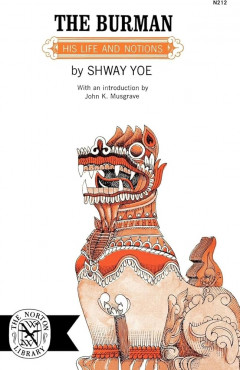
The Burman: His life and notions
Only one Western writer has ever been able to capture fully the spirit of the delightful inhabitants of Burma. Whether describing the childbirth rates, the function of the astrologers in Burmese society, or the Buddhist precepts by which the good Burman lives, "Shway Yoe" ―the pseudonym of Sir J. George Scott, K.C.I.E., a British civil servant who spent more than thirty years in Burma―fills…
- Edisi
- -
- ISBN/ISSN
- 0-393-00212-8
- Deskripsi Fisik
- xxvi, 609 pages ; 19 cm
- Judul Seri
- -
- No. Panggil
- 920.092 YOE b
Ataturk
Atatürk by Jorge G. Blanco Villalta and William Campbell presents an insightful biographical study of Mustafa Kemal Atatürk, the founding father of the modern Turkish Republic. The book traces Atatürk’s early life, military career, and rise to national leadership during the Turkish War of Independence. It highlights his transformative reforms that reshaped Turkey into a secular, modern nat…
- Edisi
- -
- ISBN/ISSN
- -
- Deskripsi Fisik
- xv, 480 pages : Ilustrations ; 24 cm.
- Judul Seri
- -
- No. Panggil
- 956.1024 VIL a
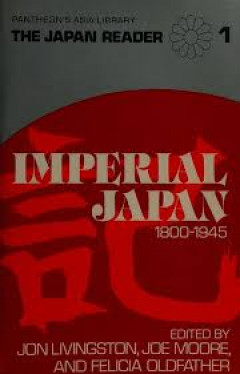
Imperial Japan 1800-1945
An analytical overview of Japan’s transformation from a feudal society into a modern imperial power. The book traces major political, economic, and social changes beginning in the late Tokugawa period, through the Meiji Restoration, and into Japan’s era of militaristic expansion. Livingston highlights key factors such as industrialization, state-led modernization, nationalism, and the rise …
- Edisi
- -
- ISBN/ISSN
- 0-394-48437-1
- Deskripsi Fisik
- viii, 517 pages : illustrations ; 20 cm
- Judul Seri
- -
- No. Panggil
- 952 LIV i

Riot & revolution in Singapore & Malaya 1945-1963
This book examines simultaneous revolutionary struggles in urban Singapore and rural Malaya led by the Malayan Communist Party (MCP) between 1945 and 1963. In Singapore, Clutterbuck focuses on students and trade unions as the base for communist mobilization, exploring their attempts to influence political power through strikes and organization. In Malaya, he analyzes the MCP’s guerrilla insur…
- Edisi
- -
- ISBN/ISSN
- 0-571-10181-X
- Deskripsi Fisik
- 321 pages ; 22 cm
- Judul Seri
- -
- No. Panggil
- 959.204 CLU r
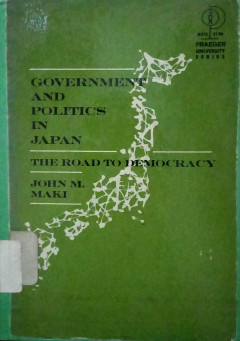
Government and politics in Japan: The Road to democracy
Analyzes the historical development of Japan’s political system and its gradual transformation toward democratic governance. Maki explains the evolution of political institutions from the Meiji era through the postwar period, highlighting the role of constitutional reforms, political parties, and public participation. The book also examines the interaction between traditional political cultur…
- Edisi
- -
- ISBN/ISSN
- -
- Deskripsi Fisik
- xi, 275 pages ; 20,5 cm
- Judul Seri
- -
- No. Panggil
- 952 MAK g
 Karya Umum
  Filsafat
  Agama
Agama  Ilmu-ilmu Sosial
  Bahasa
  Ilmu-ilmu Murni
  Ilmu-ilmu Terapan
  Kesenian, Hiburan, dan Olahraga
  Kesusastraan
  Geografi dan Sejarah