Ditapis dengan
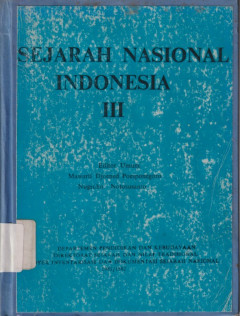
Sejarah nasional Indonesia, jilid III
Jilid III dari Sejarah Nasional Indonesia ini membahas perkembangan sejarah kepulauan Nusantara pada masa kerajaan-kerajaan besar, mulai dari kebangkitan Sriwijaya, perkembangan Majapahit, hingga dinamika politik, ekonomi, dan kebudayaan pada era klasik Indonesia. Buku ini menyajikan analisis mengenai struktur pemerintahan, perkembangan agama dan kebudayaan, hubungan perdagangan antarwilayah, s…
- Edisi
- -
- ISBN/ISSN
- -
- Deskripsi Fisik
- 437 halaman : ilustrasi ; 21 cm
- Judul Seri
- -
- No. Panggil
- 959.8 TJA s

Toward freedom: The Autobiography of Jawaharlal Nehru
Toward Freedom is the autobiographical account of Jawaharlal Nehru, one of India’s foremost leaders and the first Prime Minister of independent India. Written during his imprisonment by British authorities, the book offers a vivid narrative of Nehru’s personal life, political awakening, and philosophical reflections. It highlights his experiences in the Indian independence movement, his r…
- Edisi
- -
- ISBN/ISSN
- -
- Deskripsi Fisik
- xii, 449 pages : illustrations ; 22,2 cm
- Judul Seri
- -
- No. Panggil
- 954.04 NEH t
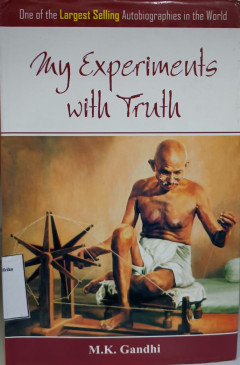
My Experiments with truth
The autobiographical account of Mohandas Karamchand Gandhi, chronicling his personal journey toward self-realization and moral development. The book documents Gandhi’s early life, formative experiences in India and South Africa, and the evolution of his philosophy of nonviolence, truth, and civil resistance. Through candid reflections on his successes and failures, Gandhi offers deep insight …
- Edisi
- -
- ISBN/ISSN
- 81-89297-52-X
- Deskripsi Fisik
- 364 pages : illustrations ; 22,3 cm
- Judul Seri
- -
- No. Panggil
- 954.035092 GAN e
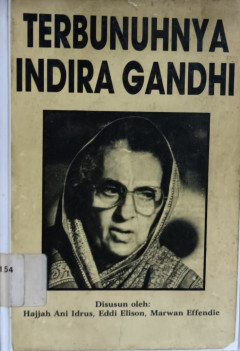
Terbunuhnya Indira Gandhi
Pembunuhan Indira Gandhi menyajikan laporan jurnalistik dan historis tentang peristiwa-peristiwa yang mengelilingi pembunuhan Perdana Menteri India Indira Gandhi pada Oktober 1984. Disusun oleh Hajjah Ani Idrus, Eddi Elison, dan Marwan Effendie, buku ini mendokumentasikan ketegangan politik sebelum pembunuhan, keadaan serangan, dampak di India, dan reaksi publik di seluruh dunia. Ditulis d…
- Edisi
- -
- ISBN/ISSN
- -
- Deskripsi Fisik
- 250 pages : illustrations ; 21,3 cm
- Judul Seri
- -
- No. Panggil
- 954.04 IDR t

Jawaharlal Nehru: A Biography. Volume One, 1889–1947
Jawaharlal Nehru: A Biography, Volume One, 1889–1947 is the first part of Sarvepalli Gopal’s definitive and scholarly biography of India’s first prime minister. This volume traces Nehru’s early life, education, and political awakening, offering a detailed account of his involvement in India’s struggle for independence alongside Mahatma Gandhi. Gopal examines Nehru’s evolving pol…
- Edisi
- -
- ISBN/ISSN
- 0-19-561617-2
- Deskripsi Fisik
- 398 pages : illustrations ; 23,7 cm
- Judul Seri
- -
- No. Panggil
- 954.03 GOP j

Jawaharlal Nehru: A Biography. Volume Two, 1947–1956
Jawaharlal Nehru: A Biography, Volume Two, 1947–1956 continues Sarvepalli Gopal’s authoritative and detailed account of the life of India’s first Prime Minister. This volume begins with India’s independence in 1947 and explores Nehru’s central role in shaping the new nation—politically, socially, and institutionally. Gopal examines Nehru’s leadership in establishing democratic…
- Edisi
- -
- ISBN/ISSN
- 0-19-561810-8
- Deskripsi Fisik
- 346 pages : illustrations ; 23,7 cm
- Judul Seri
- -
- No. Panggil
- 954.04 GOP j
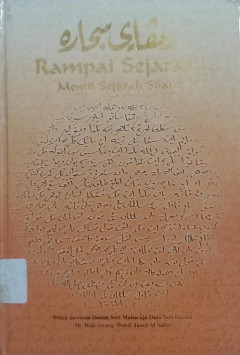
Rampai sejarah: Meniti sejarah islam
Buku Rampai Sejarah: Meniti Sejarah Silam menyajikan sebuah kompilasi tulisan sejarah yang mendalam, dikarang oleh Pehin Jawatan Dalam Seri Maharaja Dato' Seri Utama Dr. Haji Awang Mohd. Jamil Al-Sufri. Karya ini merupakan upaya penting dalam merekam dan menganalisis perjalanan masa lalu, dengan fokus utama pada sejarah, adat istiadat, dan warisan budaya Melayu Islam Beraja (MIB). Melalui p…
- Edisi
- -
- ISBN/ISSN
- 9789991763194
- Deskripsi Fisik
- 180 halaman : ilustrasi ; 27 cm
- Judul Seri
- -
- No. Panggil
- 959.55 SUF r
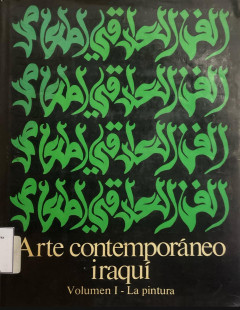
Arte contemporaneo Iraqiu
Arte Contemporáneo Iraqí presents an in-depth exploration of contemporary art in Iraq, highlighting the creativity, resilience, and cultural identity expressed by Iraqi artists. The book examines major artistic movements, individual artists, and the social and political contexts that shape their work. Through analyses of painting, sculpture, installation, and mixed-media art, it illustrates h…
- Edisi
- 1
- ISBN/ISSN
- -
- Deskripsi Fisik
- 249 pages : illustrations ; 28 cm
- Judul Seri
- -
- No. Panggil
- 759.6 SAR a
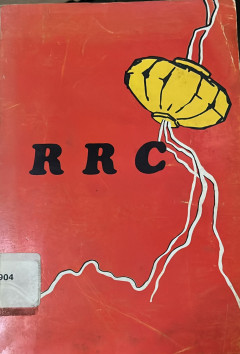
RRC : Suatu petunjuk jalan
Buku ini memberikan gambaran komprehensif mengenai perkembangan politik, ekonomi, hubungan luar negeri, dan pertahanan Republik Rakyat Cina (RRC) sejak masa sebelum 1949 hingga periode setelah Mao Zedong. Pembahasan dimulai dengan pemaparan struktur konstitusi RRC serta dinamika politik domestik yang meliputi evolusi kekuasaan dari masa kerajaan, naiknya kepemimpinan Mao, konsolidasi Partai Kom…
- Edisi
- -
- ISBN/ISSN
- -
- Deskripsi Fisik
- 246 halaman ; 22 cm
- Judul Seri
- -
- No. Panggil
- 951.0904 BAD r

A Communist revolutionary movement as an international state-actor: The Case …
The book A Communist Revolutionary Movement as an International State-Actor: The Case of the PKI-Aidit examines the role of the Indonesian Communist Party (PKI) under the leadership of D.N. Aidit as a political actor that was not only influential in Indonesia's domestic dynamics, but also active in the international political arena. Through an analysis of the PKI's relations with communist coun…
- Edisi
- -
- ISBN/ISSN
- 962-220-226-8
- Deskripsi Fisik
- 229 pages; 23 cm
- Judul Seri
- -
- No. Panggil
- 324.259 807 5 COR c
 Karya Umum
  Filsafat
  Agama
Agama  Ilmu-ilmu Sosial
  Bahasa
  Ilmu-ilmu Murni
  Ilmu-ilmu Terapan
  Kesenian, Hiburan, dan Olahraga
  Kesusastraan
  Geografi dan Sejarah