Ditapis dengan

Ceylon in picture
Ceylon in Picture presents a visual portrayal of early 20th-century Ceylon through a collection of photographs accompanied by descriptive notes. The book highlights the island’s landscapes, cultural traditions, and daily life, offering readers an impression of its natural beauty and social diversity. Egan’s images document important landmarks, rural villages, and colonial-era developments. …
- Edisi
- -
- ISBN/ISSN
- 0-8069-1082-8
- Deskripsi Fisik
- 64 pages : illustrations ; 24,5 cm
- Judul Seri
- -
- No. Panggil
- 915.5493 EGA c
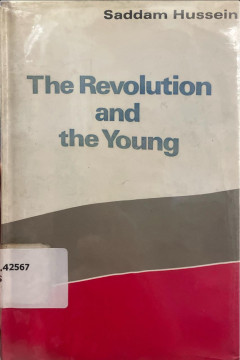
The Revolution and the young
The Revolution and the Young presents Saddam Hussein’s ideological perspective on the role of youth in shaping Iraq’s revolutionary and political future. In this work, he outlines the responsibilities of young generations in supporting national development, sustaining the Ba'athist revolutionary vision, and defending the principles of Arab nationalism. Through political reflections and dire…
- Edisi
- 1
- ISBN/ISSN
- -
- Deskripsi Fisik
- 40 pages; 20 cm
- Judul Seri
- -
- No. Panggil
- 322.4 HUS r

Up against apartheid : The Role and the plight of the press in South Africa
A firsthand report of the workings of the press in the intensely troubled nation, complete with portions of the Erasmus Commission Reports never before published in the United States on the so-called Muldergate scandal. Pollak was the co-founder and editor of MORE magazine, which specialized in media analysis. After observing the workings of the press in South Africa, he believes that in…
- Edisi
- -
- ISBN/ISSN
- 0-8093-1013-9
- Deskripsi Fisik
- 157 pages ; 21 cm
- Judul Seri
- -
- No. Panggil
- 079.68 POL u

The Japanese file: Pre-war Japanese penetration in Southeast Asia
Japan’s economic, political, and strategic expansion into Southeast Asia during the decades leading up to World War II. Robertson analyzes how Japan used trade networks, migration, cultural initiatives, and intelligence activities to strengthen its influence across the region. The book highlights Japan’s ambitions to secure resources, build strategic footholds, and counter Western colonial …
- Edisi
- -
- ISBN/ISSN
- -
- Deskripsi Fisik
- 179 pages ; 21 cm
- Judul Seri
- -
- No. Panggil
- 327.52 ROB j

Modern Japan's foreign policy
In-depth examination of Japan’s diplomatic evolution from the late 19th century to the post–World War II period. Kajima analyzes how Japan’s foreign policy was shaped by its modernization efforts, shifting security concerns, economic priorities, and interactions with major world powers. The book discusses key issues such as Japan’s engagement in international organizations, its relation…
- Edisi
- -
- ISBN/ISSN
- 0-8048-0658-6
- Deskripsi Fisik
- 327 pages ; 22 cm
- Judul Seri
- -
- No. Panggil
- 327.52 KAJ m

Collective indentities nationalisms and protest in modern Sri Langka
This book explores the formation and transformation of collective identities in modern Sri Lanka, focusing on the interplay between ethnicity, nationalism, and political mobilization. Roberts analyzes historical and contemporary movements to show how cultural narratives and social structures shape public protest. Through detailed case studies, he illustrates the tensions and interactions among …
- Edisi
- -
- ISBN/ISSN
- -
- Deskripsi Fisik
- ix, 537 pages ; 21,5 cm
- Judul Seri
- -
- No. Panggil
- 954.93 ROB c
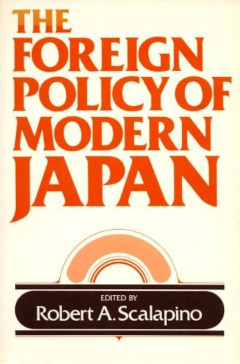
The Foreign policy of modern Japan
A comprehensive analysis of Japan’s diplomatic strategies and international behavior from the late 19th century through the post–World War II era. Scalapino examines the historical foundations of Japan’s foreign policy, including its early modernization efforts, imperial expansion, wartime decisions, and subsequent transformation under the postwar constitution. The book highlights Japan 
- Edisi
- -
- ISBN/ISSN
- 0-520-03499-6
- Deskripsi Fisik
- xix, 426 pages ; 23 cm
- Judul Seri
- -
- No. Panggil
- 327.52 SCA f
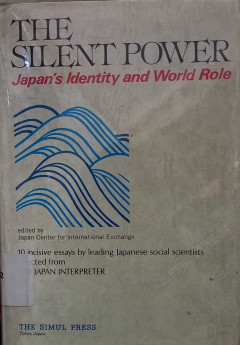
The Silent power: Japan's identity and world role
How Japan’s cultural traditions, historical experiences, and national identity shape its behavior and position in the international community. The book examines Japan’s preference for subtle, indirect, and consensus-driven strategies in diplomacy, economics, and global engagement—an approach often described as “silent power.” It analyzes how Japan balances pacifist principles with eco…
- Edisi
- -
- ISBN/ISSN
- -
- Deskripsi Fisik
- xi, 251 pages ; 21 cm
- Judul Seri
- -
- No. Panggil
- 327.352 EXC s

The Revolt in the temple
This book commemorates 2,500 years of the land, race, and faith of the Sinhalese Buddhist people, weaving together their history, philosophy, and nationhood. The author explores the deep ethical and spiritual teachings of Buddhism as a foundation for both individual and societal integrity. He argues that Buddhist ideals can inform practical political and social reforms in the modern world. Ulti…
- Edisi
- -
- ISBN/ISSN
- -
- Deskripsi Fisik
- 700 pages : 21 cm
- Judul Seri
- -
- No. Panggil
- 954.93 TIM r

One trench or two
One Trench or Two presents Saddam Hussein’s political reflections on unity, conflict, and national struggle within the context of Iraq and the Arab world. The book outlines his views on leadership, ideological commitment, and the necessity of unified action in confronting external and internal challenges. Through a combination of political commentary and strategic argumentation, Saddam Hussei…
- Edisi
- 1
- ISBN/ISSN
- -
- Deskripsi Fisik
- 49 pages; 20 cm
- Judul Seri
- -
- No. Panggil
- 335 HUS o
 Karya Umum
  Filsafat
  Agama
Agama  Ilmu-ilmu Sosial
  Bahasa
  Ilmu-ilmu Murni
  Ilmu-ilmu Terapan
  Kesenian, Hiburan, dan Olahraga
  Kesusastraan
  Geografi dan Sejarah