Ditapis dengan
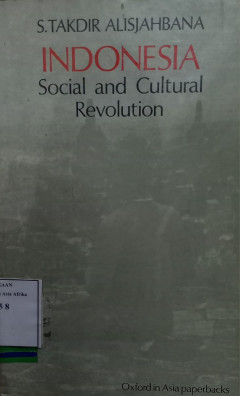
Indonesia social and cultural revolution
The major transformations in Indonesian society during the post-independence period. The author highlights shifts in values, mindsets, language, and cultural patterns as part of the nation’s modernization process. Alisjahbana emphasizes the need for a new orientation—rational, progressive, and grounded in scientific thinking—to build a modern and dynamic society. This work offers an impor…
- Edisi
- -
- ISBN/ISSN
- 0-19-638082-0
- Deskripsi Fisik
- ix, 206 pages ; 21,5 cm
- Judul Seri
- -
- No. Panggil
- 306.5988 ALI i
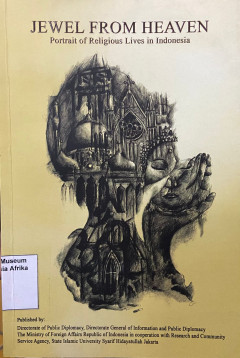
Jewel from heaven: Portrait of religious lives in Indonesia
Jewel from Heaven: Portrait of Religious Lives in Indonesia presents an in-depth look at religious life in Indonesia, a country known for its ethnic, cultural, and religious diversity. This book illustrates how religion—whether Islam, Christianity, Hinduism, Buddhism, or local beliefs—colors people's daily lives and shapes social identities in various regions.
- Edisi
- -
- ISBN/ISSN
- 978-602-60508-0-9
- Deskripsi Fisik
- ix, 182 pages: illustration.; 24 cm
- Judul Seri
- -
- No. Panggil
- 200.9 HAR j
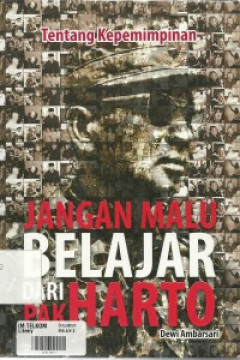
Jangan malu belajar dari pak Harto
Buku Jangan Malu Belajar dari Pak Harto karya Dewi Ambarsari mengulas berbagai keteladanan, karakter, dan prinsip kepemimpinan Presiden Soeharto yang dapat dijadikan pelajaran hidup. Melalui kisah dan refleksi singkat, penulis menunjukkan nilai-nilai sederhana namun relevan tentang disiplin, kerja keras, dan pengabdian. Buku ini mengajak pembaca untuk mengambil hikmah positif dari pengalaman se…
- Edisi
- -
- ISBN/ISSN
- 978-8977-20-6
- Deskripsi Fisik
- 216 halaman ; 20,5 cm
- Judul Seri
- -
- No. Panggil
- 303.34 AMB j
China : The People's republic, 1949-1976
This history of the People's Republic of China (1949-1976), the third and final volume in a major new history of modern China since 1840, offers a sweeping and penetrating account of a singular historical era During these pivotal decades, the Chinese struggled to find an alternative to the Soviet model of industrialization and to confront the awesome problems. of bureaucratization under the gu…
- Edisi
- -
- ISBN/ISSN
- 0-394-42873-0
- Deskripsi Fisik
- 255 pages ; 23 cm
- Judul Seri
- -
- No. Panggil
- 951.05 CHE c

Menggali falsafah pak Harto: Suatu analisis theologi butir butir budaya jawa …
Buku ini mengkaji falsafah hidup Soeharto melalui analisis teologis terhadap butir-butir budaya Jawa yang ia jadikan pedoman moral dan kepemimpinan. Penulis menelusuri ajaran kebatinan dan budi pekerti Jawa sebagai sumber nilai etika, spiritualitas, dan karakter yang membentuk gaya kepemimpinan Soeharto. Melalui pendekatan interpretatif, buku ini menunjukkan bagaimana nilai-nilai tersebut dipak…
- Edisi
- -
- ISBN/ISSN
- 979-95677-4-2
- Deskripsi Fisik
- xi, 416 halaman; 21 cm
- Judul Seri
- -
- No. Panggil
- 113.8 PAT m
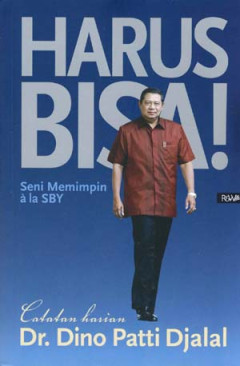
Harus bisa!: Seni memimpin ala SBY
Buku "Harus Bisa: Seni Memimpin ala SBY" mengulas perjalanan kepemimpinan Susilo Bambang Yudhoyono (SBY), Presiden Indonesia ke-6, dan menawarkan wawasan tentang pendekatan kepemimpinannya. Abstrak ini merangkum tema-tema kunci yang diangkat dalam buku ini, serta pentingnya pengalaman kepemimpinan SBY dalam konteks politik Indonesia. Buku ini menyajikan sebuah narasi yang mendalam mengenai kepe…
- Edisi
- cet.1
- ISBN/ISSN
- 978-979-1008-10-5
- Deskripsi Fisik
- 462 halaman ; 22 cm
- Judul Seri
- -
- No. Panggil
- 303.34 DJA h

Cultural interface of India with Asia religion, art and architecture
The reality of the Indian presence in Asian cultures is undeniable. Recent scholarship in Asian cultural studies has emphasized the essential oneness of the substratum that defines Asian identity. Buddhism and Hinduism, originating in India, travelled beyond their homeland and profoundly shaped the beliefs and faith of people across Asia. Trade, political ambitions, and religious pursuits facil…
- Edisi
- -
- ISBN/ISSN
- 81-246-0262-X
- Deskripsi Fisik
- xxii, 412 pages : illustrations ; 29 cm
- Judul Seri
- -
- No. Panggil
- 303.482 PAN c
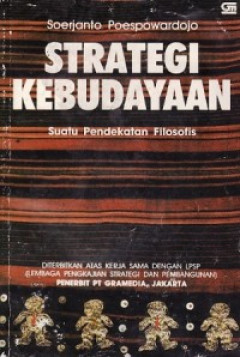
Strategi kebudayaan: Suatu pendekatan filosofis
Analisis mendalam tentang peran kebudayaan dalam pembangunan nasional dan modernisasi masyarakat. Poespowardojo mengemukakan bahwa kebudayaan bukan semata tradisi pasif, melainkan alat strategis bagi bangsa untuk merespons dinamika global, menjaga identitas, sekaligus membentuk masyarakat yang bermoral dan manusiawi. Dalam buku ini dibahas perbandingan karakteristik antara kebudayaan Barat dan …
- Edisi
- -
- ISBN/ISSN
- 979-403-452-5
- Deskripsi Fisik
- x, 313 halaman ; 21 cm
- Judul Seri
- -
- No. Panggil
- 306.409598 POE s
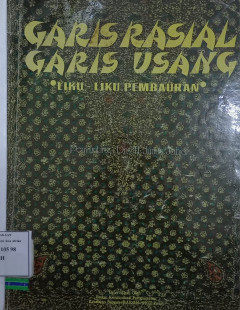
Garis rasial, garis usang: Liku-liku pembauran
Membahas kritik terhadap konsep rasialisme dan pemisahan etnis, khususnya terkait posisi masyarakat keturunan Tionghoa di Indonesia. Junus Jahja menekankan bahwa garis rasial adalah konstruksi usang yang tidak relevan dalam negara-bangsa modern yang majemuk. Melalui uraian historis dan sosial, buku ini menyoroti pentingnya pembauran, integrasi, serta pelepasan identitas etnis eksklusif menuju k…
- Edisi
- -
- ISBN/ISSN
- -
- Deskripsi Fisik
- v, 233 halaman : ilustrasi ; 27,5 cm
- Judul Seri
- -
- No. Panggil
- 305.895105 YAH g
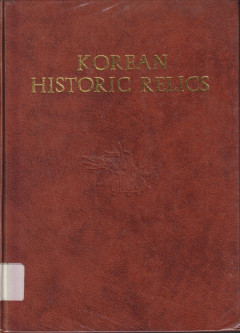
Korean historic relics
This book presents an overview of the historic relics of Korea, focusing primarily on cultural sites, ancient artifacts, architectural remains, and archaeological discoveries located within the Democratic People’s Republic of Korea. Published by the Cultural Relics Publishing House in Pyongyang in 1980, the book aims to introduce readers to the historical development of Korean civilization th…
- Edisi
- -
- ISBN/ISSN
- -
- Deskripsi Fisik
- illustrations ; 29,5 cm
- Judul Seri
- -
- No. Panggil
- 951.93 CUL k
 Karya Umum
  Filsafat
  Agama
Agama  Ilmu-ilmu Sosial
  Bahasa
  Ilmu-ilmu Murni
  Ilmu-ilmu Terapan
  Kesenian, Hiburan, dan Olahraga
  Kesusastraan
  Geografi dan Sejarah