Ditapis dengan
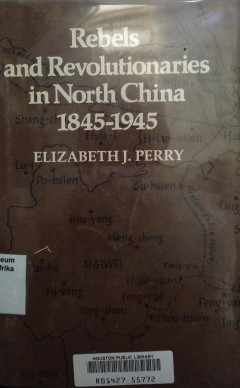
Rebels and revolutionaries in North China, 1845–1945
This influential historical study examines a century of rebellion, social unrest, and revolutionary activity in North China from 1845 to 1945. Elizabeth J. Perry analyzes the roots of social conflicts, the organization of rebel groups, the role of peasants and local elites, and the political and economic pressures that shaped revolutionary movements. Drawing on extensive archival research and f…
- Edisi
- -
- ISBN/ISSN
- 0-8047-1055-4
- Deskripsi Fisik
- xiii, 324 pages ; 22,5 cm
- Judul Seri
- -
- No. Panggil
- 950 PER r
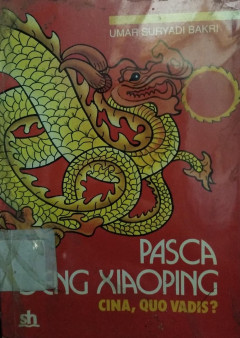
Cina, quo vadis? After Deng Xiaoping
This book analyzes the political direction and transformation of China following the leadership of Deng Xiaoping. Edited by Umar Suryadi Bakry, the volume examines China’s economic reforms, political restructuring, and social changes during the transitional period after Deng’s era. It provides insights into China’s domestic and foreign policies, the challenges of modernization, and the na…
- Edisi
- -
- ISBN/ISSN
- 979-416-357-0
- Deskripsi Fisik
- xiv, 173 pages ; 20,5 cm
- Judul Seri
- -
- No. Panggil
- 951 BAK c
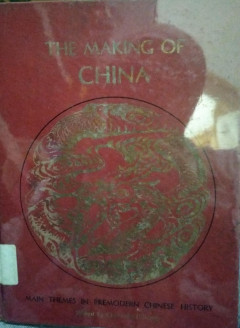
The making of China: Main themes in premodern Chinese history
This scholarly volume, edited by Chun-shu Chang, examines major themes in premodern Chinese history from prehistoric times through the late imperial era. Through contributions from leading historians and sinologists, the book explores key developments in Chinese civilization including the formation of political institutions, philosophical traditions, social structures, interstate relations, and…
- Edisi
- -
- ISBN/ISSN
- 0-13-554660-1
- Deskripsi Fisik
- xiv, 347 pages ; 24 cm
- Judul Seri
- -
- No. Panggil
- 951 CHA m

General Vo Nguyen Giap: The General headquarters in the spring of brilliant v…
This is General Giap's latest memoir on the Supreme Command's sharp and lucid decisions at the end of the national resistance war. In his book, he writes about great events such as the battle of Dien Bien Phu in the air during Christmas 1972; and the Tay Nguyen Campaign, which was a strategic turning-point that led to the Ho Chi Minh Campaign to liberate Sai Gon in April 1975. The last part of …
- Edisi
- Ed. 2
- ISBN/ISSN
- -
- Deskripsi Fisik
- 357 pages : illustrations (black and white) ; 21 cm
- Judul Seri
- -
- No. Panggil
- 920 GIA g
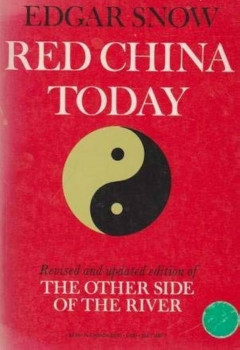
Red China today
Red China Today by Edgar Snow is an in-depth journalistic report on the development of the People's Republic of China during the early years of Mao Zedong's leadership. Continuing his monumental work Red Star Over China, Snow returned to China to review the political, social, and economic changes that occurred after the revolution was successfully established. This book captures the major trans…
- Edisi
- -
- ISBN/ISSN
- 0-394-71681-7
- Deskripsi Fisik
- 749 pages : 20 cm
- Judul Seri
- -
- No. Panggil
- 951.057 SNO r
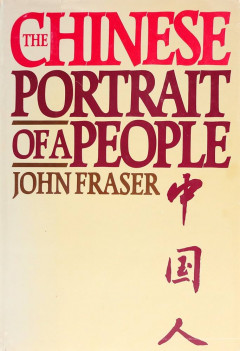
The Chinese portrait of a people
Portrait of a People by John Fraser is an in-depth report on the life of the Chinese people at the end of the 20th century, written based on the author's direct experience as a foreign correspondent living and working in China. Fraser describes the social, cultural, and political realities of China through keen observation and interviews with various segments of society, from government officia…
- Edisi
- -
- ISBN/ISSN
- 0-671-44873-0
- Deskripsi Fisik
- 463 pages : illustrations ; 24 cm
- Judul Seri
- -
- No. Panggil
- 951.057 FRA c

On Building a human community with a shared future
On Building a Human Community with a Shared Future is a collection of translations of 85 articles and speeches by Xi Jinping since 2012, designed to offer a deep understanding of his vision and thoughts on the future of humanity. The book emphasizes the concept of humanity as a single community with a common home—the Earth—and emphasizes universal values such as peace, development, ju…
- Edisi
- -
- ISBN/ISSN
- -
- Deskripsi Fisik
- xii, 571 pages ; 23,5 cm
- Judul Seri
- -
- No. Panggil
- 327.730 JIN b

Flaying dragon and dancing phoenix: An Introduction to selected Chinese minor…
This book will give readers a glimpse of one of the main cultural forms among Chinese minorities. It not only introduces the dances of each minority group, including characteristic movements, steps, patterns, rhythms and musical accompaniment, but also gives the historical and legendary background for the dances. The selection of twenty-five minority groups' folk dances represents the fruition …
- Edisi
- 1
- ISBN/ISSN
- 7-80005-007-6
- Deskripsi Fisik
- 224 pages : illustrations ; 21 cm
- Judul Seri
- -
- No. Panggil
- 793.2 WEI f

The Chinese dream: What it means for China and the rest of the world
This book explores the idea of the “Chinese Dream” and its significance for China and the wider world. The author (editor) examines how the Chinese Dream is understood as an ideal of national renaissance, prosperity, socio-political development, and China's global position. It also analyzes questions such as: is the Chinese Dream a vision of national renaissance or global domination? …
- Edisi
- -
- ISBN/ISSN
- 978-7-5104-4480-7
- Deskripsi Fisik
- 205 pages : illustrations ; 22,5 cm
- Judul Seri
- -
- No. Panggil
- 305.8 XIA c
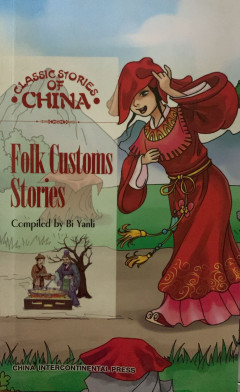
Folk customs stories
This book is part of the "Chinese Classic Stories" series, which presents traditional Chinese folktales, myths, legends, and customs in illustrated and bilingual text. Through "Folk Customs Stories," readers are introduced to the various customs, traditions, and habits of Chinese society—how these customs shape culture, outlook on life, and traditional social frameworks. This book is suitable…
- Edisi
- -
- ISBN/ISSN
- 978-7-5085-2206-7
- Deskripsi Fisik
- 190 pages : illustrations ; 19 cm
- Judul Seri
- -
- No. Panggil
- 398 YAN f
 Karya Umum
  Filsafat
  Agama
Agama  Ilmu-ilmu Sosial
  Bahasa
  Ilmu-ilmu Murni
  Ilmu-ilmu Terapan
  Kesenian, Hiburan, dan Olahraga
  Kesusastraan
  Geografi dan Sejarah