Ditapis dengan
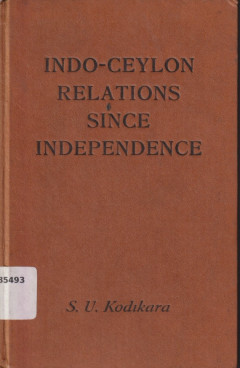
Indo-Ceylon relations since independence
This book examines the development of bilateral relations between India and Ceylon (Sri Lanka) since both countries gained independence. S. U. Kodikara outlines the historical, political, economic, and social factors influencing the dynamics of relations between the two countries, including the issue of citizenship of Indian Tamils, political agreements, and India's role in the stability of the…
- Edisi
- -
- ISBN/ISSN
- -
- Deskripsi Fisik
- viii, 262 halaman: illustration; 23 cm
- Judul Seri
- -
- No. Panggil
- 327.5493 KOD i

Indonesian foreign policy and the dilemma of dependence: From Sukarno to Soeh…
This book examines how a developing country like Indonesia attempts to rely on foreign aid and investment for national development without losing its independence and sovereignty. The approach is taken from the perspective of Indonesia's political elite—how their perceptions of the international system, superpowers, and the threat of dependency influence foreign policy. The author compares fo…
- Edisi
- -
- ISBN/ISSN
- 080140939X
- Deskripsi Fisik
- 384 pages; 22 cm
- Judul Seri
- -
- No. Panggil
- 327.598 WEI i
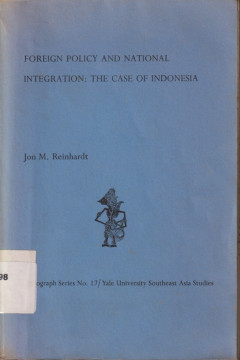
Foreign policy and national integration: The Case of Indonesia
Jon M. Reinhardt's book, Foreign Policy and National Integration: The Case of Indonesia, examines the relationship between Indonesian foreign policy and the process of national integration during the early New Order era. Reinhardt analyzes how foreign policy was used as a domestic political instrument to strengthen government legitimacy, manage ethnic and regional diversity, and build national …
- Edisi
- -
- ISBN/ISSN
- -
- Deskripsi Fisik
- vi, 230 pages : illustration ; 23 cm
- Judul Seri
- -
- No. Panggil
- 327.598 REI f
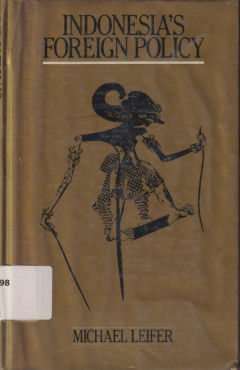
Indonesia’s foreign policy
Michael Leifer's book, Indonesia's Foreign Policy, examines the development, orientation, and dynamics of Indonesian foreign policy from the early days of independence through the New Order period. Leifer analyzes how geopolitical factors, national interests, the stability of the Southeast Asian region, and the role of ASEAN have shaped Indonesia's diplomatic approach. The book also outlines In…
- Edisi
- -
- ISBN/ISSN
- 0-04-327069-7
- Deskripsi Fisik
- xvii, 198 pages ; 22 cm
- Judul Seri
- -
- No. Panggil
- 327.598 LEI i
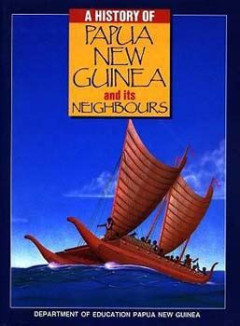
A History of Papua New Guinea and its neighbours
A History of Papua New Guinea and Its Neighbours is an introductory historical work that examines the development of Papua New Guinea within the regional context of Melanesia and the Pacific, as well as its interactions with neighboring countries. This book traces the long journey of Papuan society from prehistoric times, through early migrations, the development of culture and social systems, …
- Edisi
- First Edition
- ISBN/ISSN
- 0-7016-2590-2
- Deskripsi Fisik
- x, 60 pages; 25 cm
- Judul Seri
- -
- No. Panggil
- 995 WIL a
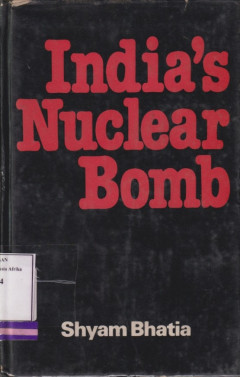
India's nuclear bomb
An in-depth investigation into India’s pursuit of nuclear capability during the Cold War era. The book examines political motivations, scientific developments, and strategic calculations behind India’s nuclear programme. Bhatia discusses key events leading to the first nuclear test in 1974 (“Smiling Buddha”), responses from global powers, and the domestic debates surrounding nuclear pol…
- Edisi
- -
- ISBN/ISSN
- 0-7069-0770-5
- Deskripsi Fisik
- 169 pages ; 22 cm
- Judul Seri
- -
- No. Panggil
- 355.8251 BHA i
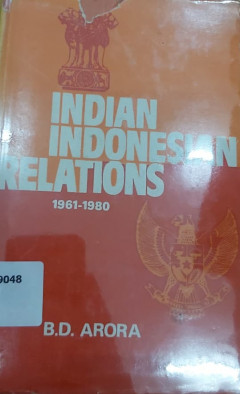
Indian Indonesia relations: 1961-1980
Inspired by centuries of mutual political, commercial, and cultural relations, and against the background of India’s spontaneous support during the Dutch–Indonesian struggle, this study examines the interaction of India and Indonesia from 1961 to 1980. While the early years reflected mutual goodwill and cooperation, later decades showed limitations, differing priorities, and ideological div…
- Edisi
- -
- ISBN/ISSN
- -
- Deskripsi Fisik
- xx, 371 pages ; 22 cm
- Judul Seri
- -
- No. Panggil
- 327.5405 ARO i

Nuclear India: Volume II
This first volume of Nuclear India by J. P. Jain provides an in-depth introduction to the origins, development, and strategic foundations of India’s nuclear program. The book examines India’s political motivations, scientific progress, and security concerns within the regional and global context. Jain discusses historical milestones, policy debates, technological challenges, and India’s p…
- Edisi
- -
- ISBN/ISSN
- -
- Deskripsi Fisik
- vxvii, 440 pages ; 22 cm
- Judul Seri
- -
- No. Panggil
- 355.0217 JAI n
Nuclear India: Volume II
This volume of Nuclear India by J. P. Jain explores India’s evolving nuclear policy, strategic motivations, and defense considerations. The author examines the historical development of India’s nuclear program, technological capabilities, and the geopolitical pressures influencing national security decisions. The book analyzes regional tensions in South Asia, global nuclear diplomacy, and I…
- Edisi
- -
- ISBN/ISSN
- -
- Deskripsi Fisik
- vxvii, 440 pages ; 22 cm
- Judul Seri
- -
- No. Panggil
- 355.0217 JAI n

Zayed the prosperous and his big tour in China, Japan and Indonesia
Zayed the Prosperous and His Big Tour in China, Japan and Indonesia presents a documented account of the official international journey undertaken by the leader of the United Arab Emirates to three major Asian nations. Produced by the UAE’s Ministry of Information and Culture, the book highlights the diplomatic, cultural, and economic significance of these visits during a formative period in …
- Edisi
- -
- ISBN/ISSN
- -
- Deskripsi Fisik
- 266 pages : Ilustrations ; 28 cm
- Judul Seri
- -
- No. Panggil
- 923.1538 ZAY t
 Karya Umum
 Filsafat
 Agama
 Ilmu-ilmu Sosial
 Bahasa
 Ilmu-ilmu Murni
 Ilmu-ilmu Terapan
 Kesenian, Hiburan, dan Olahraga
 Kesusastraan
 Geografi dan Sejarah