Ditapis dengan
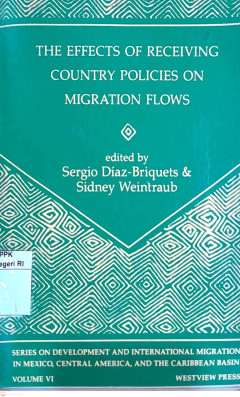
The effects of receiving country policies on migration flows
Covers the period from 1950 to 1989. Focuses on the impact of the Immigration Reform and Control Act of 1986 (IRCA) on the volume of undocumented immigration into the USA. Includes a chapter on emigration pressure in Europe and Africa.
- Edisi
- -
- ISBN/ISSN
- 0-8133-8342-0
- Deskripsi Fisik
- xv, 303 pages : illustrations ; 22 cm
- Judul Seri
- -
- No. Panggil
- 325.73 Bri e

Immigration phobia and the security dilemma: Russia, Europe, and the United S…
Immigration phobia is a paradoxical global phenomenon: neither theories that link conflict to symbolic and realistic threats, nor the 'contact hypothesis' can systematically explain intense anti-migrant alarmism and exclusionism toward marginally small migrant minorities. Through a careful comparative study of immigration attitudes in the Russian Far East, the EU, and the United States, this bo…
- Edisi
- First Published
- ISBN/ISSN
- 0-521-84988-8
- Deskripsi Fisik
- viii, 286 pages : index ; 23 cm
- Judul Seri
- -
- No. Panggil
- 325.1 Ale i

The power of the vote : Electing presidents, overthrowing dictators, and prom…
From the legendary New York City mayoral race of 1977 to his twenty-year efforts to modernize Israeli politics to Bill Clinton's 1996 reelection campaign, Schoen takes you on a fascinating, eye-opening ride across the international political landscape of the past three decades. Demonstrating how politics has evolved and how he has utilized the latest technology to help candidates win the hearts…
- Edisi
- -
- ISBN/ISSN
- 978-0-06-144080-9
- Deskripsi Fisik
- xx, 396 pages : index ; 24 cm
- Judul Seri
- -
- No. Panggil
- 342.7307 Sch p

A reason to vote: Breaking the two-party stranglehold--and the remarkable ris…
Seven years ago, the Natural Law Party was founded to create a new mainstream political party that would offer voters forward-looking. prevention-oriented, commonsense solutions to America's problems. Here is the remarkable story of the party's founding and its successful efforts to enter the national political arena, as well as the party's point-by-point platform to lead the country into the n…
- Edisi
- -
- ISBN/ISSN
- 0-312-24316-2
- Deskripsi Fisik
- xix, 327 pages ; 21 cm
- Judul Seri
- -
- No. Panggil
- 324.2738 Rot n

The coming war with Japan
Argues that the post-Cold War world will see the United States and Japan emerge as opponents, traces Japan's increasing power, and contends the United States holds the trump cards in the economic contest.
- Edisi
- -
- ISBN/ISSN
- 0-312-07677-0
- Deskripsi Fisik
- xv, 318 pages : illustration, table, bibliography, index ; 23 cm
- Judul Seri
- -
- No. Panggil
- 327.73052 Fri c

Current issues in Korean-U.S. relations: Korean-American dialogue: A report o…
The Korea-U.S. Forum in 1992 was a series of four talks presented by Korean and U.S. experts in their fields. Scholars, political leaders, business representatives, students, and media personnel attending the talks had the opportunity to exam- ine the issues presented in each session during an open question and answer forum following the talks
- Edisi
- -
- ISBN/ISSN
- 89-7225-007-4
- Deskripsi Fisik
- vii, 147 pages ; 23 cm
- Judul Seri
- -
- No. Panggil
- 327.730519 Man c
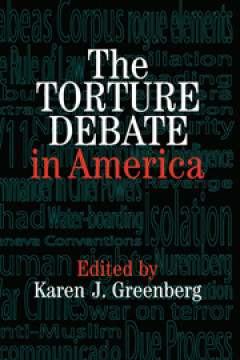
The torture debate in America
Contents: - Section one: Democracy, terror and torture - Section two: On the matter of failed states, the Geneva conventions, and international law - Section three: On torture - Section four: Looking forward etc.
- Edisi
- -
- ISBN/ISSN
- 0-521-67461-1
- Deskripsi Fisik
- xviii, 414 pages : index ; 23 cm
- Judul Seri
- -
- No. Panggil
- 323.49 Gre t

Who will tell the people: The betrayal of American democracy
Who Will Tell the People is a passionate, eye-opening challenge to American democracy. Here is a tough-minded exploration of why we're in trouble, starting with the basic issues of who gets heard, who gets ignored, and why. Greider shows us the realities of power in Washington today, uncovering the hidden relationships that link politicians with corporations and the rich, and that subvert the n…
- Edisi
- -
- ISBN/ISSN
- 0-671-68891-X
- Deskripsi Fisik
- 464 pages : index ; 24 cm
- Judul Seri
- -
- No. Panggil
- 323.024 097 3 Gre w

Religion and democracy in the United States: Danger or opportunity?
This collection, a work of the Task Force on Religion and American Democracy of the American Political Science Association, thoughtfully explores the effects of religion on democracy and contemporary partisan politics. Topics include how religious diversity affects American democracy, how religion is implicated in America's partisan battles, and how religion affects ideas about race, ethnicity,…
- Edisi
- -
- ISBN/ISSN
- 978-0-691-14729-1
- Deskripsi Fisik
- viii, 444 pages : illustrations (black and white) : index ; 23 cm
- Judul Seri
- -
- No. Panggil
- 322.10973 Wol r

Myanmar's enemy within: Buddhist violence and the making of a Muslim 'other'
British journalist Francis Wade spent considerable time in Myanmar trying to understand its distant and recent history. In early 2017 he published Myanmar’s Enemy Within: Buddhist Violence and the Making of a Muslim “Other,” about changing attitudes over the centuries about how the majority Buddhist population viewed Muslims. In his historical investigations, he does not spare British col…
- Edisi
- First Published
- ISBN/ISSN
- 978-1-78360-527-9
- Deskripsi Fisik
- xiv, 280 pages : illustration, notes ; 22 cm
- Judul Seri
- -
- No. Panggil
- 322.109591 Wad m
 Karya Umum
  Filsafat
  Agama
Agama  Ilmu-ilmu Sosial
  Bahasa
  Ilmu-ilmu Murni
  Ilmu-ilmu Terapan
  Kesenian, Hiburan, dan Olahraga
  Kesusastraan
  Geografi dan Sejarah