Ditapis dengan
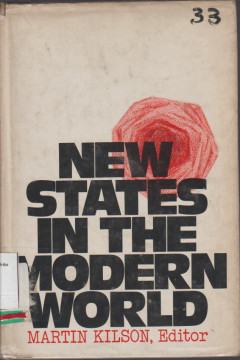
New States in the modern world
"New States in the Modern World," edited by Martin Kilson, is a collection of essays and lectures on the development of new states that emerged in the 20th century, primarily in Africa. Contributors discuss the political dynamics, governance challenges, national development, international relations, and ideological issues facing postcolonial states. This work provides an in-depth academic persp…
- Edisi
- -
- ISBN/ISSN
- 0-674-62261-8
- Deskripsi Fisik
- xi, 254 pages : illustration ; 24 cm
- Judul Seri
- -
- No. Panggil
- 320.17096 KIL s
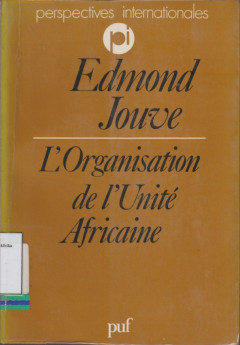
L’Organisation de l’Unité Africaine
Edmond Jouve's book, L’Organisation de l’Unité Africaine, examines the history, structure, objectives, and political dynamics of the Organization of African Unity (OAU), a regional institution established in 1963 to promote unity, solidarity, and liberation among African nations. Jouve examines the OAU's role in conflict resolution, interstate relations, anti-colonial struggles, and its co…
- Edisi
- -
- ISBN/ISSN
- 2-13-038778-0
- Deskripsi Fisik
- 284 pages ; 21,5 cm
- Judul Seri
- -
- No. Panggil
- 341.24 JOU l
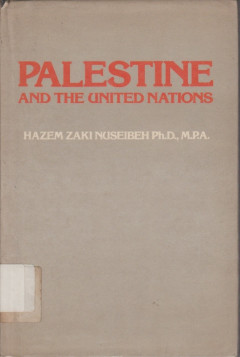
Palestine and the United Nations
This book examines the relationship between Palestine and the United Nations (UN), and how the Palestinian issue has evolved in international forums from the mandate period to the modern era. Hazem Zaki Nuseibeh outlines various UN resolutions, the positions of member states, the dynamics of diplomacy, and international efforts to find a solution to the Palestine–Israel conflict. The book pro…
- Edisi
- -
- ISBN/ISSN
- -
- Deskripsi Fisik
- 200 pages ; 24 cm
- Judul Seri
- -
- No. Panggil
- 341.232 NUS p
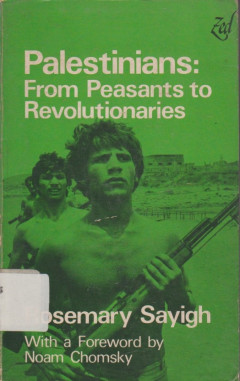
Palestinians: From peasants to revolutionaries
This is Rosemary Sayigh's seminal work, chronicling the history of the Palestinian people through in-depth interviews with refugees in Lebanese camps. Using an anthropological and political approach, Sayigh traces the transformation of Palestinian society from traditional peasants to a group involved in a modern revolutionary movement. The book depicts the experiences, struggles, identities, an…
- Edisi
- -
- ISBN/ISSN
- 0-905762-25-8
- Deskripsi Fisik
- 206 pages : illustration ; 21,5 cm
- Judul Seri
- -
- No. Panggil
- 956.953 SAY p
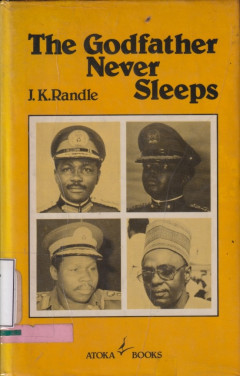
The Godfather never sleeps
The Godfather Never Sleeps is a reflective and critical work by Nigerian author J. K. Randle, presenting a compilation of essays on political, social, and cultural life in Nigeria. Drawing from personal experiences and observations, Randle offers commentary on governance, leadership, corruption, and societal challenges shaping modern Nigeria. Written in an accessible and insightful style, the b…
- Edisi
- -
- ISBN/ISSN
- 978-153-040-5
- Deskripsi Fisik
- 456 pages ; 22 cm
- Judul Seri
- -
- No. Panggil
- 823.914 RAN t
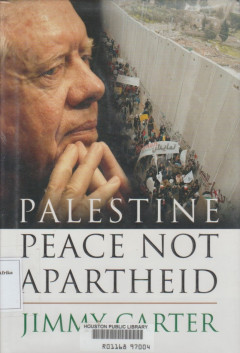
Palestine: Peace not apartheid
Written by Jimmy Carter, former President of the United States, this book offers an in-depth analysis of the Palestinian–Israeli conflict and the path to a just and sustainable peace. Carter outlines the diplomatic challenges, Israel's policies in the West Bank and Gaza, the United States' role in the peace process, and the political obstacles that make a two-state solution difficult to achie…
- Edisi
- -
- ISBN/ISSN
- 978-0-7432-8502-5
- Deskripsi Fisik
- xiv, 264 pages : illustration ; 24,5 cm
- Judul Seri
- -
- No. Panggil
- 956.9405 CAR p

The Realities of Vietnam: A Ripon society appraisal
The Realities of Vietnam presents an analytical appraisal of the Vietnam situation prepared by the Ripon Society. Edited by Christopher W. Beal with contributions from Anthony A. D’Amato, the book examines the political, social, and military dimensions of the Vietnam conflict as understood in the late 1960s. It evaluates U.S. policy, the nature of the South Vietnamese government, the motivati…
- Edisi
- -
- ISBN/ISSN
- -
- Deskripsi Fisik
- 186 pages ; 23,5 cm
- Judul Seri
- -
- No. Panggil
- 959.7043 BEA r
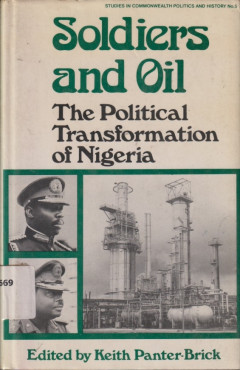
Soldiers and oil: The Political transformation of Nigeria
Soldiers and Oil: The Political Transformation of Nigeria explores the complex relationship between military rule and the oil-driven political economy of Nigeria. Edited by Keith Panter-Brick, this scholarly volume examines how the discovery and exploitation of petroleum reshaped Nigeria’s governance, power structures, and social landscape throughout the post-colonial period. Contributors a…
- Edisi
- -
- ISBN/ISSN
- 0-7146-3098-5
- Deskripsi Fisik
- xii, 375 pages : illustrations ; 22 cm
- Judul Seri
- -
- No. Panggil
- 320.9669 BRI s
La question du pouvoir en Algérie
La Question du Pouvoir en Algérie by Abdelkader Yefsah is an analytical work exploring the nature, structure, and evolution of political power in Algeria. Published in 1990, the book discusses the dynamics of authority, the mechanisms of governance, and the internal political struggles that shaped Algeria in the post-independence period. Yefsah provides a critical perspective on institutional …
- Edisi
- -
- ISBN/ISSN
- -
- Deskripsi Fisik
- 511 pages ; 21 cm
- Judul Seri
- -
- No. Panggil
- 965.04 ABD l
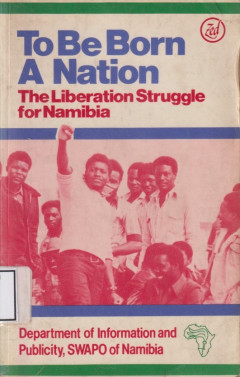
To be born a nation: The Liberation struggle for Namibia
To Be Born a Nation is a comprehensive documentation of Namibia's struggle for liberation from South African colonialism. Compiled by SWAPO's Information and Publicity Department, it details Namibia's political history, the roots of the conflict, the development of the resistance movement, and the diplomatic and military strategies pursued toward independence. Complete with maps, diagrams, and …
- Edisi
- -
- ISBN/ISSN
- 0-905762-73-8
- Deskripsi Fisik
- v, 354 pages : illustration ; 21,5 cm
- Judul Seri
- -
- No. Panggil
- 968.803 DEP b
 Karya Umum
  Filsafat
  Agama
Agama  Ilmu-ilmu Sosial
  Bahasa
  Ilmu-ilmu Murni
  Ilmu-ilmu Terapan
  Kesenian, Hiburan, dan Olahraga
  Kesusastraan
  Geografi dan Sejarah