Ditapis dengan

The French presence in Cochinchina and Cambodia: Rule and response (1859–1905)
Milton E. Osborne's The French Presence in Cochinchina and Cambodia examines French colonial policy in Southeast Asia, particularly in Cochinchina (South Vietnam) and Cambodia, from 1859 to 1905. It examines the occupation process, colonial administration, the political relationship between France and local elites, and the forms of resistance and responses of local communities. Drawing on prima…
- Edisi
- -
- ISBN/ISSN
- 0-8014-0512-2
- Deskripsi Fisik
- xvi, 379 pages : illustration ; 21,5 cm
- Judul Seri
- -
- No. Panggil
- 959.6 OSB f

The rise and fall of the American left
The American Left was born in America, not, as some would have it in Europe or the Third World, and the American Left was nurtured by intellectuals and activists who read Jefferson and Whitman before the read Marx or Mao. One lesson this brilliant history teaches us in that the fury of radical innocence and wounded idealism so peculiar to American intellectual history springs from native soil
- Edisi
- -
- ISBN/ISSN
- 0-393-03075-X
- Deskripsi Fisik
- 432 pages : illustrations ; 22 cm
- Judul Seri
- -
- No. Panggil
- 303.484 DIG r
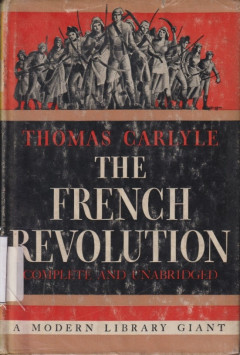
The French revolution: A History
Thomas Carlyle's The French Revolution: A History is one of the classic works of historiography on the French Revolution. In a dramatic and visceral narrative style, Carlyle depicts the events, figures, and social dynamics that shaped one of the greatest revolutions in world history. The book offers a moral and philosophical interpretation of the radical changes that occurred in France between …
- Edisi
- -
- ISBN/ISSN
- -
- Deskripsi Fisik
- xxix, 748 pages : illustration ; 21 cm
- Judul Seri
- -
- No. Panggil
- 944.04 CAR f
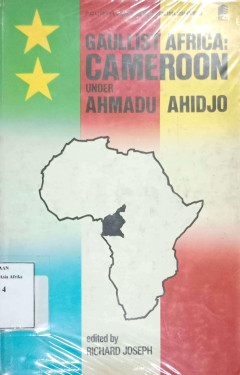
Gaullist Africa: Cameroon under Ahmadu Ahidjo
Gaullist Africa: Cameroon under Ahmadou Ahidjo is a scholarly examination of Cameroon’s political evolution during the presidency of Ahmadou Ahidjo, one of Africa’s pivotal post-colonial leaders. Edited by Richard Joseph, the book explores how French Gaullist policies shaped Cameroon’s political structures, governance style, and international relations after independence.
- Edisi
- -
- ISBN/ISSN
- 978-156-004-5
- Deskripsi Fisik
- xiv,217 pages, ; 24cm.
- Judul Seri
- -
- No. Panggil
- 967.110 4 JOS g
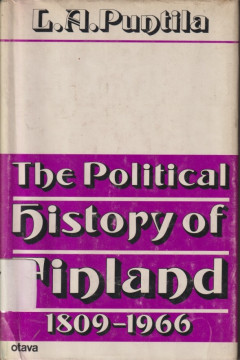
The Political history of Finland 1809–1966
L. A. Puntila's The Political History of Finland 1809–1966 examines the political development of Finland from the time of the Russian Empire (Grand Duchy of Finland) to the era of independence and the consolidation of the modern state. Through in-depth historical analysis, the author outlines changes in government structure, the process of democratization, the role of political parties, and t…
- Edisi
- -
- ISBN/ISSN
- 951-1-01366-1
- Deskripsi Fisik
- 248 pages : illustration ; 22,5 cm
- Judul Seri
- -
- No. Panggil
- 948.97 PUN p
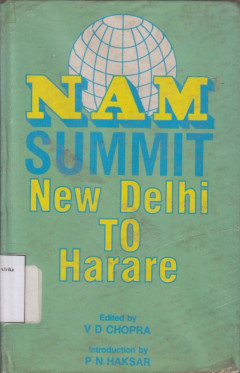
NAM Summit: New Delhi to Harare
NAM Summit: New Delhi to Harare, edited by V. D. Chopra and published by Patriot Publishers on behalf of the Indian Centre for Regional Affairs, examines the development of the Non-Aligned Movement (NAM) from its first summit in New Delhi to its subsequent summit in Harare. It explores the dynamics of international politics during the mid-Cold War era, as developing countries sought to maintain…
- Edisi
- -
- ISBN/ISSN
- 81-7050-030-3
- Deskripsi Fisik
- xiv, 359 pages ; 21,5 cm
- Judul Seri
- -
- No. Panggil
- 327.172 CHO n
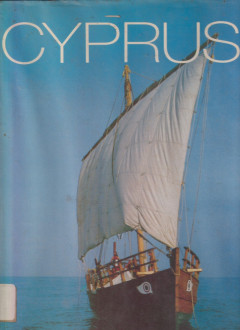
Cyprus
Published by the Cyprus Press and Information Office, the book is an official publication showcasing the country's rich history, culture, and archaeological heritage. Featuring photographs from various institutions and professional photographers, the book presents a visual depiction of Cyprus's important cities, ancient sites, community life, and cultural diversity. Intended as a resource for i…
- Edisi
- -
- ISBN/ISSN
- 9963-38-012-3
- Deskripsi Fisik
- 206 pages : illustration ; 31 cm
- Judul Seri
- -
- No. Panggil
- 956.45 PRE c
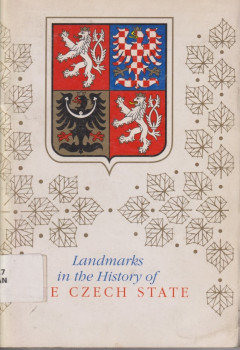
Landmarks in the history of the Czech State
"Landmarks in the History of the Czech State" is a book published by the Czech Ministry of Foreign Affairs to support a historical exhibition on the development of the Czech state. It provides concise yet informative accounts of key events, figures, and sites in the history of Bohemia, Moravia, and later the Czech Republic. Written by Marcel Deyl and revised by historian Robert Kvaček, the boo…
- Edisi
- -
- ISBN/ISSN
- -
- Deskripsi Fisik
- 49 pages : illustration ; 23,5 cm
- Judul Seri
- -
- No. Panggil
- 943.7 DEY l

Histoire de l’Afro-Asiatism jusqu’à Bandung : La naissance du Tiers-Monde
This book explores the historical development of the Afro-Asian movement leading up to the 1955 Bandung Conference, considered a foundational moment in the emergence of the Third World. Pierre Queuille traces the political, cultural, and ideological forces that shaped Afro-Asian solidarity during the mid-20th century. Through a historical analysis of decolonization, international diplomacy, and…
- Edisi
- -
- ISBN/ISSN
- -
- Deskripsi Fisik
- 326 pages ; 22,5 cm
- Judul Seri
- -
- No. Panggil
- 327.17 QUE h
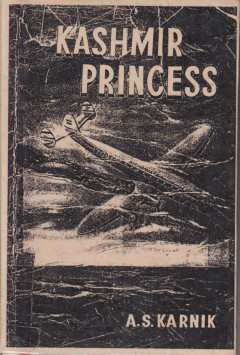
Kashmir Princess
This book provides an investigative account of the 1955 Kashmir Princess incident, in which an Air India chartered aircraft carrying delegates to the Asian-African Conference was destroyed by sabotage. Written shortly after the event, A. S. Karnik analyzes the political context, possible motives, and international implications surrounding the bombing. The work offers insight into Cold War tensi…
- Edisi
- -
- ISBN/ISSN
- -
- Deskripsi Fisik
- xv, 168 pages : illustrations ; 21,5 cm
- Judul Seri
- -
- No. Panggil
- 363.124 KAR k
 Karya Umum
  Filsafat
  Agama
Agama  Ilmu-ilmu Sosial
  Bahasa
  Ilmu-ilmu Murni
  Ilmu-ilmu Terapan
  Kesenian, Hiburan, dan Olahraga
  Kesusastraan
  Geografi dan Sejarah