Ditapis dengan

American dreams: The United States since 1945
For a brief, bright moment in 1945, America stood at its apex, looking back on victory not only against the Axis powers but against the Great Depression, and looking ahead to seemingly limitless power and promise. What we've done with that power and promise over the past six decades is a vitally important and fascinating topic that has rarely been tackled in one volume, and never by a historian…
- Edisi
- -
- ISBN/ISSN
- 978-1-59420-262-9
- Deskripsi Fisik
- x, 420 pages ; 24 cm
- Judul Seri
- -
- No. Panggil
- 973. 9 BRA a

The right nation: Conservative power in America
Evaluates the conservative movement that has swept across America in recent years, contending that conservatives have waged deliberate and effective campaigns against liberal advances, in an analysis that offers insight into right-wing politics and its organizers, representatives, and supporters.
- Edisi
- -
- ISBN/ISSN
- 1-59420-020-3
- Deskripsi Fisik
- 450 pages : Illustrations (blck and white) : index ; 24 cm
- Judul Seri
- -
- No. Panggil
- 320.52 MIC r

Divided loyalties
This book is the memoir of Janet Teissier du Cros, a Scottish woman who lived in southern France during World War II. Through a powerful personal narrative, she describes daily life under German occupation, the struggle for survival, political tensions, and the inner struggle between identity and loyalty to two homelands. With a foreword by D. W. Brogan, this work offers a humanistic perspectiv…
- Edisi
- -
- ISBN/ISSN
- -
- Deskripsi Fisik
- xxvii, 350 pages :; 21 cm
- Judul Seri
- -
- No. Panggil
- 940.53 TEI d

Napoleon: Historical enigma
This book is a collection of essays compiled and introduced by David H. Pinkney on Napoleon Bonaparte, one of the most complex and controversial figures in European history. Through analyses by various historians, this work examines historical conundrums regarding Napoleon's leadership, political strategy, reforms, and long-term impact on France and the world. This book provides a comprehensive…
- Edisi
- -
- ISBN/ISSN
- 0-88273-403-2
- Deskripsi Fisik
- 96 pages : illustration ; 23,5 cm
- Judul Seri
- -
- No. Panggil
- 944.05 PIN n
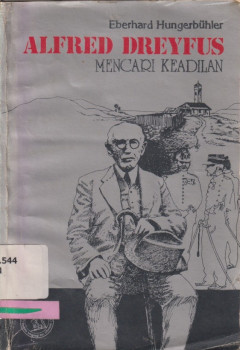
Alfred Dreyfus: Mencari keadilan
Ini adalah studi biografi mendalam tentang Jacques Mallet du Pan (1749–1800), seorang jurnalis dan penulis politik berpengaruh pada periode menjelang dan selama Revolusi Prancis. Frances Acomb menelusuri perkembangan pemikirannya, karier jurnalistiknya, dan perannya dalam mengkritik gerakan revolusioner. Melalui pendekatan historis dan analitis, buku ini menggambarkan bagaimana tulisan-tulisa…
- Edisi
- -
- ISBN/ISSN
- 979-408-106-X
- Deskripsi Fisik
- vi, 186 halaman : ilustrasi ; 21 cm
- Judul Seri
- -
- No. Panggil
- 923.1 HUN a

Mallet du Pan (1749–1800): A Career in political journalism
This is an in-depth biographical study of Jacques Mallet du Pan (1749–1800), an influential journalist and political writer in the period leading up to and during the French Revolution. Frances Acomb traces the development of his thought, his journalistic career, and his role in criticizing the revolutionary movement. Through a historical and analytical approach, the book illustrates how Mall…
- Edisi
- -
- ISBN/ISSN
- 0-8223-0295-0
- Deskripsi Fisik
- xii, 304 pages ; 24 cm
- Judul Seri
- -
- No. Panggil
- 944.04 ACO m

The Unpublished diary of Pierre Laval
This book contains the diaries of Pierre Laval, a French politician known for leading the collaborationist Vichy government during the German occupation of World War II. Compiled and introduced by his daughter, Josée Laval, the book offers a firsthand account of Laval's personal views, political decisions, and defense of his actions up until his trial in 1945. The diaries provide important his…
- Edisi
- -
- ISBN/ISSN
- -
- Deskripsi Fisik
- 217 pages : illustration ; 22 cm
- Judul Seri
- -
- No. Panggil
- 944.0816 LAV u

Homeland insecurity: How Washington politicians have made America less safe
Homeland Insecurity examines how political decisions in Washington weakened the effectiveness of U.S. law enforcement and national security agencies, particularly the FBI. Drawing from their direct experience in counterterrorism, Terry D. Turchie and Kathleen M. Puckett reveal how partisan politics, bureaucratic changes, and misguided reforms undermined efforts to keep America safe. The authors…
- Edisi
- -
- ISBN/ISSN
- 978-1-933909-33-2
- Deskripsi Fisik
- xiii, 313 pages ; 23,5 cm
- Judul Seri
- -
- No. Panggil
- 363.25 TUR h

France and the Africans 1944–1960: A Political history
Edward Mortimer's France and the Africans 1944–1960: A Political History examines the political relations between France and African countries from the late colonial period through decolonization. The book explores French policy toward its colonies, the dynamics of African internal politics, and the transition to independence. Mortimer provides a thorough analysis of the political negotiation…
- Edisi
- -
- ISBN/ISSN
- -
- Deskripsi Fisik
- 390 pages : illustration ; 21,5 cm
- Judul Seri
- -
- No. Panggil
- 325.344 MOR f

Then Everything changed: Stunning alternate histories of American politics
This book presents a series of alternate historical scenarios that reimagine pivotal moments in modern American politics. Jeff Greenfield explores how small, often overlooked events—such as a driver’s mistake, a medical decision, or a brief moment of chance—could have profoundly changed the careers of prominent political figures like John F. Kennedy, Robert F. Kennedy, Jimmy Carter, Geral…
- Edisi
- -
- ISBN/ISSN
- 978-0-399-15706-6
- Deskripsi Fisik
- xiv, 434 pages : illustrations ; 23,5 cm
- Judul Seri
- -
- No. Panggil
- 973.92 GRE t
 Karya Umum
  Filsafat
  Agama
Agama  Ilmu-ilmu Sosial
  Bahasa
  Ilmu-ilmu Murni
  Ilmu-ilmu Terapan
  Kesenian, Hiburan, dan Olahraga
  Kesusastraan
  Geografi dan Sejarah