Ditapis dengan

India : bangkitnya raksasa baru asia, calon pemain utama dunia di era globali…
Bagaimana India bisa sedahsyat ini? India memulai dari dunia pendidikan dengan mencetak tenaga ahli bidang teknologi informasi. Hingga tercipta apa yang dinamakan Lembah Silikon India (Silicon Valley of India). Di lembah Silikon ini berdiri sekitar 200 industri besar peranti lunak dengan menyerap ratusan ribu karyawan.Sepak terjang India tidak sampai di situ, India pun melejit dalam industri ot…
- Edisi
- -
- ISBN/ISSN
- 978-979-709-300-6
- Deskripsi Fisik
- xxiv, 248 halaman ; 21 cm
- Judul Seri
- -
- No. Panggil
- 959 SUH i
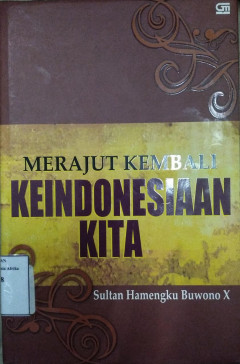
Merajut kembali keindonesiaan kita
Merajut Kembali Keindonesiaan Kita is a reflective work by Sultan Hamengku Buwono X that discusses the challenges and opportunities in rebuilding a cohesive Indonesian identity in the modern era. The book explores themes of cultural diversity, national integrity, social harmony, leadership, democracy, and Indonesia’s historical journey toward unity. Through insightful commentary, Sultan HB X …
- Edisi
- -
- ISBN/ISSN
- 978-979-22-3435-0
- Deskripsi Fisik
- vii, 310 halaman : 24 cm
- Judul Seri
- -
- No. Panggil
- 320.959 8 BUW m
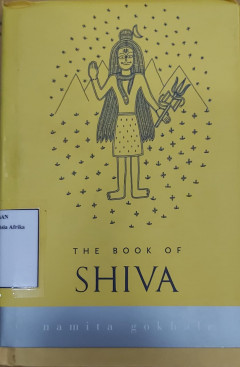
The Book of Shiva
Shiva, Destroyer and Protector, Supreme Ascetic and Lord of the Universe, is Ardhanarishwara—half man and half woman. He is Neelakantha, who drank poison to save the three worlds, and yet, crazed with grief at the death of Sati, set about destroying them. Within him lie the answers to some of humanity’s deepest dilemmas. Namita Gokhale explores the many stories about Shiva, examining quest…
- Edisi
- -
- ISBN/ISSN
- 0-67-004906-9
- Deskripsi Fisik
- 130 pages : illustrations ; 18 cm
- Judul Seri
- -
- No. Panggil
- 294.3 GOK b
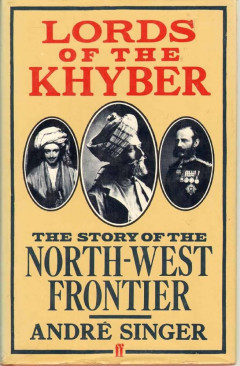
Lord of the Kyber : The Story of the North West frontier
One hundred and forty years before Russians invaded Afghanistan in 1979, causing an outcry of protest from the West. The British had marched into Kabul and put their puppet king on the throne. The years which followed saw three wars, countless skirmishes and thousands of deaths - but the Pathans, or Pushtuns, and their fellow tribesmen of the NorthWest Frontier, remained undefeated. Pushtun…
- Edisi
- -
- ISBN/ISSN
- 0-571-11796-1
- Deskripsi Fisik
- 234 pages : illustrations ; 23 cm
- Judul Seri
- -
- No. Panggil
- 954.91 SIN l
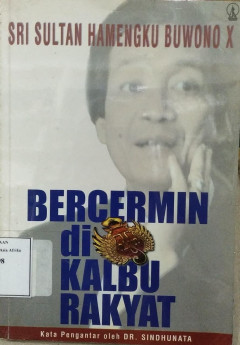
Bercermin di kalbu rakyat
Bercermin di Kalbu Rakyat merupakan kumpulan esai Sri Sultan Hamengku Buwono X yang membahas hubungan antara pemimpin dan rakyat dalam konteks sosial-politik Indonesia. Melalui tulisan-tulisan reflektif, Sultan menekankan pentingnya pemimpin memahami aspirasi, kebutuhan, dan perasaan masyarakat sebagai dasar membangun kehidupan bermasyarakat yang harmonis dan berkeadaban. Buku ini juga mengupas…
- Edisi
- -
- ISBN/ISSN
- 979-672-398-0
- Deskripsi Fisik
- 148 halaman ; 22,4 cm
- Judul Seri
- -
- No. Panggil
- 320.959 8 BUW b
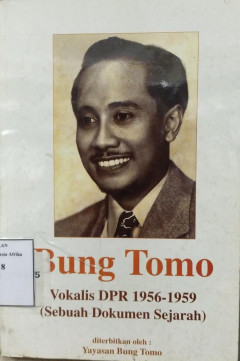
Bung Tomo: Vokalis DPR 1956–1959 (sebuah dokumen sejarah)
Buku Bung Tomo: Vokalis DPR 1956–1959 merupakan sebuah dokumen sejarah yang memuat pidato, sikap politik, serta pandangan Bung Tomo selama menjabat sebagai anggota DPR pada periode 1956–1959. Disusun dan diterbitkan oleh Yayasan Bung Tomo, buku ini menampilkan rekam jejak pemikiran beliau dalam masa awal Orde Parlementer, yang ditandai dinamika nasional dan pergulatan politik pasca-kemerdek…
- Edisi
- -
- ISBN/ISSN
- 979-95578-0-1
- Deskripsi Fisik
- iv, 240 halaman ; 20,7 cm
- Judul Seri
- -
- No. Panggil
- 320.959 8 LUX b
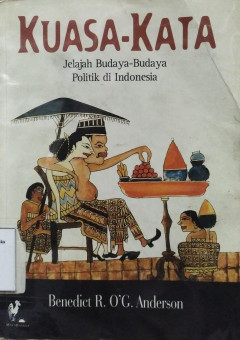
Kuasa-kata: Jelajah budaya-budaya politik di Indonesia
Kuasa-Kata adalah terjemahan dari buku Language and Power: Exploring Political Cultures in Indonesia karya Benedict Anderson, seorang ilmuwan politik terkemuka dari Cornell University. Buku ini mengeksplorasi keterkaitan antara bahasa, simbol, dan praktik politik dalam budaya Indonesia. Anderson menelaah bagaimana kekuasaan dimaknai, dikonstruksi, dan dinegosiasikan melalui penggunaan bahasa, m…
- Edisi
- -
- ISBN/ISSN
- -
- Deskripsi Fisik
- viii, 634 halaman ; 21 cm
- Judul Seri
- -
- No. Panggil
- 320.959 8 AND k

Studi kawasan: Sejarah diplomasi dan perkembangan politik di Asia
Buku ini membahas perkembangan sejarah diplomasi serta dinamika politik di kawasan Asia. Ditulis oleh Teuku May Rudy, buku ini menguraikan proses hubungan internasional di Asia, latar belakang sejarah politik, serta faktor budaya dan geopolitik yang memengaruhi kebijakan luar negeri negara-negara Asia. Dengan pendekatan studi kawasan, karya ini memberikan pemahaman mendalam mengenai perubahan p…
- Edisi
- -
- ISBN/ISSN
- 979-589-0203-9
- Deskripsi Fisik
- ix, 283 halaman ; 20,8 cm
- Judul Seri
- -
- No. Panggil
- 320.95 RUD s

Serangan umum 1 Maret 1949: "Schaak maat" untuk Belanda (strategi letkol Soeh…
Buku ini mengulas strategi Letkol Soeharto dalam Serangan Umum 1 Maret 1949 yang berhasil mengguncang kekuatan Belanda. Melalui operasi terencana, serangan ini membuktikan eksistensi TNI dan meningkatkan posisi diplomatik Indonesia. Penulis menyoroti aspek taktik militer, dampak politik, serta peran kunci berbagai tokoh dalam keberhasilan operasi tersebut.
- Edisi
- -
- ISBN/ISSN
- 978-602-96430-2-2
- Deskripsi Fisik
- 52 halaman : ilustrasi ; 21 cm
- Judul Seri
- -
- No. Panggil
- 303.6 BAK s

The Making of India's foreign policy : The Indian national congress and world…
India's foreign policy has a historical background which has not so far been systematically studied. The Indian National Congress, the main organization that carried the struggle for national freedom, showed interest in questions of foreign policy right from its birth in 1885. This interest, at first limited, grew with the broadening of its general political outlook. Gradually, certain principl…
- Edisi
- -
- ISBN/ISSN
- 978-81-925354-8-7
- Deskripsi Fisik
- xxvi, 301 pages ; 23 cm
- Judul Seri
- -
- No. Panggil
- 327.54 PRA m
 Karya Umum
  Filsafat
  Agama
Agama  Ilmu-ilmu Sosial
  Bahasa
  Ilmu-ilmu Murni
  Ilmu-ilmu Terapan
  Kesenian, Hiburan, dan Olahraga
  Kesusastraan
  Geografi dan Sejarah