Ditapis dengan
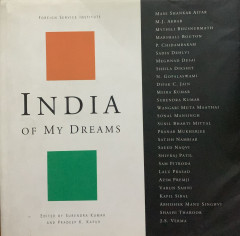
India of my dreams
This book is a comprehensive collection of Mahatma Gandhi's writings that summarize his vision of an ideal India (Swaraj). Gandhi outlines his views on various aspects of national life, including education, the rural economy, political structure, the role of religion, the status of women, and community development. It is a blueprint for the India he envisioned, based on the principles of truth …
- Edisi
- -
- ISBN/ISSN
- 978-81-7188-689-0
- Deskripsi Fisik
- 299 pages : illustrations ; 25 cm
- Judul Seri
- -
- No. Panggil
- 954.035 KUM i

The Ramayana: Love and valour in India's great epic — The Mewar ramayana m…
A richly illustrated exploration of the celebrated Mewar Ramayana, one of the most magnificent manuscript traditions in Indian art history. Written by J. P. Losty, this volume showcases exquisite miniature paintings commissioned by Maharana Jagat Singh of Mewar in the 17th century. The book examines the narrative structure of the Ramayana, its artistic interpretation, stylistic features, and cu…
- Edisi
- -
- ISBN/ISSN
- 978-93-85285-17-9
- Deskripsi Fisik
- illustrations ; 25,5 cm
- Judul Seri
- -
- No. Panggil
- 891.212 LOS r
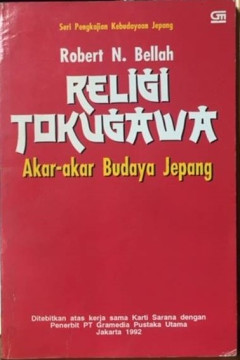
Religi Tokugawa: Akar-akar budaya Jepang
Daftar isi: 1. Religi dan masyarakat industri di Jepang 2. Garis besar struktur sosial Jepang pada masa Tokugawa 3. Religi di Jepang : Tinjauan umu 4. Religi dan negara 5. Religi dan ekonomi 6. Shingaku dan pendirinya, Ishida Baigan.
- Edisi
- cet.1
- ISBN/ISSN
- 979-511-256-2
- Deskripsi Fisik
- xxvi, 341 halaman ; 21 cm
- Judul Seri
- -
- No. Panggil
- 952 BEL r

India in crisis
India in Crisis by J. D. Sethi offers a critical examination of the political, economic, and social upheavals that shaped India during a turbulent period of its post-independence history. Sethi analyzes internal conflicts, policy failures, leadership challenges, and the pressures created by rapid population growth and economic instability. The book discusses major national crises, including pol…
- Edisi
- -
- ISBN/ISSN
- -
- Deskripsi Fisik
- 233 pages ; 22 cm
- Judul Seri
- -
- No. Panggil
- 954.05 SET i
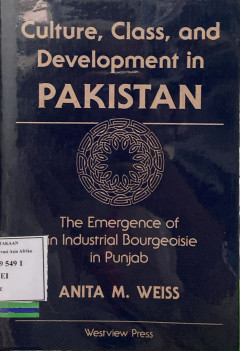
Culture, class, and development in Pakistan
This book is concerned with social change in Pakistan, particularly the relationship between indigenous sociocultural orientations, the development process, and the rise of a new middle-level entrepreneurial class in the Punjab.
- Edisi
- -
- ISBN/ISSN
- 0-8133-7910-5
- Deskripsi Fisik
- x, 207 pages: illustration; 22 cm
- Judul Seri
- -
- No. Panggil
- 305.509 WEI c
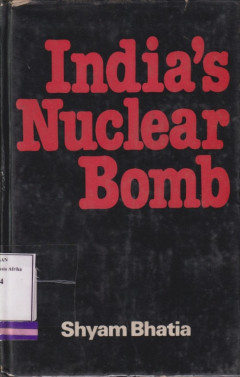
India's nuclear bomb
An in-depth investigation into India’s pursuit of nuclear capability during the Cold War era. The book examines political motivations, scientific developments, and strategic calculations behind India’s nuclear programme. Bhatia discusses key events leading to the first nuclear test in 1974 (“Smiling Buddha”), responses from global powers, and the domestic debates surrounding nuclear pol…
- Edisi
- -
- ISBN/ISSN
- 0-7069-0770-5
- Deskripsi Fisik
- 169 pages ; 22 cm
- Judul Seri
- -
- No. Panggil
- 355.8251 BHA i

The modern history of Japan
The Modern History of Japan by W. G. Beasley provides a comprehensive overview of Japan’s political, social, and economic transformation from the late Tokugawa era to the modern period. The book examines the fall of the shogunate, the Meiji Restoration, Japan’s rapid modernization, and the emergence of the nation as a major world power. Beasley analyzes key historical developments, includin…
- Edisi
- -
- ISBN/ISSN
- 0-297-76604-X
- Deskripsi Fisik
- ix, 358 pages : illustrations ; 21,5 cm
- Judul Seri
- -
- No. Panggil
- 952.647 BEA m
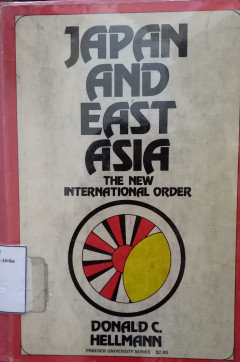
Japan and East Asia: The New international order
Japan’s evolving political and economic role in shaping the postwar and contemporary East Asian regional order. Hellmann examines how Japan’s rapid economic growth, security partnership with the United States, and increasing regional engagement influenced the balance of power in East Asia. The book explores Japan’s interactions with major regional actors—including China, Korea, and Sout…
- Edisi
- -
- ISBN/ISSN
- -
- Deskripsi Fisik
- xii, 243 pages : illustrations ; 20,5 cm
- Judul Seri
- -
- No. Panggil
- 327.5205 HEL i

Japan unmasked
An accessible and candid insight into the realities of Japanese society, culture, and national character. Kawasaki explains how historical experiences, social structures, traditions, and group-centered values shape everyday life in Japan. The book highlights key themes such as work ethic, social discipline, modernization, and the tension between tradition and change. Through clear observations …
- Edisi
- -
- ISBN/ISSN
- -
- Deskripsi Fisik
- 231 pages : illustrations ; 18 cm
- Judul Seri
- -
- No. Panggil
- 952 KAW j

Pembantaian Timor Timur: Horor masyarakat internasional
Buku Pembantaian Timor Timur karya Joseph Nevins menyajikan analisis mendalam mengenai kekerasan, pelanggaran hak asasi manusia, dan dinamika politik yang terjadi di Timor Timur terutama menjelang dan setelah jajak pendapat 1999. Melalui dokumentasi historis, wawancara, dan laporan investigatif, Nevins mengungkap bagaimana struktur kekuasaan, kebijakan negara, dan operasi militer berkontribusi …
- Edisi
- -
- ISBN/ISSN
- 978-602-8174-05
- Deskripsi Fisik
- xxiii+375 halaman; 23 cm
- Judul Seri
- -
- No. Panggil
- 959.870 NEV p
 Karya Umum
  Filsafat
  Agama
Agama  Ilmu-ilmu Sosial
  Bahasa
  Ilmu-ilmu Murni
  Ilmu-ilmu Terapan
  Kesenian, Hiburan, dan Olahraga
  Kesusastraan
  Geografi dan Sejarah