Ditapis dengan
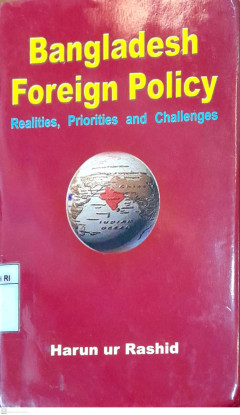
Bangladesh foreign policy: Realities, priorities, and challenges
The book is built around three themes: Historical backgrounds as well as the domestic and international setting, the foreign policy making-process, the principal actors in formulating foreign policy, the country's strengths and weaknesses and impact of changes in international politics.
- Edisi
- Revised edition
- ISBN/ISSN
- 984080197X
- Deskripsi Fisik
- xv, 504 pages : illustrations, maps : index ; 23 cm
- Judul Seri
- -
- No. Panggil
- 327.5492 Ras b

India in Sri Lanka : Between lion and the tigers
By a retired officer in the Ministry of External Affairs and a noted scholar, detailed scholarly study of India-Sri Lanka diplomatic relations. Focus on l980 to the present, attention to riots, militant groups, Indian Peacekeeping operations.
- Edisi
- -
- ISBN/ISSN
- 81-7049-210-6
- Deskripsi Fisik
- 353 pages : map, index ; 23 cm
- Judul Seri
- -
- No. Panggil
- 327.5405493 Bha i

Pakistan's foreign policy, 1947- 2005: A concise history
A distinguished career in Pakistan's Foreign Service has provided Abdul Sattar with a unique, personal insight into the making, implementation and consequences of Pakistan's foreign policy from Partition to post-9/11. This concise history reflects his knowledge and experience, providing a thorough account which will be of interest to both the layman and the scholar.
- Edisi
- First Published
- ISBN/ISSN
- 0-19-547167-9
- Deskripsi Fisik
- xii, 329 pages : illustrations, maps : bibl: hlm 321-322 : index ; 25 cm
- Judul Seri
- -
- No. Panggil
- 327.54 Sat p

India in a turbulent world: Perspective in foreign and security policies
- Edisi
- -
- ISBN/ISSN
- 81-7003-265-2
- Deskripsi Fisik
- xiv,321 Halaman : index ;21 cm
- Judul Seri
- -
- No. Panggil
- 327.54 Pat i
- Edisi
- -
- ISBN/ISSN
- 81-7003-265-2
- Deskripsi Fisik
- xiv,321 Halaman : index ;21 cm
- Judul Seri
- -
- No. Panggil
- 327.54 Pat i
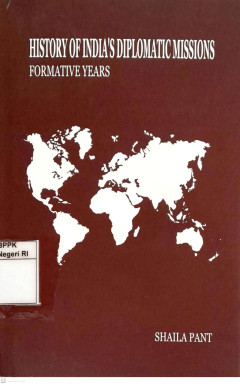
History of India's diplomatic missions: Formative years
The challenging task of executing, Nehru's vision of independent foreign policy required an innovative and dynamic diplomatic corp. The Indian state had the advantage of having a battery of officers drawn from British Raj, but could they translate the Nehruvian vision into practice? The history of evolution of Indian missions and their functioning provides an insight in to the dynamics of India…
- Edisi
- First Published
- ISBN/ISSN
- 81-902929-5-1
- Deskripsi Fisik
- ix, 201 pages : bibl: hlm 195-201 ; 23 cm
- Judul Seri
- -
- No. Panggil
- 327.54 Pan h

The long view from Delhi: To define the Indian grand strategy for foreign policy
Analyzing some of the major influences on foreign and security policy in India, this synthesis of insights assesses emerging global scenarios from an Indian perspective and details their likely impact on India's current and future national interests. This study first uses the Net Assessment method to detail the scenarios_that the country will face in 2020 and then utilizes a transparent method …
- Edisi
- -
- ISBN/ISSN
- 9788171888009
- Deskripsi Fisik
- 182 pages : 29 cm
- Judul Seri
- -
- No. Panggil
- 327.54 Men l
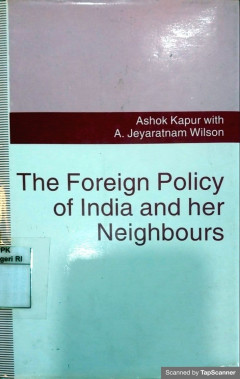
Foreign policy of India and her neighbours
This study of perceptions, interests and strategies of South Asian states reveals the analytical and empirical richness of three kinds of states in the region: India - the regional hegemon; Pakistan-India's permanent competitor; and other South Asian states who do not accept Pakistani perceptions, interests and strategies concerning India. This book assesses the diplomatic and strategic princip…
- Edisi
- First Published
- ISBN/ISSN
- 0-333-55829-4
- Deskripsi Fisik
- ix, 186 pages : illustrations : index ; 23 cm
- Judul Seri
- -
- No. Panggil
- 327.54 Kap f

Assignment Colombo
J. N. Dixit, former Foreign Secretary was India's High Commissioner in Sri Lanka from 1985 to 1989. He was an active participant in events leading to the signing of the Indo-Sri Lanka agreement and induction of the IPKF into Sri Lanka. This book is an attempt to put matters in perspective in the context of India's motivation which remain misunderstood. The author feels that the peoples of In…
- Edisi
- -
- ISBN/ISSN
- 81-220-0499-7
- Deskripsi Fisik
- xxi, 393 pages : illustrations (black and white) : index ; 22 cm
- Judul Seri
- -
- No. Panggil
- 327.54 Dix a
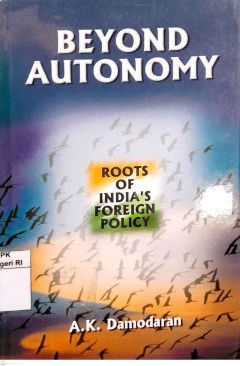
Beyond autonomy: India's foreign policy
In a world of instant communication, no country can remain in isolation. The impact of socio-cultural and economic trends receive instant reverberations the world over. This is equally true of foreign policy. While the balance of power and ideology may have undergone changes, the fundamentals of Indian diplomatic expression has remained the same, with its commitment to our national interests an…
- Edisi
- -
- ISBN/ISSN
- 81-7039-241-1
- Deskripsi Fisik
- xv, 246 pages : index ; 23 cm
- Judul Seri
- -
- No. Panggil
- 327.54 Dam b

The fukuda doctrine and ASEAN: New dimensions in Japanese foreign policy
A burgeoning Japanese rote in the Asia-Pacific region has been one of the most contentious issues to the Southeast Asian Countries in recent years with its positive and negative implications. It is thus timely and significant to come to terms with Japan's "design" in the region from a historical perspective. Attributing Japan's active involvement in Southeast Asian affairs to the proclamation o…
- Edisi
- -
- ISBN/ISSN
- 981-3016-14-0
- Deskripsi Fisik
- xiv, 277 pages : bibl: hlm 256-271 : index ; 23 cm
- Judul Seri
- -
- No. Panggil
- 327.520595 Sud f
 Karya Umum
  Filsafat
  Agama
Agama  Ilmu-ilmu Sosial
  Bahasa
  Ilmu-ilmu Murni
  Ilmu-ilmu Terapan
  Kesenian, Hiburan, dan Olahraga
  Kesusastraan
  Geografi dan Sejarah