Ditapis dengan
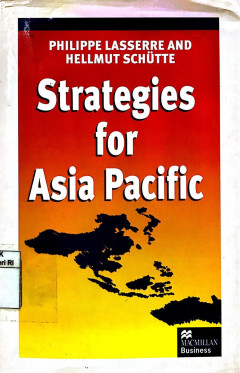
Strategies for Asia Pacific
Strategies for Asia Pacific has established itself as the leading book on strategic analysis related to firms, markets, business cultures and logic in the Asia Pacific region. Recommended by The Economist as one of the five books on Asia that need to be read, this revised and updated edition will be essential reading for managers in Asia and companies doing business in Asia as well as students …
- Edisi
- -
- ISBN/ISSN
- 0-333-65318-1
- Deskripsi Fisik
- xix, 315 pages : illustration (black and white) : index ; 24 cm.
- Judul Seri
- -
- No. Panggil
- 338.099599 Las s

Searching for peace in Asia Pacific : an overview of conflict prevention and …
This book is one of the major outcomes of the Searching for Peace in Asia Pacific project of the European Centre for Conflict Prevention (ECCP). Numerous individuals and organizations from the Asia Pacific region, Europe. the United States, and Canada provided their advice, insights, and support in shaping the project, participated in workshops and seminars, gave feedback on draft texts, contri…
- Edisi
- -
- ISBN/ISSN
- 1-58826-239-1
- Deskripsi Fisik
- xvi, 848 pages : index ; 24 cm
- Judul Seri
- -
- No. Panggil
- 320.9509049 Hei t
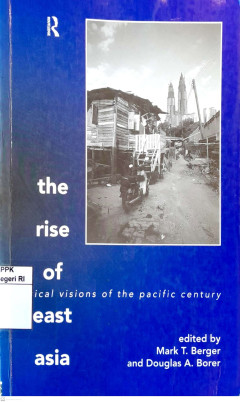
The rise of East Asia: Critical visions of the Pacific century
The rise of East Asia has proceeded dramatically since the 1970s and the economic strength of Japan, South Korea and Taiwan is well established. By the 1980s industrialization was well under way in Thailand, Malaysia, Indonesia and China's coastal provinces. Now the governments of the Philippines, Vietnam and even India are attempting to follow the East Asian model, while the people of Australi…
- Edisi
- -
- ISBN/ISSN
- 0-415-16168-1
- Deskripsi Fisik
- xi, 308 pages : index ; 24cm
- Judul Seri
- -
- No. Panggil
- 320.950 Ber r
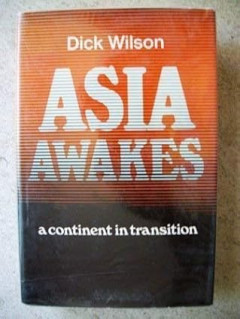
Asia awakes: A continent in transition
During the ascendency of European colonial power, the single word "Asia" was casually employed to encompass the vast area stretching from Pakistan to Japan, from Mongolia to Borneo. Only recently has the Western mind begun to comprehend the myriad variations in culture, religion, race, and political structure that exist within Asia, and their sharp differences in approaching the universal chall…
- Edisi
- -
- ISBN/ISSN
- -
- Deskripsi Fisik
- 460 pages : illustrations : index ; 22 cm
- Judul Seri
- -
- No. Panggil
- 320.95 Wil a

Ageing and long-term care: National policies in the Asia-Pacific
The case studies in this book focus on the emergence, extent and nature of national policies on ageing and associated strategies to address long-term care needs. Key opportunities for and constraints on policy are identified in this first round of regional studies, written by prominent researchers in Hong Kong, Korea, Malaysia, Singapore and Thailand, who are partners in the Ageing Research Net…
- Edisi
- -
- ISBN/ISSN
- 981-230-173-9
- Deskripsi Fisik
- xvii, 242 pages : illustration (black and white) : index ; 21 cm.
- Judul Seri
- -
- No. Panggil
- 320.95 Phi a
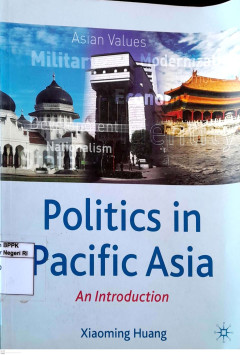
Politics in Pacific Asia: An introduction
This lively and accessible new text provides a uniquely broad-ranging Introduction to the governance and politics of Pacific Asia. Thematically structured around the key institutions and issues, it is genuinely comparative in its approach to the whole region. A range of representative countries (China, Japan, South Korea, Taiwan, Singapore, Malaysia, Thailand, Indonesia, Vietnam and the Philipp…
- Edisi
- -
- ISBN/ISSN
- 978-0-230-52178-3
- Deskripsi Fisik
- 272 pages ; 24 cm
- Judul Seri
- -
- No. Panggil
- 320.95 Hua p
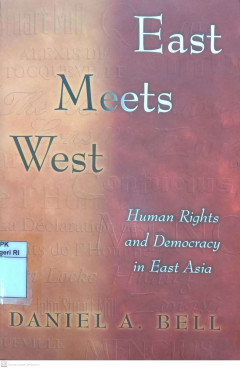
East meets west: Human rights and democracy in east Asia
Is liberal democracy a universal ideal? Proponents of "Asian values" argue that it is a distinctive product of the Western experience and that Western powers shouldn't try to push human rights and democracy onto Asian states. Liberal democrats in the West typically counter by questioning the motives of Asian critics, arguing that Asian leaders are merely trying to rationalize human rights viola…
- Edisi
- -
- ISBN/ISSN
- 0-691-00508-7
- Deskripsi Fisik
- xii, 369 pages : index ; 24 cm
- Judul Seri
- -
- No. Panggil
- 320.95 Bel e
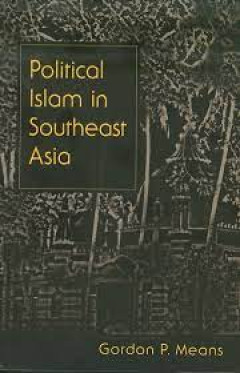
Political Islam in Southeast Asia
Gordon Means traces the evolution of Islamic politics in Southeast Asia, ranging from the early arrival of Islam in the region to the challenges it generates, and faces, today. Means's analysis encompasses the events and actions shaping Islamic politics, as well as the impact of Islamic politics on government and public policy outcomes.
- Edisi
- -
- ISBN/ISSN
- 978-1-58826-678-1
- Deskripsi Fisik
- xii, 444 pages : bibliography, index ; 23 cm
- Judul Seri
- -
- No. Panggil
- 320.5570959 Mea p
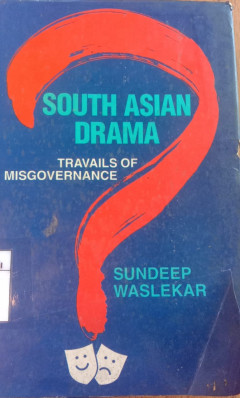
South Asian drama: Travails of misgovernance
Misgovernance is the fundamental problem of South Asia. Time and time again the people of this region have seen a new dawn break only to be disappointed long before breakfast. Independence itself, the overthrow of military dictators like Ayub Khan, Zia-ul-Haq, and General Ershad, the end of Indira Gandhi's Emergency, the curtailing of monarchical power in Nepal, how many more times will democra…
- Edisi
- -
- ISBN/ISSN
- 81-220-0416-4
- Deskripsi Fisik
- xi, 372 pages : index ; 23 cm
- Judul Seri
- -
- No. Panggil
- 320.54 Was s

George Yeo on Bonsai, Banyan, and the Tao
This book is a collection of my past speeches and writings. They are jointly selected by Asad Latif and Lee Huay Leng for the English and Chinese versions of the book in consultation with me. Dr Phua Kok Khoo, Founder and Chairman of World Scientific had repeatedly persuaded me to write a book about my views on politics and culture since my time in the Foreign Ministry
- Edisi
- -
- ISBN/ISSN
- 9789814520508
- Deskripsi Fisik
- xxxix, 686 pages : index ; 23 cm
- Judul Seri
- -
- No. Panggil
- 320.45957 Lat g
 Karya Umum
  Filsafat
  Agama
Agama  Ilmu-ilmu Sosial
  Bahasa
  Ilmu-ilmu Murni
  Ilmu-ilmu Terapan
  Kesenian, Hiburan, dan Olahraga
  Kesusastraan
  Geografi dan Sejarah