Ditapis dengan

Histoire des classes sociales dans l'Afrique de l'Ouest II le Senegal
Majhemout Diop's book, *Histoire des Classes Sociales dans l’Afrique de l’Ouest. II: Le Sénégal*, is an in-depth sociological study of the development of social classes in Senegal. Using a historical and empirical approach, Diop traces the changing structure of Senegalese society from pre-colonial, colonial, and modern times. The book examines elite formation, the dynamics of interclass r…
- Edisi
- -
- ISBN/ISSN
- 2-85802-625-1
- Deskripsi Fisik
- 277 pages; 22 cm
- Judul Seri
- -
- No. Panggil
- 966.3 DIO h
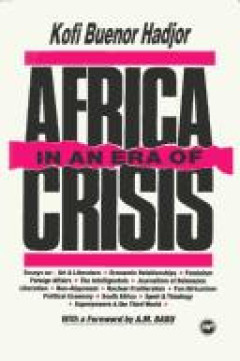
Africa in an era of crisis
Kofi Buenor Hadjor's Africa in an Era of Crisis examines the multidimensional crises facing Africa at the end of the 20th century, encompassing economic decline, political pressure, internal conflict, and development challenges. Hadjor outlines how global intervention, international economic policies, and domestic political dynamics contributed to the crisis situations in various African countr…
- Edisi
- -
- ISBN/ISSN
- 0-86543-150-7
- Deskripsi Fisik
- iii, 226 pages;23 cm
- Judul Seri
- -
- No. Panggil
- 960.328 HAD a
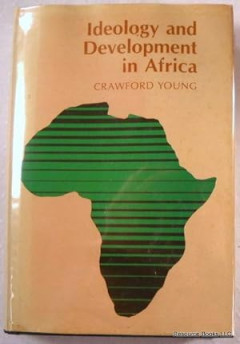
Ideology development in Africa
Crawford Young's Ideology and Development in Africa examines the relationship between political ideology and development processes in post-independence African countries. The book examines how various ideological strands—nationalism, African socialism, state capitalism, and single-party systems—influenced the economic and political policies of African countries. Young examines the successes…
- Edisi
- -
- ISBN/ISSN
- 0-300-03096-7
- Deskripsi Fisik
- xi, 376 pages; 21 cm
- Judul Seri
- -
- No. Panggil
- 960.32 YOU i

The Fate of Africa: From the hopes of freedom to the heart of despair — A H…
Martin Meredith's The Fate of Africa presents a comprehensive history of the fifty-year journey of African nations since gaining independence. The book depicts the early hopes of independence, the various political conflicts, economic challenges, civil wars, dictatorships, and the social dynamics that have shaped modern Africa. Using a journalistic approach and in-depth historical research, Mer…
- Edisi
- -
- ISBN/ISSN
- 1-58648-246-7
- Deskripsi Fisik
- vi, 752 pages : illustration ; 23,5 cm
- Judul Seri
- -
- No. Panggil
- 960.32 MER f

Et demain l'Afrique
This book presents Edem Kodjo’s visionary analysis of Africa’s future within its political, economic, and social context. Kodjo outlines the major challenges facing the continent and offers strategic perspectives for advancing Africa in the modern era. It serves as an essential reference in the study of African geopolitics, development, and international relations.
- Edisi
- -
- ISBN/ISSN
- 2-234-01791-2
- Deskripsi Fisik
- 366 pages; 24 cm
- Judul Seri
- -
- No. Panggil
- 960 KOD e
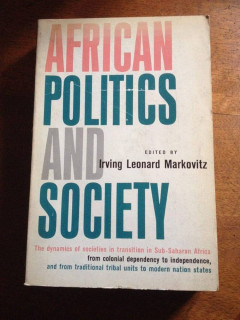
African politics and society
This book examines fundamental issues in African politics and society, including issues of government structure, development processes, social change, and the challenges facing postcolonial African states. Irving L. Markovitz analyzes the internal and external factors influencing African political dynamics and illustrates the complex relationships between the state, society, economy, and modern…
- Edisi
- -
- ISBN/ISSN
- -
- Deskripsi Fisik
- xvi, 485 pages ; 23,5 cm
- Judul Seri
- -
- No. Panggil
- 960 MAR a
The New Africa
This book depicts the profound changes that occurred in Africa in the mid-20th century, as the continent's countries entered a new post-colonial era. Through photographs and travelogues compiled by Ellen and Attilio Gatti, the book presents a portrait of the people, culture, daily life, and social dynamics of modern Africa. This work provides a firsthand perspective on Africa's transformation i…
- Edisi
- -
- ISBN/ISSN
- -
- Deskripsi Fisik
- 213 pages; 24 cm
- Judul Seri
- -
- No. Panggil
- 960 GAT n

The Third world
This book provides a comprehensive analysis of the political, social, and economic conditions that shape what has historically been known as the “Third World.” Peter Worsley examines the origins of the term, the legacy of colonialism, and the structural inequalities that affect developing countries. Through a multidisciplinary approach, the book explores issues such as poverty, modernizatio…
- Edisi
- -
- ISBN/ISSN
- 0-297-76197-8
- Deskripsi Fisik
- xvi, 373 pages ; 21,5 cm
- Judul Seri
- -
- No. Panggil
- 320.91724 WOR t

Five African states: Responses to diversity
This book examines the political, social, and ethnic dynamics of five African countries at the beginning of independence: Congo, Dahomey, the Federal Republic of Cameroon, Rhodesia and Nyasaland, and South Africa. Through expert analysis, the book explains how ethnic diversity, colonialism, and governmental structures influenced political stability and societal development in each country. This…
- Edisi
- -
- ISBN/ISSN
- -
- Deskripsi Fisik
- xiv, 643 pages : illustration ; 24 cm
- Judul Seri
- -
- No. Panggil
- 320.96 CAR f
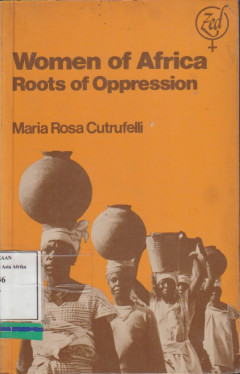
Women of Africa: Roots of oppression
Maria Rosa Cutrufelli's book, Women of Africa: Roots of Oppression, explores the various forms of oppression experienced by African women, stemming from traditional structures, the legacy of colonialism, and modern economic systems. Cutrufelli highlights how gender inequality, patriarchal power, economic exploitation, and political conflict shape women's lives across Africa. Using a historical …
- Edisi
- -
- ISBN/ISSN
- -
- Deskripsi Fisik
- 186 pages ; 21,5 cm
- Judul Seri
- -
- No. Panggil
- 305.42 CUT w
 Karya Umum
  Filsafat
  Agama
Agama  Ilmu-ilmu Sosial
  Bahasa
  Ilmu-ilmu Murni
  Ilmu-ilmu Terapan
  Kesenian, Hiburan, dan Olahraga
  Kesusastraan
  Geografi dan Sejarah