Ditapis dengan

A History of political thought in the sixteenth century
This classic study by J. W. Allen examines the evolution of political thought in sixteenth-century Europe, a period marked by the Renaissance, the Reformation, and profound social and political transformation. The book explores major political theorists, their ideas, and the intellectual contexts that shaped debates about authority, the state, sovereignty, and religion. Allen provides detailed …
- Edisi
- -
- ISBN/ISSN
- -
- Deskripsi Fisik
- xxii, 527 pages ; 20,5 cm
- Judul Seri
- -
- No. Panggil
- 940.23 ALL h

A History of Europe from 911 to 1198
This book by Z. N. Brooke provides a detailed account of European history from 911 to 1198, a formative period in the development of medieval Europe. It examines political, social, and religious transformations, including the rise of monarchies, the influence of the Church, the growth of feudal institutions, and the shaping of medieval society. The narrative offers insight into major events and…
- Edisi
- -
- ISBN/ISSN
- -
- Deskripsi Fisik
- xx, 553 pages : illustration ; 22 cm
- Judul Seri
- -
- No. Panggil
- 940.12 BRO h
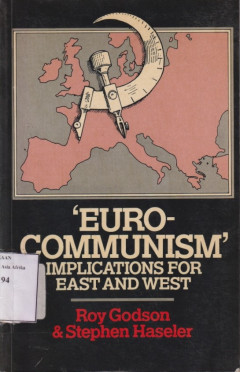
‘Eurocommunism’: Implications for east and west
Eurocommunism’: Implications for East and West examines the rise of Eurocommunist movements across Western Europe and their political significance during the late 20th century. Written by Roy Godson and Stephen Haseler, the book analyzes the ideological evolution of Eurocommunist parties, their relations with the Soviet Union, their influence on domestic politics, and the implications for Eas…
- Edisi
- -
- ISBN/ISSN
- 0-333-25677-8
- Deskripsi Fisik
- ix, 144 pages ; 21,5 cm
- Judul Seri
- -
- No. Panggil
- 329.02094 GOD e
The East European revolution
The East European Revolution by Hugh Seton-Watson provides an authoritative analysis of the political and social transformations that reshaped Eastern Europe after World War II. The book examines the rise of communist governments, the role of the Soviet Union in restructuring regional politics, the collapse of prewar institutions, and the emergence of new revolutionary elites. Seton-Watson offe…
- Edisi
- -
- ISBN/ISSN
- -
- Deskripsi Fisik
- xix, 435 pages : illustration ; 22 cm
- Judul Seri
- -
- No. Panggil
- 947 WAT e

The Unfinished revolution: Making sense of the communist past in Central-East…
The Unfinished Revolution by James Mark examines how Central and Eastern European societies have understood, negotiated, and remembered their communist past since the revolutions of 1989. Through comparative case studies, the book explores the social, political, and cultural transformations that shaped post-communist identity. Mark analyzes themes such as collective memory, political justice, d…
- Edisi
- -
- ISBN/ISSN
- 978-0-300-16716-0
- Deskripsi Fisik
- xxviii, 312 pages : illustration ; 24 cm
- Judul Seri
- -
- No. Panggil
- 943.705 MAR u

The Road to terror: Stalin and the self-destruction of the Bolsheviks, 1932 
The Road to Terror presents a comprehensive documentary record of Stalin’s Great Purges, revealing how the Bolshevik leadership descended into political paranoia and internal destruction between 1932 and 1939. Drawn from previously inaccessible Soviet archives, the book exposes the mechanisms of repression, the psychological climate of fear, and the bureaucratic processes that facilitated mas…
- Edisi
- -
- ISBN/ISSN
- 978-0-300-10407-3
- Deskripsi Fisik
- xv, 287 pages ; 23,5 cm
- Judul Seri
- -
- No. Panggil
- 947.0842 GET r
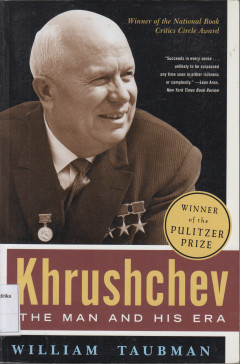
Khrushchev: The Man and His era
This Pulitzer Prize–winning biography offers an extensive and deeply researched portrait of Nikita Khrushchev, one of the most pivotal leaders of the Soviet Union. William Taubman reconstructs Khrushchev’s life—from his rise through the Communist Party under Stalin, to his surprising emergence as premier, and his attempts to reform the Soviet system while managing the dangers of the Cold …
- Edisi
- -
- ISBN/ISSN
- 978-0-393-05279-5
- Deskripsi Fisik
- xx, 871 pages : illustrations ; 23,5 cm
- Judul Seri
- -
- No. Panggil
- 947.084092 TAU k

Hostage in Peking
This book is a firsthand account of Anthony Grey, a Reuters correspondent who was held as a political hostage by the People's Republic of China government for two years (1967–1969) during the Cultural Revolution. Through personal narrative, Grey describes his experiences of detention, the psychological pressures, his interactions with local authorities, and the political and social situation …
- Edisi
- -
- ISBN/ISSN
- 0–297–79503–1
- Deskripsi Fisik
- 343 pages : illustration ; 21,5 cm
- Judul Seri
- -
- No. Panggil
- 365.450924 GRE h

Sino-Soviet crisis politics: A Study of political change and communication
Richard Wich's Sino-Soviet Crisis Politics is an in-depth study of the political dynamics and communication between the People's Republic of China and the Soviet Union during a period of heightened ideological and strategic tensions during the Cold War. Through analysis of archives, political statements, and communication patterns between the two countries, Wich outlines how the crisis and conf…
- Edisi
- -
- ISBN/ISSN
- 0-674-80935-1
- Deskripsi Fisik
- 313 pages ; 23,5 cm
- Judul Seri
- -
- No. Panggil
- 327.51047 WIC s
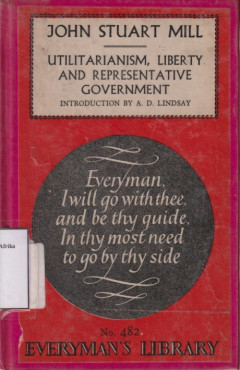
Utilitarianism; Liberty; Representative government
This book contains three major works by John Stuart Mill that form the foundation of modern ethical and political thought. Utilitarianism discusses the greatest good and the basis of universal morality. On Liberty explores the limits of state power over individuals and the importance of freedom of thought and expression. Representative Government outlines Mill's theory of the ideal form of gove…
- Edisi
- -
- ISBN/ISSN
- -
- Deskripsi Fisik
- xxviii, 397 pages ; 18 cm
- Judul Seri
- -
- No. Panggil
- 171.5 MIL u
 Karya Umum
  Filsafat
  Agama
Agama  Ilmu-ilmu Sosial
  Bahasa
  Ilmu-ilmu Murni
  Ilmu-ilmu Terapan
  Kesenian, Hiburan, dan Olahraga
  Kesusastraan
  Geografi dan Sejarah