Ditapis dengan
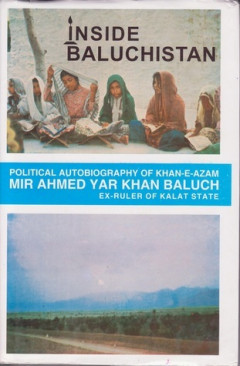
Inside Baluchistan: Political autobiography of Khan-E-Azam
Inside Baluchistan: Political Autobiography of Khan-e-Azam is a political account and personal experience of Mir Ahmad Yar Khan Baluch, a prominent figure and the last ruler of the state of Kalat before its integration into Pakistan. In this autobiography, the author reveals the political dynamics of Baluchistan during the transitional period leading up to and following Pakistan's independence …
- Edisi
- -
- ISBN/ISSN
- -
- Deskripsi Fisik
- xx, 352 pages: illustration; 24 cm
- Judul Seri
- -
- No. Panggil
- 923.254 BAL i
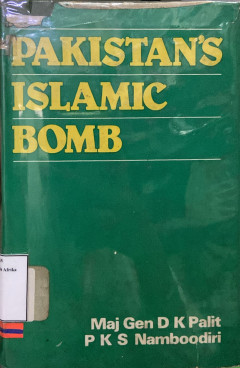
Pakistan's islamic bomb
Pakistan's Islamic Bomb deeply analyzes Pakistan's efforts to develop nuclear capabilities in the 1970s, particularly after its defeat in the 1971 war and the loss of Bangladesh. Palit and Namboodiri outline the geopolitical background, strategic competition with India, and the internal political dynamics that led to the development of this nuclear program. With a strong analytical approach, th…
- Edisi
- -
- ISBN/ISSN
- 0-7069-0911-9
- Deskripsi Fisik
- xii, 150 pages; 22 cm
- Judul Seri
- -
- No. Panggil
- 2X9.6 PAL p
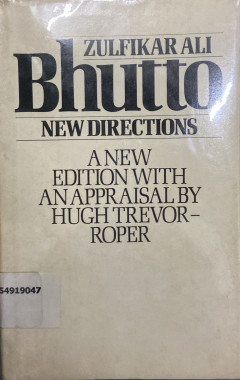
New directions
New Directions is a compilation of the political thoughts and state vision of Zulfikar Ali Bhutto, one of the most influential figures in modern Pakistani political history. In this work, Bhutto outlines his ideas on a new direction for national development, democratic reform, social justice, and Pakistan's role in the international geopolitical order. Through incisive analysis and compelling a…
- Edisi
- -
- ISBN/ISSN
- -
- Deskripsi Fisik
- 144 pages; 22 cm
- Judul Seri
- -
- No. Panggil
- 320.954 BHU n
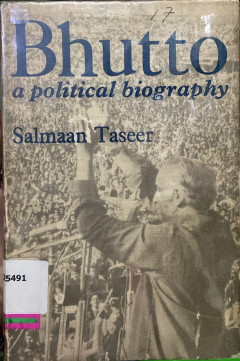
Bhutto: A Political biography
Salmaan Taseer's Bhutto: A Political Biography presents the life and political journey of Zulfikar Ali Bhutto, one of the most influential figures in modern Pakistani history. The book examines his childhood, education, the formation of his political views, and his role in government and national politics. Through an analysis of key events and Bhutto's role in shaping the nation's direction, th…
- Edisi
- -
- ISBN/ISSN
- 0-903729-48-2
- Deskripsi Fisik
- 208 pages: illusttation; 22 cm
- Judul Seri
- -
- No. Panggil
- 923.254 TAS b
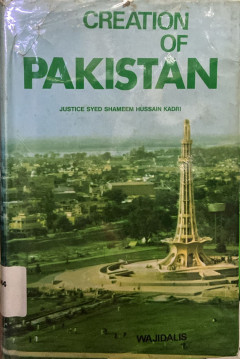
Creation of Pakistan
Justice Syed Shameem Hussain Kadri's book, Creation of Pakistan, examines the historical process, political dynamics, and social conditions that led to the formation of Pakistan in 1947. The author highlights the political struggle of Muslims in the Indian subcontinent, the roles of key figures, and the significant events that influenced the birth of the nation. Using a historical and analytica…
- Edisi
- -
- ISBN/ISSN
- -
- Deskripsi Fisik
- xviii, 521 pages: illustration; 23 cm
- Judul Seri
- -
- No. Panggil
- 954.91 KAD c
War and diplomacy in Kashmir, 1947-48
Kashmir is arguably one of the most contentious and complex issues in South Asia today. This book focuses on the genesis of the problem and examines the consequences of the often ignored fact that British officers commanded the armed forces of both India and Pakistan at that time.
- Edisi
- -
- ISBN/ISSN
- 0-7619-9589-7
- Deskripsi Fisik
- 219 pages; 21 cm
- Judul Seri
- -
- No. Panggil
- 954.6042 DAS w
Pakistan: The Enigma of political development
Originally published in 1980. Pakistan is worthy of our concern. Noble intentions breathed life into the Pakistan dream, but the country has been stalked by tragedy from its inception. This volume was conceived to serve a variety of reader categories and it should meet the needs of teachers and students engaged in the study of Pakistan.
- Edisi
- -
- ISBN/ISSN
- 0-7129-0954-0
- Deskripsi Fisik
- 294 pages: 23 cm
- Judul Seri
- -
- No. Panggil
- 320.954 ZIR p
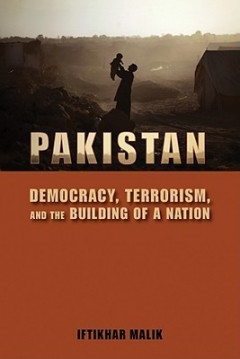
Pakistan: Democracy, terrorism and the building of a nation
In August 2008, Pervez Musharraf stood down as Pakistan's president after having already resigned the posts of Chief of Army Staff and Prime Minister. It was a final end to a dictorial rule that started when he seized power in a military coup in 1999, and seemed to many to be the inevitable conclusion to a government that had started in idealism but had ended in corruption - another example of …
- Edisi
- -
- ISBN/ISSN
- 978-1-56656-816-6
- Deskripsi Fisik
- 211 pages; 23 cm
- Judul Seri
- -
- No. Panggil
- 954.91 MAL p

Foundations of Pakistan: All India muslim league documents: 1906-1947
Foundations of Pakistan: All-India Muslim League Documents, 1906–1947 is a comprehensive collection of primary documents chronicling the political journey of the Muslim movement in the Indian subcontinent prior to the founding of Pakistan. Compiled by Syed Sharifuddin Pirzada, the book chronicles resolutions, speeches, correspondence, meeting minutes, and key decisions of the All-India Muslim…
- Edisi
- -
- ISBN/ISSN
- -
- Deskripsi Fisik
- lxxiv, 605 pages: 25 cm
- Judul Seri
- -
- No. Panggil
- 954.9 PIR f
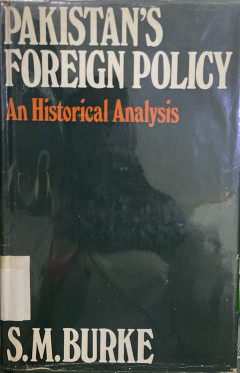
Pakistan's foreign policy
S. M. Burke's Pakistan's Foreign Policy provides an in-depth analysis of the dynamics, orientation, and evolution of Pakistan's foreign policy since its founding in 1947. Burke explores the historical, geopolitical, and ideological factors that shaped Pakistan's relations with major powers, including the United States, India, China, and the Soviet Union. The book also examines internal challeng…
- Edisi
- -
- ISBN/ISSN
- -
- Deskripsi Fisik
- ix, 432 pages: 25 cm
- Judul Seri
- -
- No. Panggil
- 327.5491 BUR p
 Karya Umum
  Filsafat
  Agama
Agama  Ilmu-ilmu Sosial
  Bahasa
  Ilmu-ilmu Murni
  Ilmu-ilmu Terapan
  Kesenian, Hiburan, dan Olahraga
  Kesusastraan
  Geografi dan Sejarah