Ditapis dengan

APEC as an institution: Multilateral governance in the Asia-Pacific
APEC is an experimental multilateralism, relying not on a large bureaucracy but rather upon national government agencies, semi-autonomous inter-govermental committees and "virtual" associations. Organized around the principles of enforced through monitoring and robust compliance mechanisms. This volume assesses the strengths and weaknesses of APEC's "soft" institutionalism, and it's the credibi…
- Edisi
- -
- ISBN/ISSN
- 981-230-209-3
- Deskripsi Fisik
- xvi, 275 pages ; 23 cm
- Judul Seri
- -
- No. Panggil
- 337.1 Fei a
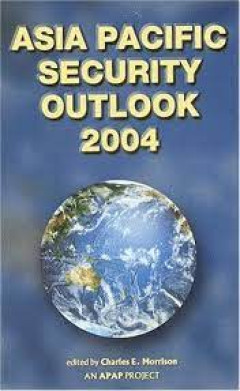
Asia Pacific security outlook 2004
The book includes two topical chapters discussing the North Korean crisis and terrorism in Southeast Asia as well as a general South Asia paper. Also presents country perspectives from ASEAN Regional Forum (ARF) member countries, based on background papers written in almost all cases by nationals of the countries concerned. The aim is to increase understanding of each other's viewpoints among s…
- Edisi
- -
- ISBN/ISSN
- 4889070702
- Deskripsi Fisik
- 219 pages ; 23 cm
- Judul Seri
- -
- No. Panggil
- 341.7 Mor a
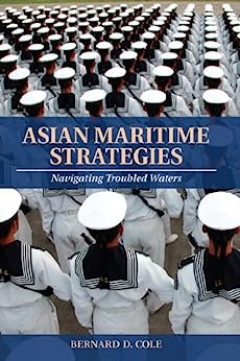
Asian maritime strategies: Navigating troubled waters
Asian Maritime Strategies explores one of the world's most complex and dangerous maritime arenas. Asia, stretching from the Aleutian Islands to the Persian Gulf, contains the world's busiest trade routes. It is also the scene of numerous maritime territorial disputes, pirate attacks, and terrorist threats. In response, the nations of the region are engaged in a nascent naval arms race. In t…
- Edisi
- First Printing
- ISBN/ISSN
- 978-1-59114-162-4
- Deskripsi Fisik
- xiv, 304 pages : 25 cm.
- Judul Seri
- -
- No. Panggil
- 359. 03095 Col a

Tigers: Leaders of the new Asia-Pasific
This is a book about leaders and leadership, in particular the leaders of the Asia-Pacific. It is based around inter- views I have had with all the leaders profiled here except President Suharto of Indonesia, President Clinton of the United States, and President Lee Teng-hui of Taiwan. With all the other leaders I have had at least one, and mostly several, interviews in the course of covering t…
- Edisi
- Cet. 1
- ISBN/ISSN
- 1864481536
- Deskripsi Fisik
- xviii, 326 pages : index ; 23 cm
- Judul Seri
- -
- No. Panggil
- 351.003109225 She t
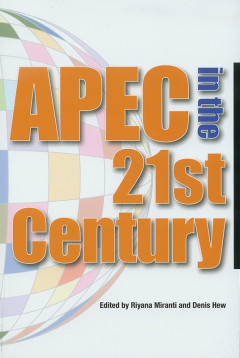
APEC in the 21st century
APEC is a unique organization that promotes economic cooperation in the Asia-Pacific region. It remains an informal intergovernmental organization that provides a useful platform for leaders, ministers, businessmen and experts to discuss regional issues on a regular basis. This book examines APECs accomplishments in recent years and the challenges it faces in the new century. These challenges i…
- Edisi
- -
- ISBN/ISSN
- 981-230-253-0
- Deskripsi Fisik
- xi, 302 pages ; 23 cm.
- Judul Seri
- -
- No. Panggil
- 382.095 Mir a

The Asian-Pacific community in the year 2000: Challenges and prospects
This volume contains papers compiled during an in-depth study on the region conducted by the Sejong Institute in the spring of 1991. The chapters in this volume offer a birds-eye view of on-going and potential developments in regional security, intra-regional trade and technology transfers, recent political developments and new pressures on alliance management requirements, the prospect for eco…
- Edisi
- -
- ISBN/ISSN
- -
- Deskripsi Fisik
- xi, 573 pages ; 23 cm
- Judul Seri
- -
- No. Panggil
- 327.05 Chu a

Japan, the United States, and prospects for the Asia-Pasific century: Three s…
This book provides a framework for considering the ramifications of Japan's expanding role and influence in the Asia-Pacific region. It documents Japan's emergence as the regional "core economy"; reviews the factors that may influence Tokyo's future political and military role; poses alternative scenarios for the evolving Asia-Pacific economic, political and security order; analyses the factors…
- Edisi
- -
- ISBN/ISSN
- 981-3016-22-1
- Deskripsi Fisik
- xiv, 155 pages : ilustrasi ; 23 cm
- Judul Seri
- -
- No. Panggil
- 327.52 Cro j

Intervention and state-building in the Pacific: The legitimacy of 'cooperativ…
Built on declared principles of partnership and respect for sovereignty, and successful in gaining legitimacy in the international community, the new model seems to offer a legitimate way to engage in state-building intervention. The book mounts a critique of these claims, showing how international legitimacy does not automatically translate into political legitimacy among those in the affected…
- Edisi
- First published
- ISBN/ISSN
- 9780719076831
- Deskripsi Fisik
- xvi, 246 pages ; 24 cm
- Judul Seri
- -
- No. Panggil
- 327.091823 Fry i

The role of security and economic cooperation structures in the Asia Pacific …
On 12 November 1995 CSIS in conjunction with Australian Defence Studies Centre (ADSC), Canberra organised a workshop on "Potential Linkages between Economic and Regional Security Fora". The papers presented at the workshop have been edited and compiled in this volume entitled The Role of Security and Economic Cooperation Structures in the Asia Pacific Region Indonesian and Australian Views This…
- Edisi
- -
- ISBN/ISSN
- 979-8026-42-X
- Deskripsi Fisik
- vi, 168 pages ; 25 cm
- Judul Seri
- -
- No. Panggil
- 341.720 918 23 Soe r
Asia Pacific after the Cold War
This book, entitled Asia Pacific after the cold war, presents a complication of papers written by Jusuf Wanandi from 1989 to 1996. Of the papers compiled, some were presented at conferences, seminars as well as at workshops in various countries, and the others are revised articles already published in newspapers and journals.
- Edisi
- -
- ISBN/ISSN
- 979-8026-48-9
- Deskripsi Fisik
- vi, 245 pages ; 25 cm
- Judul Seri
- -
- No. Panggil
- 327.116 Wan a
 Karya Umum
  Filsafat
  Agama
Agama  Ilmu-ilmu Sosial
  Bahasa
  Ilmu-ilmu Murni
  Ilmu-ilmu Terapan
  Kesenian, Hiburan, dan Olahraga
  Kesusastraan
  Geografi dan Sejarah