Ditapis dengan
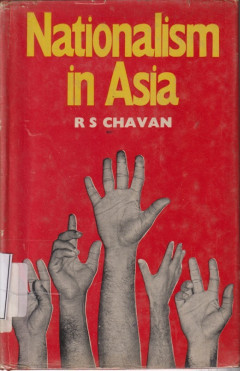
Nationalism in Asia
This book provides an analytical overview of the rise and development of nationalism in various regions of Asia. R. S. Chavan examines the historical roots, political dynamics, and socio-cultural forces that shaped nationalist movements across the continent. The work highlights key events, ideological influences, and regional variations that contributed to the formation of modern Asian nation-s…
- Edisi
- -
- ISBN/ISSN
- 0-7069-0608-X
- Deskripsi Fisik
- xvi, 595 pages ; 22 cm
- Judul Seri
- -
- No. Panggil
- 320.54095 CHA n
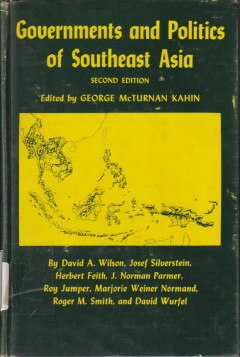
Governments and politics of Southeast Asia
This volume offers a comprehensive examination of the political systems and governmental structures of Southeast Asian nations during the mid-twentieth century. Edited by George McTurnan Kahin, the book brings together contributions from leading scholars who analyze historical foundations, political change, institutional development, and regional dynamics across Southeast Asia. Through country-…
- Edisi
- -
- ISBN/ISSN
- -
- Deskripsi Fisik
- xvii, 796 pages : illustration ; 24 cm
- Judul Seri
- -
- No. Panggil
- 320.959 KAH g

The Troubled region: Issues of peace and development in Southeast Asia
This volume examines key political, economic, and social issues affecting Southeast Asia in the post-1945 period. Edited by Parimal Kumar Das, the book compiles scholarly contributions that analyze peace efforts, development challenges, regional security concerns, and socioeconomic transitions across various Southeast Asian nations. By presenting diverse perspectives from researchers and practi…
- Edisi
- -
- ISBN/ISSN
- 81-7036-074-9
- Deskripsi Fisik
- 330 pages : illustrations ; 22,5 cm
- Judul Seri
- -
- No. Panggil
- 959.053 DAS t

Southeast Asia and the world of tomorrow
“This publication discusses the political, economic, and strategic challenges facing Southeast Asia and explores possible future developments for the region. Produced by the Centre for Strategic and International Studies (CSIS) Jakarta, the work outlines regional dynamics, international alignments, and prospects for Southeast Asia’s role in global affairs. It reflects early scholarly assess…
- Edisi
- -
- ISBN/ISSN
- -
- Deskripsi Fisik
- xi, 406 pages ; 21,5 cm
- Judul Seri
- -
- No. Panggil
- 327.59 CEN s
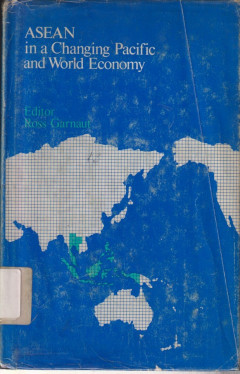
ASEAN in a changing pacific and world economy
This edited volume analyzes the role of ASEAN within a rapidly changing Pacific and global economic environment. The contributors examine the external economic relations of Southeast Asian nations, the development of regional industries, and the broader impact of international economic trends on ASEAN member states. The book discusses shifts in global trade patterns, resource-based industries, …
- Edisi
- -
- ISBN/ISSN
- 0-7081-1304-4
- Deskripsi Fisik
- xxiii, 557 pages ; 24,5 cm
- Judul Seri
- -
- No. Panggil
- 337.59 GAR a
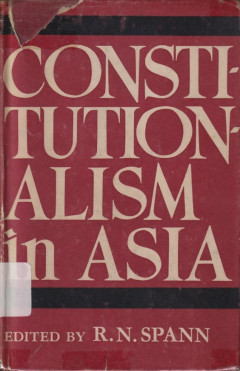
Constitutionalism in Asia
This volume explores the development of constitutionalism across various Asian countries during the post-colonial period. Edited by R. N. Spann, the book examines the formation of modern constitutions, institutional structures, and political systems in Asia. Contributors discuss the challenges faced by newly independent states, including nation-building, governance, legal reform, and the adapta…
- Edisi
- -
- ISBN/ISSN
- -
- Deskripsi Fisik
- xii, 249 pages ; 22 cm
- Judul Seri
- -
- No. Panggil
- 342.5 SPA c

International politics since world war II: A Short history
International Politics Since World War II: A Short History provides a concise yet comprehensive overview of major political developments in the international system following the end of World War II. Charles L. Robertson analyzes the global balance of power, the emergence of the Cold War, decolonization, and the evolution of international institutions. The book highlights key political actors, …
- Edisi
- -
- ISBN/ISSN
- 0-471-72744-X
- Deskripsi Fisik
- xiii, 465 pages ; 22,5 cm
- Judul Seri
- -
- No. Panggil
- 327.0904 CHA i
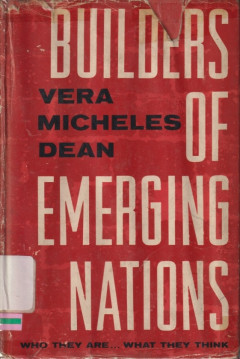
Builders of emerging nations
This book presents a series of biographical and analytical portraits of influential leaders who shaped the political development of emerging nations in the mid-20th century. Vera Micheles Dean examines their roles in nation-building, their political challenges, and the social transformations that accompanied the rise of newly independent states. Through insightful commentary, the work highlight…
- Edisi
- -
- ISBN/ISSN
- 81783-0111
- Deskripsi Fisik
- x, 277 pages : illustration ; 21,5 cm
- Judul Seri
- -
- No. Panggil
- 320.9 DEA b

The Economic impact on under-developed societies: Essays on international inv…
This book contains a collection of essays by S. Herbert Frankel that examine the relationship between international investment, social change, and economic development in underdeveloped countries. Frankel examines how foreign capital influences social structure, economic growth, and modernization in Asia, Africa, and Latin America. Through economic and social analysis, this book provides a deep…
- Edisi
- -
- ISBN/ISSN
- -
- Deskripsi Fisik
- 179 pages : illustrations ; 23 cm
- Judul Seri
- -
- No. Panggil
- 338.91 FRA e

A History of Australia, Volume V
Volume V of C. M. H. Clark’s seminal series traces the political, legal, and social transformation of Australia between 1888 and 1915. In this period, Australians increasingly shaped their own laws, institutions, and national identity. Clark examines the debates surrounding federation, the rise of organized labour, democratic reforms, and the tensions between conservative and progressive visi…
- Edisi
- 5
- ISBN/ISSN
- 0-522-84223-2
- Deskripsi Fisik
- xv, 448 pages : illustration ; 24 cm
- Judul Seri
- -
- No. Panggil
- 994.03 CLA h
 Karya Umum
 Filsafat
 Agama
 Ilmu-ilmu Sosial
 Bahasa
 Ilmu-ilmu Murni
 Ilmu-ilmu Terapan
 Kesenian, Hiburan, dan Olahraga
 Kesusastraan
 Geografi dan Sejarah