Ditapis dengan

Malaysia : A Survey
This book presents a comprehensive survey of Malaysia from historical, social, economic, and political perspectives. In various chapters, Wang Gungwu and his contributors explore Malaysia's development from the pre-colonial period to the modern era, including ethnic dynamics, economic structures, and government institutions. The book also discusses societal transformation, the role of the state…
- Edisi
- -
- ISBN/ISSN
- -
- Deskripsi Fisik
- 465 pages ; 25 cm
- Judul Seri
- -
- No. Panggil
- 959.504 GUN m

Papers on Malay subjects
Papers on Malay Subjects is a collection of scientific essays and ethnographic reports published in the early 20th century to provide an in-depth overview of the social, cultural, historical, and legal aspects of Malay society. Edited by R. J. Wilkinson with several contributors such as Sir R. O. Winstedt, C. W. Harrison, G. E. Shaw, and J. Rigby, this work consists of four main volumes discuss…
- Edisi
- -
- ISBN/ISSN
- -
- Deskripsi Fisik
- viii, 468 pages ;25 cm
- Judul Seri
- -
- No. Panggil
- 959.5 BUR p
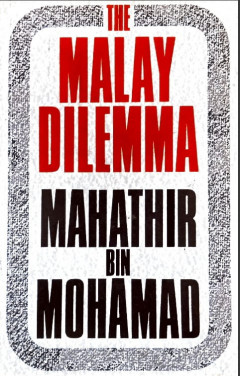
The Malay dilemma
Dr. Mahathir was born on December 20, 1925, in Alor Setar, Kedah. While still in school, he was involved in the campaign against the Malayan Union in 1945-1946. Using the pseudonym C.H.E. Det, he frequently wrote articles about the Malay people and politics for the Sunday Times newspaper between 1946 and 1950. He had long been a member of UMNO, but he only became famous in 1964 when he won a…
- Edisi
- -
- ISBN/ISSN
- -
- Deskripsi Fisik
- vi, 188 pages ; 21 cm
- Judul Seri
- -
- No. Panggil
- 959.5 MOH m
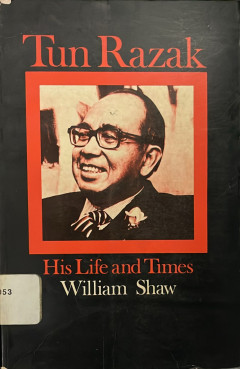
Tun Razak : His life and times
This book is a biography of Tun Abdul Razak, Malaysia's second Prime Minister, who died suddenly at the age of 53 in January 1976. Throughout his life, Razak dedicated himself to Malaysia's independence and the welfare of its people, serving as a technocrat since independence in 1957 and a key figure in education and rural development policy, which led to him winning the Magsaysay Award. After …
- Edisi
- -
- ISBN/ISSN
- -
- Deskripsi Fisik
- 267 pages : ilustrations ; 25 cm
- Judul Seri
- -
- No. Panggil
- 959.053 SHA t
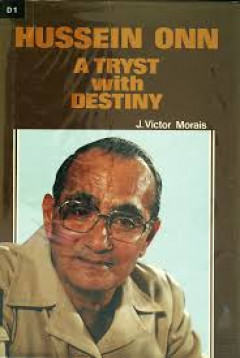
Hussein Onn : A Tryst with destiny
Datuk Hussein Onn, the Prime Minister of Malaysia, is now hailed in the ASEAN region as a political phenomenon- as one who has given a new dimension to the fine art of political democracy. Datuk Hussein has since he became Prime Minister, taken more cruel decisions than perhaps any other leader before him. In so doing, he has shown that he is motivated by the common good and the courage to stan…
- Edisi
- -
- ISBN/ISSN
- 9971-65-054-1
- Deskripsi Fisik
- xv, 224 pages : ilustrations ; 20 cm
- Judul Seri
- -
- No. Panggil
- 923.15951 MOR h

The Constitution of Malaysia : Its Development 1957-1977
Malaysia's first twenty-one years as an independent state have been characterized by stability and progress in the political. social and economic fields. Malaysia's constitution has undoubtedly contributed towards this stability and progress especially when its constitution is compared with those of many new countries of Africa and Asia over the period 1957 to 1977. This book reviews the develo…
- Edisi
- -
- ISBN/ISSN
- 0-19-580406-6
- Deskripsi Fisik
- xxiii, 425 pages : 30 cm
- Judul Seri
- -
- No. Panggil
- 342.595 SUF c
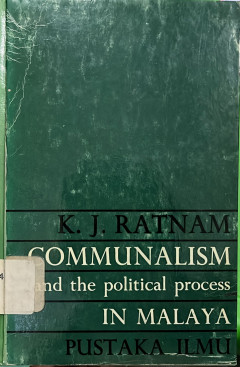
Communialism and the political process in Malaya
In this book, the author deals with the communal problem as it has existed in the Federation of Malaya since the Second World War, when the non-Malay population ceased to be transient and became a part of the settled community. Dr Ratnam has selected for discussion those topics and issues which form the basis of communal disagreement-the creation of Malayan citizenship, the introduction of ele…
- Edisi
- -
- ISBN/ISSN
- -
- Deskripsi Fisik
- viii, 248 pages ; 22 cm
- Judul Seri
- -
- No. Panggil
- 324.204 RAT c
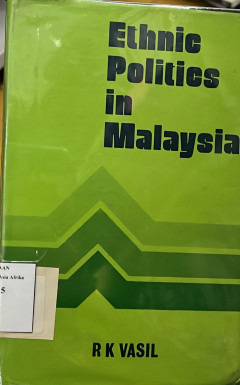
Ethnic politics in Malaysia
The book Ethnic Politics in Malaysia by R. K. Vasil examines the dynamics of communal and ethnic politics in post-independence Malaysia. Vasil explores how various ethnic groups (mainly Malay, Chinese, and Indian) interact within a pluralistic political system. He discusses power structures, the role of ethnic-based political parties, and the ways in which political elites build communal coalit…
- Edisi
- -
- ISBN/ISSN
- -
- Deskripsi Fisik
- xii, 234 pages ; 25 cm
- Judul Seri
- -
- No. Panggil
- 320.959 5 VAS e
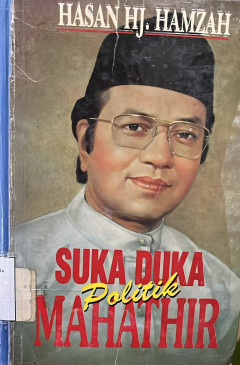
Suka duka politik Mahathir
This book highlights the political career of Dr. Mahathir Mohamad during his decade as Prime Minister of Malaysia, revealing the ups and downs he experienced as the country's leader. Hassan Hj. Hamzah describes Mahathir as a controversial figure: some see him as a dictator, but many also respect him as a hero of modernization. In this narrative, Hamzah examines the various political challenges,…
- Edisi
- -
- ISBN/ISSN
- 983-9683-05-5
- Deskripsi Fisik
- xv, 496 pages : ilustrations ; 25 cm
- Judul Seri
- -
- No. Panggil
- 320.959 5 HAM s
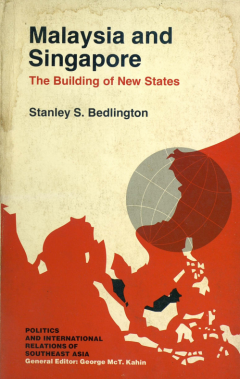
Malaysia and Singapore : The Building of New States
This concise and informed introduction to the way the Malaysian and Singapore governments work is based on the author’s unusual combination of academic training and professional field experience. Stanley Bedlington goes beyond a mere description of government institutions and political parties. He moves easily across various disciplines, including history, anthropology, sociology, and politic…
- Edisi
- -
- ISBN/ISSN
- 0-8014-0910-1
- Deskripsi Fisik
- 285 pages ; 25 cm
- Judul Seri
- -
- No. Panggil
- 320.959 5 BED m
 Karya Umum
  Filsafat
  Agama
Agama  Ilmu-ilmu Sosial
  Bahasa
  Ilmu-ilmu Murni
  Ilmu-ilmu Terapan
  Kesenian, Hiburan, dan Olahraga
  Kesusastraan
  Geografi dan Sejarah