Ditapis dengan

Geopolitik dan perekonomian Indonesia dampak dan respons kebijakan
Buku ini menyajikan perspektif mendalam dan komprehensif mengenai dinamika geoekonomi dan geopolitik global, serta pengaruhnya terhadap perekonomian Indonesia berikut respons kebijakan yang diambil. Kodifikasi dinamika geokonomi dan geopolitik yang ditabulasi dalam buku ini, dapat menjadi lesson learned dan fondasi yang bagus pagi pembaca, untuk menyusun future & strategic foresight lima, atau …
- Edisi
- Cet. 1
- ISBN/ISSN
- 978-623-5662-13-8
- Deskripsi Fisik
- xx + 272 hlm.; 15,5 x 23 cm
- Judul Seri
- -
- No. Panggil
- 330.9598 Nat g
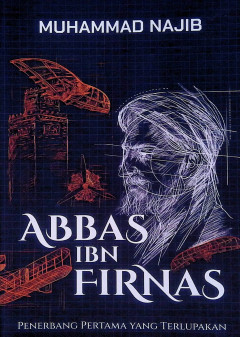
Abbas Ibn Firnas: Penerbang Pertama yang Terlupakan
Buku ini menelusuri perjalanan intelektual Abbas Ibn Firnas, ilmuwan Muslim dari Andalusia yang memiliki visi tentang kemampuan manusia untuk terbang jauh sebelum penemuan pesawat oleh Wright Bersaudara dan jauh sebelum desain alat terbang Leonardo da Vinci. Lebih dari sekadar mengisahkan eksperimen terbang Ibn Firnas, buku ini mengulas faktor-faktor yang mendukung lahirnya ilmuwan: semangat be…
- Edisi
- -
- ISBN/ISSN
- 978-634-96-050-5-2
- Deskripsi Fisik
- 159 hlm.; 13, 5 x 20,5 cm
- Judul Seri
- -
- No. Panggil
- 509.2 Naj a

Pandemi, inovasi, dan keberlanjutan ekonomi: Perspektif empiris dan kebijakan…
Buku ini mengkaji dampak pandemi COVID - 19 terhadap perekonomian global dan Indonesia, termasuk pengaruhnya terhadap usaha mikro, kecil, dan menengah (UMKM), lapangan kerja, dan stabilitas ekonomi. Buku ini membahas peran kolaborasi pemerintah, Bank Indonesia, dan otoritas terkait lainnya dalam mengimplementasikan kebijakan moneter, fiskal, dan sektor riil untuk mengurangi gangguan ekonomi yan…
- Edisi
- Ed. 1, Cet. 1
- ISBN/ISSN
- 978-623-08-0136-5
- Deskripsi Fisik
- xxviii, 436 hlm.; 23 cm.
- Judul Seri
- -
- No. Panggil
- 330.9 Juh p

Indonesia's strategic position in the evolving global space landscape: the ar…
The second space age presents Indonesia with opportunities to strengthen its technological capabilities, industrial competitiveness, and strategic autonomy. This policy brief evaluates Indonesia’s potential accession to the Artemis Accords and recommends conditional, benefit-based accession within a comprehensive National Space Strategy. Through whole-of-government and private-sector coordina…
- Edisi
- -
- ISBN/ISSN
- -
- Deskripsi Fisik
- -
- Judul Seri
- -
- No. Panggil
- Sesparlu 79-2026

Safeguarding Indonesia's national interest in multilateral environmental nego…
Indonesia possesses significant environmental, economic, and diplomatic assets but lacks an institutionalized whole-of-government mechanism to translate these strengths into international negotiating influence. This policy brief examines how Indonesia can strengthen its agenda-setting capacity during the 2026–2030 global environmental governance implementation phase. It recommends selective l…
- Edisi
- -
- ISBN/ISSN
- -
- Deskripsi Fisik
- -
- Judul Seri
- -
- No. Panggil
- Sesparlu 79-2026

Indonesia's semiconductor ambition: Strengthening Kemlu's strategic role in m…
Developing the semiconductor industry presents Indonesia with a strategic opportunity to expand downstream industrialization, increase domestic value creation, and support its 8% economic growth target. However, technological constraints, dependence on foreign capital and raw materials, and legal requirements within global technology ecosystems pose challenges to Indonesia’s strategic autonom…
- Edisi
- -
- ISBN/ISSN
- -
- Deskripsi Fisik
- -
- Judul Seri
- -
- No. Panggil
- Sesparlu 78-2026

Toward a rule-based consular assistance framework: Managing Moral Hazard in S…
The protection of Indonesian nationals abroad faces growing governance challenges arising from increasingly complex consular cases, inconsistent handling across diplomatic missions, and gaps between public expectations and state authority. This paper identifies the need for an integrated operational framework that clarifies the scope, limitations, and prioritization of consular assistance. It r…
- Edisi
- -
- ISBN/ISSN
- -
- Deskripsi Fisik
- -
- Judul Seri
- -
- No. Panggil
- Sesparlu 78-2026

From resource to influence: Indonesia’s strategy in global biofuel governance
Indonesia’s position as a major producer of palm-based biofuels has yet to translate into substantial influence over global biofuel governance. Dependence on external technologies and international sustainability standards may constrain market access, competitiveness, and domestic value creation, particularly in the development of sustainable aviation fuel (SAF). This paper recommends strengt…
- Edisi
- -
- ISBN/ISSN
- -
- Deskripsi Fisik
- -
- Judul Seri
- -
- No. Panggil
- Sesparlu 78-2026

Designing flexible working arrangement policy in Ministry of Foreign Affairs
This paper examines the need to design a Flexible Working Arrangement policy in Indonesia's Ministry of Foreign Affairs (MoFA) post-COVID-19 pandemic. During the unprecedented time of COVID-19, thousands of employees were forced to work from home using digital technology and platforms, and MoFA embraced the new normal by implementing Working from Home (WfH) arrangements using existing technolog…
- Edisi
- -
- ISBN/ISSN
- -
- Deskripsi Fisik
- -
- Judul Seri
- -
- No. Panggil
- Sesdilu 69-2021

Forging a resilient nickel industry: Assessing Indonesia-U.S. partnership
Indonesia’s downstreaming policy has expanded domestic processing capacity and increased nickel export value, yet the industry remains concentrated in the midstream battery supply chain and heavily dependent on Chinese investment, technology, and markets. This paper recommends integrating Indonesia’s nickel industry into US-aligned supply chains while maintaining its domestic downstreaming …
- Edisi
- -
- ISBN/ISSN
- -
- Deskripsi Fisik
- -
- Judul Seri
- -
- No. Panggil
- Sesparlu 78-2026
 Karya Umum
 Filsafat
 Agama
 Ilmu-ilmu Sosial
 Bahasa
 Ilmu-ilmu Murni
 Ilmu-ilmu Terapan
 Kesenian, Hiburan, dan Olahraga
 Kesusastraan
 Geografi dan Sejarah