Ditapis dengan
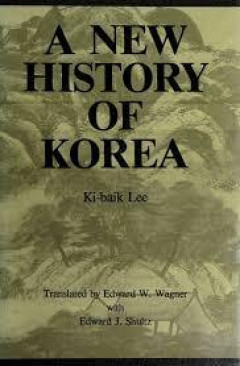
A New history of Korea
This book provides a comprehensive overview of Korea’s history, spanning from ancient times to the modern era. Ki-baik Lee examines Korea's political, social, economic, and cultural developments, emphasizing the interplay between internal dynamics and external influences. The work highlights the resilience and adaptability of the Korean people through periods of unification, foreign invasions…
- Edisi
- -
- ISBN/ISSN
- 0-674-61575-1
- Deskripsi Fisik
- v, 474 pages : illustrations ; 23 cm
- Judul Seri
- -
- No. Panggil
- 951.9043 LEE n

Nuclear diplomacy in East Asia : US and the Korean nuclear crisis management
This Book Is An Analytical Study Of The Diplomatic Strategies Of The U.S., North And South Korea, China And Japan In The Resolution Of The Korean Nuclear Crisis, Which Began With The North Korean Announcement Of Withdrawal From Npt On 12 March 1993. Dust Jacket Slightly Damaged.
- Edisi
- First Pulished
- ISBN/ISSN
- 81-7095-048-1
- Deskripsi Fisik
- xii, 414 pages : index ; 23 cm
- Judul Seri
- -
- No. Panggil
- 327.2 Kap n

The peninsula question: A chronicle of the second Korean nuclear crisis
Through interviews, gives a behind-the-scenes look at negotiations to denuclearize the Korean peninsula. Offering multiple perspectives on the second Korean nuclear crisis, provides a window of understanding on the historical, geopolitical, and security concerns at play on the peninsula since 2002, paying special attention to China's dealings with North Korea
- Edisi
- -
- ISBN/ISSN
- 978-0-8157-3010-1
- Deskripsi Fisik
- xii, 592 pages : index ; 25 cm.
- Judul Seri
- -
- No. Panggil
- 327.1747095193 Fun p

The Korean Peninsula: Prospects for arms reduction under global detente
Since the end of the Korean War, Northeast Asia has been at peace but held in a state of tension due to the seemingly permanent rivalry between the superpowers and their respective allies in the region.
- Edisi
- -
- ISBN/ISSN
- 0-8133-8148-7
- Deskripsi Fisik
- vi, 275 pages : index ; 23 cm.
- Judul Seri
- -
- No. Panggil
- 327.174 Tay k

Current issues in Korean-U.S. relations: Korean-American dialogue: A report o…
The Korea-U.S. Forum in 1992 was a series of four talks presented by Korean and U.S. experts in their fields. Scholars, political leaders, business representatives, students, and media personnel attending the talks had the opportunity to exam- ine the issues presented in each session during an open question and answer forum following the talks
- Edisi
- -
- ISBN/ISSN
- 89-7225-007-4
- Deskripsi Fisik
- vii, 147 pages ; 23 cm
- Judul Seri
- -
- No. Panggil
- 327.730519 Man c

Divided Korea: The politics of development 1945–1972
This research was co-authored by the Research Institute on International Change at Columbia University, and the East Asian Research Center at Harvard University. This book contains state issues that occurred in South Korea and North Korea, both in the field of politics and military power.
- Edisi
- -
- ISBN/ISSN
- 1-56591-087-7
- Deskripsi Fisik
- xii, 471 pages : ilustration, bibliography, index ; 23 cm
- Judul Seri
- -
- No. Panggil
- 327.519305 Kim d

North Korea: The politics of regime Survival
Featuring contributions by some of the leading experts in Korean studies, this book examines the political content of Kim Jong-Il's regime maintenance, including both the domestic strategy for regime survival and North Korea's foreign relations with South Korea, Russia, China, Japan, and the United States. It considers how and why the Democratic People's Republic of Korea (DPRK) became a "hermi…
- Edisi
- -
- ISBN/ISSN
- 0-7656-1639-4
- Deskripsi Fisik
- xi, 322 pages : bibl: hlm 299-308 : index ; 23 cm
- Judul Seri
- -
- No. Panggil
- 320.95193 Kih n

Crony capitalism : Corruption and development in South Korea and the Philippines
Why has the literature on Asian development not addressed the issue of money politics in Korea? How can we reconcile the view of an efficient developmental state in Korea before 1997 with reports of massive corruption and inefficiency in that same country in 1998 and 1999? Politics is central to the answer. This study argues that both Korea and the Philippines experienced significant corruption…
- Edisi
- -
- ISBN/ISSN
- 0-521-00408-X
- Deskripsi Fisik
- xv, 203 pages : illustrations (black and white) : index ; 23 cm
- Judul Seri
- -
- No. Panggil
- 320.951 Kan c

Peace on the Korean, Peninsula, and East Asia
Kim Dae-jung is President of the Republic of Korea. He was elected to the presidency on 18 December 1997. He has received numerous awards and honours and been conferred many honorary degrees from universities in Korea, China, the USA and Russia. He has also published about forty books in Korean, as well as English and other languages. This text contains his speech at the Singapore lecture on 27…
- Edisi
- -
- ISBN/ISSN
- 981-230-118-6
- Deskripsi Fisik
- 24 pages ; 24 cm
- Judul Seri
- -
- No. Panggil
- 951.9 Dae p

In quest of excellence: Selected public policies of Korea
Content: 1. Government e-procurement system 2. KOCCA, a new driver for the Korean creative content industry 3. KNPA boasts standout cyber crime investigation capabilities 4. e-Customs system used worldwide 5. IIAC: A top-class airport operation system envied worldwide
- Edisi
- -
- ISBN/ISSN
- -
- Deskripsi Fisik
- 159 pages : illustrations ; 27 cm
- Judul Seri
- -
- No. Panggil
- 951.9 Ser q
 Karya Umum
  Filsafat
  Agama
Agama  Ilmu-ilmu Sosial
  Bahasa
  Ilmu-ilmu Murni
  Ilmu-ilmu Terapan
  Kesenian, Hiburan, dan Olahraga
  Kesusastraan
  Geografi dan Sejarah