Ditapis dengan

The Bandung Conference and Japan’s Return to Asia: Between the United State…
This book examines Japan’s diplomatic position during the early Cold War, focusing on its participation and political stance surrounding the 1955 Bandung Conference. Miyashiro analyzes Japan’s attempt to reintegrate into Asia while balancing pressure from the United States and its own regional ambitions. The work provides insight into Japan’s foreign policy transformation, regional identi…
- Edisi
- -
- ISBN/ISSN
- 9784794210357
- Deskripsi Fisik
- vii, 229 pages ; 19,5 cm
- Judul Seri
- -
- No. Panggil
- 327.52 DAI b
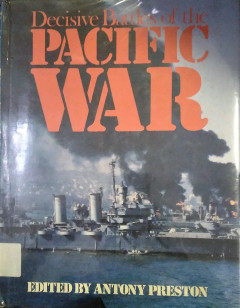
Decisive battles of the pacific war
"Decisive Battles of the Pacific War" is a comprehensive illustrated work edited by military historian Antony Preston, presenting key battles that shaped the outcome of the Second World War in the Pacific theater. The book examines major engagements between Allied and Japanese forces, analyzing strategies, naval clashes, amphibious assaults, and turning points from Pearl Harbor to the final sta…
- Edisi
- -
- ISBN/ISSN
- 0-89009-293-1
- Deskripsi Fisik
- 192 pages : illustration ; 30 cm
- Judul Seri
- -
- No. Panggil
- 940.5426 PRE d

The Imperial cruise: A Secret history of empire and war
This book reveals President Theodore Roosevelt's major diplomatic expedition in 1905, known as the "Imperial Cruise." Through the American fleet's voyage to Asia, Roosevelt and William Howard Taft crafted a secret policy that shaped the geopolitics of modern East Asia. It explores the impact of this diplomacy on Japan, the Philippines, China, and Korea, and how Roosevelt-era decisions contribut…
- Edisi
- -
- ISBN/ISSN
- 978-0-316-01400-7
- Deskripsi Fisik
- 387 pages : illustration ; 21 cm
- Judul Seri
- -
- No. Panggil
- 359.4 BRA i
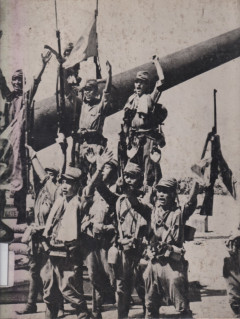
The Rising sun
The Rising Sun explores the dramatic rise of Japan as a military power in the years leading up to World War II and its early wartime expansion across Asia and the Pacific. Written by Arthur Zich with the editors of Time-Life Books, the volume examines Japan’s political transformation, its imperial ambitions, and the strategic decisions that shaped its wartime conduct. The book also traces the…
- Edisi
- -
- ISBN/ISSN
- 0-8094-2520-3
- Deskripsi Fisik
- 208 pages : illustration ; 29 cm
- Judul Seri
- -
- No. Panggil
- 940.54 ZIC r
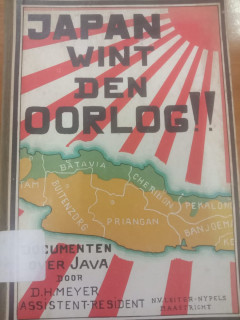
Japan wint den oorlog: Documenten over Java
This book contains a collection of documents on the situation in Java in the period leading up to and during the Japanese occupation in World War II. D. H. Meyer, an Assistant Resident in the Dutch East Indies, presents reports, administrative notes, and official documents that depict the political and military changes that occurred as Japan gained dominance in the Greater East Asia region. Thi…
- Edisi
- -
- ISBN/ISSN
- -
- Deskripsi Fisik
- 110 pages; 23 cm
- Judul Seri
- -
- No. Panggil
- 959.8 MEY j
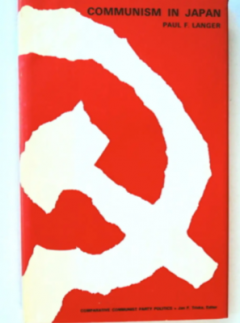
Communism in Japan: A Case of political naturalization
An analytical study of the development, structure, and political dynamics of the communist movement in Japan from its origins in the early 20th century through its postwar transformations. Langer examines the ideological foundations of Japanese communism, the formation and evolution of the Japan Communist Party (JCP), and the movement’s relationship with labor unions, intellectual groups, and…
- Edisi
- -
- ISBN/ISSN
- -
- Deskripsi Fisik
- xv, 111 pages ; 22,5 cm
- Judul Seri
- -
- No. Panggil
- 329.952 LAN c
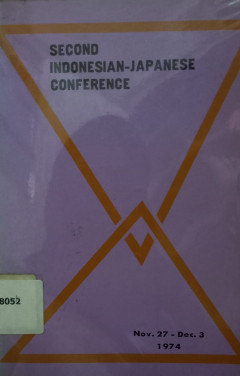
Second Indonesian-Japanese conference
Ddocuments a series of scholarly discussions, research presentations, and policy dialogues focusing on political, economic, social, and cultural relations between Indonesia and Japan. The volume highlights key issues such as bilateral cooperation, regional security, trade and investment dynamics, educational exchanges, and mutual cultural understanding. Contributors from both countries analyze …
- Edisi
- -
- ISBN/ISSN
- -
- Deskripsi Fisik
- 254 pages ; 21,5 cm
- Judul Seri
- -
- No. Panggil
- 327.598052 TIM s
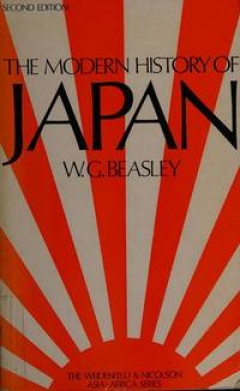
The modern history of Japan
The Modern History of Japan by W. G. Beasley provides a comprehensive overview of Japan’s political, social, and economic transformation from the late Tokugawa era to the modern period. The book examines the fall of the shogunate, the Meiji Restoration, Japan’s rapid modernization, and the emergence of the nation as a major world power. Beasley analyzes key historical developments, includin…
- Edisi
- -
- ISBN/ISSN
- 0-297-76604-X
- Deskripsi Fisik
- ix, 358 pages : illustrations ; 21,5 cm
- Judul Seri
- -
- No. Panggil
- 952.647 BEA m
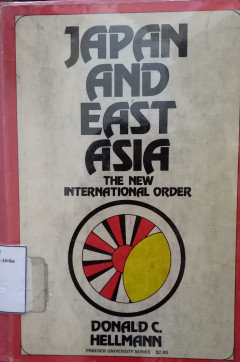
Japan and East Asia: The New international order
Japan’s evolving political and economic role in shaping the postwar and contemporary East Asian regional order. Hellmann examines how Japan’s rapid economic growth, security partnership with the United States, and increasing regional engagement influenced the balance of power in East Asia. The book explores Japan’s interactions with major regional actors—including China, Korea, and Sout…
- Edisi
- -
- ISBN/ISSN
- -
- Deskripsi Fisik
- xii, 243 pages : illustrations ; 20,5 cm
- Judul Seri
- -
- No. Panggil
- 327.5205 HEL i

Japan unmasked
An accessible and candid insight into the realities of Japanese society, culture, and national character. Kawasaki explains how historical experiences, social structures, traditions, and group-centered values shape everyday life in Japan. The book highlights key themes such as work ethic, social discipline, modernization, and the tension between tradition and change. Through clear observations …
- Edisi
- -
- ISBN/ISSN
- -
- Deskripsi Fisik
- 231 pages : illustrations ; 18 cm
- Judul Seri
- -
- No. Panggil
- 952 KAW j
 Karya Umum
  Filsafat
  Agama
Agama  Ilmu-ilmu Sosial
  Bahasa
  Ilmu-ilmu Murni
  Ilmu-ilmu Terapan
  Kesenian, Hiburan, dan Olahraga
  Kesusastraan
  Geografi dan Sejarah