Ditapis dengan
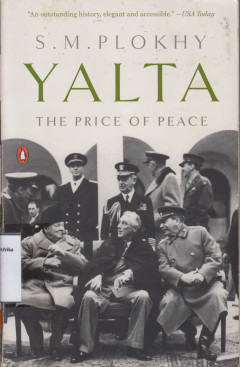
Yalta: The Price of peace
“Yalta: The Price of Peace” by historian Serhii Plokhy provides a comprehensive examination of the 1945 Yalta Conference, where Roosevelt, Churchill, and Stalin negotiated the political shape of the postwar world. Drawing from newly available archival materials, Plokhy reveals the strategic calculations, personal dynamics, and geopolitical pressures that shaped the decisions leading to the …
- Edisi
- -
- ISBN/ISSN
- ISBN 978-0-670-02141-3
- Deskripsi Fisik
- xxviii, 451 pages ; 21,5 cm
- Judul Seri
- -
- No. Panggil
- 940.5314 PLO y
A Strategy of peace in a changing world
In this influential work, Arthur N. Holcombe examines the challenges of creating and sustaining peace in a rapidly changing international environment. He discusses the political, economic, and strategic forces shaping world affairs during the mid-twentieth century and explores the role of the United States in promoting global stability. Holcombe analyzes the requirements of an effective peace s…
- Edisi
- -
- ISBN/ISSN
- -
- Deskripsi Fisik
- 332 pages ; 21,5 cm
- Judul Seri
- -
- No. Panggil
- 327.172 HOL s
Over-exposed: U.S. Banks confront Third World debt crisis
Raul Madrid's Over-exposed represents the first in-depth study of the involvement of U.S. banks in the Third World debt crisis. Based on extensive interviews with commercial bankers, the book examines the decision-making process at U.S. banks that led to the lending boom of the 1970s and early 1980s as well as the role the banks played in the management of the debt crisis. Madrid argues that ba…
- Edisi
- -
- ISBN/ISSN
- 0-931-035-50-3
- Deskripsi Fisik
- xvi, 260 pages ; 24 cm
- Judul Seri
- -
- No. Panggil
- 336.343 MAD o

The Sino-Soviet conflict: A Global perspective
This book is a collection of papers presented at a conference organized by the Center for Contemporary Chinese and Soviet Studies, University of Washington, in 1980. It discusses the Sino-Soviet conflict from a global perspective, including the dynamics of political and strategic relations between the People's Republic of China and the Soviet Union. The analysis in this book highlights the hist…
- Edisi
- -
- ISBN/ISSN
- 0-295-95873-1
- Deskripsi Fisik
- xxii, 408 pages ; 23,5 cm
- Judul Seri
- -
- No. Panggil
- 327.51047 ELL s

Soviet foreign policy in a changing world
This book is a collection of essays and academic studies on the changes and dynamics of the Soviet Union's foreign policy after 1975. Editors Robbin F. Laird and Erik P. Hoffmann present in-depth analyses of Soviet international political strategy, including relations with developing countries, reactions to global changes, and the role of ideology and internal power structures in shaping Soviet…
- Edisi
- -
- ISBN/ISSN
- 0-202-24167-X
- Deskripsi Fisik
- xxiv, 969 pages ; 23,5 cm
- Judul Seri
- -
- No. Panggil
- 327.47 LAI s
Conflict in American foreign policy: The Issues debated
Conflict in American Foreign Policy: The Issues Debated presents a comprehensive examination of major controversies in U.S. foreign policy during the post–World War II period. Edited by Don L. Mansfield and Gary J. Buckley, the book explores competing viewpoints on America’s global role, the administration of foreign policy, and the strategic decisions that shaped U.S. international relatio…
- Edisi
- -
- ISBN/ISSN
- 0-13-166844-7
- Deskripsi Fisik
- xix, 315 pages ; 23 cm
- Judul Seri
- -
- No. Panggil
- 327.73 MAN c

Soviet foreign policy since world war II
This second edition of Soviet Foreign Policy Since World War II provides a comprehensive analysis of the Soviet Union's foreign policy from the end of World War II to the early 1980s. Joseph L. Nogee and Robert H. Donaldson discuss the dynamics of ideology, strategic interests, international relations, and changes in Soviet leadership that influenced foreign policy. This book combines a framewo…
- Edisi
- Second edition
- ISBN/ISSN
- 0-08-030151-7
- Deskripsi Fisik
- vii, 351 pages ; 23 cm
- Judul Seri
- -
- No. Panggil
- 327.47 NOG s

Soviet and Chinese Influence in the Third World
This book discusses the influence of the Soviet Union and the People's Republic of China in Third World countries during the Cold War period. Alvin Z. Rubinstein analyzes the foreign policy strategies of these two communist countries and how they competed and cooperated in expanding their ideology, military influence, and diplomatic relations in Asia, Africa, and Latin America. This work also e…
- Edisi
- -
- ISBN/ISSN
- 0-275-09640-8
- Deskripsi Fisik
- ix, 231 pages ; 23,5 cm
- Judul Seri
- -
- No. Panggil
- 327.09172 RUB s
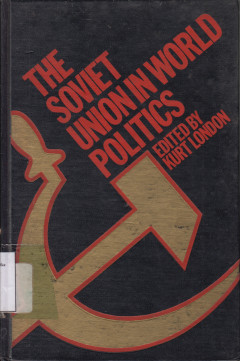
The Soviet Union in world politics
The Soviet Union in World Politics is a collection of scholarly articles edited by Kurt London, discussing the role of the Soviet Union in international political dynamics during the 20th century. This book highlights Soviet foreign policy, global strategy, diplomatic relations, and its ideological influence on other countries during the Cold War. Written by experts, this work provides an in-de…
- Edisi
- -
- ISBN/ISSN
- 0-89158-263-0
- Deskripsi Fisik
- xiii, 380 pages ; 23,5 cm
- Judul Seri
- -
- No. Panggil
- 327.47 LON s
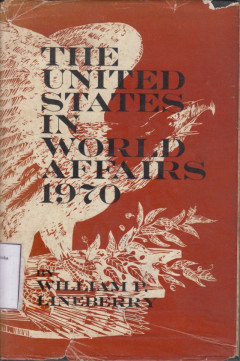
The United States in world affairs 1970
“The United States in World Affairs 1970” provides an authoritative annual review of American foreign policy developments during a critical period marked by Cold War tensions, diplomatic realignments, strategic challenges, and shifts in global power. Written under the auspices of the Council on Foreign Relations, the book analyzes major international events involving the United States throu…
- Edisi
- -
- ISBN/ISSN
- 671–21259–1
- Deskripsi Fisik
- 359 pages ; 21,5 cm
- Judul Seri
- -
- No. Panggil
- 327.73 LIN u
 Karya Umum
  Filsafat
  Agama
Agama  Ilmu-ilmu Sosial
  Bahasa
  Ilmu-ilmu Murni
  Ilmu-ilmu Terapan
  Kesenian, Hiburan, dan Olahraga
  Kesusastraan
  Geografi dan Sejarah