Ditapis dengan
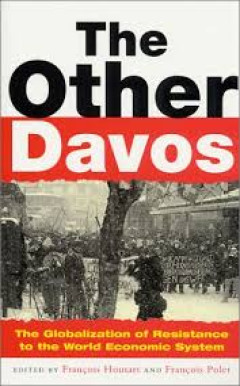
The other Davos
Each year, the Swiss mountain resort Davos is host to the meetings of the World Economic Forum. To this informal gathering of the most powerful business and financial magnates in the capitalist world are invited political leaders, cultural and religious organizations and even some trade unionists. The aim is to define global economic strategies.
- Edisi
- -
- ISBN/ISSN
- 1-85649-988-X
- Deskripsi Fisik
- ix, 132 pages : illustrations (black and white) ;21 cm
- Judul Seri
- -
- No. Panggil
- 337 Hou o

The new Middle East
The late summer headlines of a landmark peace accord between the government of Israel and the Palestine Liberation Organization stunned and delighted citizens of conscience from every walk of life and from all over the world. Here, at last, were the first glimmerings of harmony for a region whose bloody, intractable conflicts between Arab and Jew had outlived hot and cold wars alike to become a…
- Edisi
- ed.1
- ISBN/ISSN
- 0-8050-3323-8
- Deskripsi Fisik
- x, 224 pages ; 24 cm
- Judul Seri
- -
- No. Panggil
- 956 Per n
Europe, East Asia and APEC
This book was the first in a major series examining Global Economic Institutions and contrasts regional economic integration in the Asia Pacific Region and in Europe. In the Asia Pacific Region at the time of publication, regionalism was developing by means of 'open regionalism', constructed through the APEC (Asia Pacific Economic Cooperation Process). This was different from the regionalism wh…
- Edisi
- -
- ISBN/ISSN
- 978-0-521-63315-4
- Deskripsi Fisik
- xvii, 304 halaman ; 22 cm
- Judul Seri
- -
- No. Panggil
- 337 Dry e

Euroquake: Europe's explosive economic challenge will change the world
The Euroquake in prospect is an economic one. By 1993 Europe will be a bigger market than the US. By 1995 there is a real prospect of a single European currency. By 2000 a unified Germany will have become the economic and industrial engine of a new European Superstate. Daniel Burstein, who analysed the significance, of the new Japanese financial empire, in "Yen!", now turns his attention to Eur…
- Edisi
- -
- ISBN/ISSN
- 0-671-69033-7
- Deskripsi Fisik
- 384 pages ; 24 cm
- Judul Seri
- -
- No. Panggil
- 337 Bur e
The politics of international economic relations
In this fourth edition the writer have added new material that reflects both the academic changes and the events in the years since the third edition was published. For example, the monetary chapter explores efforts at exchange rate management since the Plaza and Louvre agreements, the trade chapters examine issues being negotiated in the Uruguay Round of multilateral trade negotiations, the ch…
- Edisi
- ed.4
- ISBN/ISSN
- 0-415-08430-X
- Deskripsi Fisik
- ix, 404 pages : illustrations (black and white) ; 23 cm
- Judul Seri
- -
- No. Panggil
- 337 Spe p
India in the new Asia-Pacific
Privatisation, liberalisation and globalisation have become the main features of the new world order, which means closer economic, social and cultural ties, transfer of technology and restructuring of internal priorities etc. in the various countries. In the era of globalisation and economic reforms, Asia- Pacific is the most vibrant region in the world. This book provides a diverse and vivi…
- Edisi
- Cet. 1
- ISBN/ISSN
- 81-7049-130-4
- Deskripsi Fisik
- 432 pages : illustrations (black and white) ; 22 cm
- Judul Seri
- -
- No. Panggil
- 337 Son i

What is our policy on North Korea?: A report on the evaluation of alternative…
Contents: 1. The socioeconomic and political background of the reforms 2. The DPRK's domestic economy 3. The DPRK's foreign economic relations and their dependence on the outcome of the nuclear dispute
- Edisi
- -
- ISBN/ISSN
- -
- Deskripsi Fisik
- 207 pages : illustrations (black and white) ; 25 cm
- Judul Seri
- -
- No. Panggil
- 337 Let w
Non-State actors and authority in the global system
Traditionally in international relations, power and authority were considered to rest with states. But recently, in the light of changes associated with globalisation, this has come under scrutiny both empirically and theoretically. This book analyses the continuing but changing role of states in the international arena, and their relationships with a wide range of non-state actors, which poss…
- Edisi
- -
- ISBN/ISSN
- 0-415-22085-8
- Deskripsi Fisik
- xvii, 301 pages : illustrations (black and white) ; 23 cm
- Judul Seri
- -
- No. Panggil
- 337 Hig n
Economic sanctions: Panacea or peacebuilding in a post-cold war world?
As the challenge of preventing military conflict has become increasingly complex in the post-Cold War era, economic sanctions are being applied with growing frequency. Sanctions are also being used to enforce international law, to deter aggression and terrorism, to defend democracy and human rights, and to prevent nuclear proliferation. This study addresses questions about the utility, appropri…
- Edisi
- -
- ISBN/ISSN
- 0-8133-8908-9
- Deskripsi Fisik
- xvii, 231 pages : illustration (black and white) ; 22 cm
- Judul Seri
- -
- No. Panggil
- 337 Cor e

The end of the nations state: The rise of regional economies
Nation states, asserts the world-renowned business strategist Kenichi Ohmae, are dinosaurs waiting to die. In the profoundly important book Ohmae argues that not only have nation states lost their ability to control exchange rates and protect their currencies, but they no langer generate real economic activity.
- Edisi
- -
- ISBN/ISSN
- 0-02-923341-0
- Deskripsi Fisik
- x, 214 pages : illustration ; 24 cm
- Judul Seri
- -
- No. Panggil
- 337.1 Ohm e
 Karya Umum
  Filsafat
  Agama
Agama  Ilmu-ilmu Sosial
  Bahasa
  Ilmu-ilmu Murni
  Ilmu-ilmu Terapan
  Kesenian, Hiburan, dan Olahraga
  Kesusastraan
  Geografi dan Sejarah