Ditapis dengan

Beyond reconciliation: transforming Indonesia- Timor-Leste Bilateral trust in…
Indonesia and Timor-Leste have built strong political trust through post-conflict reconciliation, but evolving regional dynamics and Timor-Leste’s ASEAN accession require a more strategic and sustainable bilateral partnership. This policy brief recommends strengthening bilateral governance, enhancing border and economic connectivity, supporting Timor-Leste’s ASEAN integration, and investing…
- Edisi
- -
- ISBN/ISSN
- -
- Deskripsi Fisik
- -
- Judul Seri
- -
- No. Panggil
- Sesparlu 79-2026

Migration diplomacy and labour-market access: the role of Indonesian diplomac…
Indonesia can leverage Europe’s growing demand for skilled workers to create safer, higher-value employment opportunities while strengthening skills development and national economic benefits. However, fragmented coordination between labour-market demand, qualification recognition, recruitment, and worker protection limits this potential. This policy brief recommends establishing a National S…
- Edisi
- -
- ISBN/ISSN
- -
- Deskripsi Fisik
- -
- Judul Seri
- -
- No. Panggil
- Sesparlu 79-2026

Geopolitical spatial clustering in Ibu Kota Nusantara: strategic spatial allo…
Indonesia’s capital relocation to Nusantara presents strategic opportunities and security challenges due to its proximity to vital international trade and data routes. This policy brief recommends establishing an integrated Foreign Spatial Governance Authority to coordinate embassy land allocation, enforce reciprocal land arrangements, and develop secure, state-controlled digital infrastructu…
- Edisi
- -
- ISBN/ISSN
- -
- Deskripsi Fisik
- -
- Judul Seri
- -
- No. Panggil
- Sesparlu 79-2026

Unlocking South and Central Asian Markets: a joint collaboration strategy for…
Indonesia’s MSMEs contribute significantly to the national economy but remain underrepresented in exports, particularly in India, where bilateral trade is dominated by raw and semi-processed commodities. This policy brief recommends a diplomatically led Indonesia–India MSME Market Access Task Force to integrate market intelligence, trade financing, halal certification, and buyer matchmaking…
- Edisi
- -
- ISBN/ISSN
- -
- Deskripsi Fisik
- -
- Judul Seri
- -
- No. Panggil
- Sesparlu 79-2026

The post-mission transition: policy solutions to address headquarters bottlen…
Indonesia’s Ministry of Foreign Affairs faces a human capital challenge as the growing number of senior diplomats exceeds available structural positions, resulting in underutilized expertise and reduced organizational efficiency. This policy brief recommends an integrated talent mobilization framework combining internal matrix-based work teams with cross-agency assignments through the nationa…
- Edisi
- -
- ISBN/ISSN
- -
- Deskripsi Fisik
- -
- Judul Seri
- -
- No. Panggil
- Sesparlu 79-2026

Strengthening Indonesia's energy resilience through small modular reactor dev…
Indonesia’s transition toward net-zero emissions by 2060 requires a secure, affordable, and low-carbon electricity system. This policy brief recommends developing Small Modular Reactors (SMRs) through an integrated technology-financing framework that balances energy security, strategic autonomy, fiscal sustainability, and investment competitiveness. The proposed strategy emphasizes blended fi…
- Edisi
- -
- ISBN/ISSN
- -
- Deskripsi Fisik
- -
- Judul Seri
- -
- No. Panggil
- Sesparlu 79-2026

The strategic role of the Ministry of Foreign Affairs in strengthening Indone…
Indonesia’s digital games industry offers significant potential for economic growth and international influence, yet domestic revenue remains largely captured by foreign publishers despite the country’s substantial gaming market. This policy brief recommends strengthening the Ministry of Foreign Affairs’ role in creative economy diplomacy through a dedicated working group on international…
- Edisi
- -
- ISBN/ISSN
- -
- Deskripsi Fisik
- -
- Judul Seri
- -
- No. Panggil
- Sesparlu 79-2026
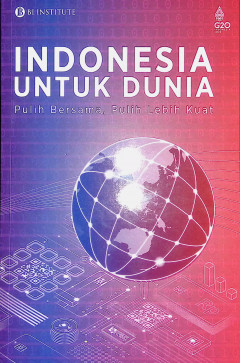
Indonesia untuk dunia pulih bersama, pulih lebih kuat
Buku ini mendokumentasikan Presidensi G20 Indonesia pada tahun 2022 dengan berfokus pada agenda prioritas jalur keuangan dan peran koordinasi serta inovasi kebijakan dalam mendukung pemulihan ekonomi global. Buku ini membahas berbagai tantangan pascapandemi COVID-19, termasuk strategi penghentian stimulus fiskal, dampak jangka panjang pandemi terhadap perekonomian, pembayaran digital, regulasi …
- Edisi
- -
- ISBN/ISSN
- 978-623-5662-45-9
- Deskripsi Fisik
- xxvi + 384 hlm.; 15 x 23 cm
- Judul Seri
- -
- No. Panggil
- 330.9598 Hen i

Strengthening strategic national resilience: rethinking military support in I…
Indonesia has established a comprehensive counter-terrorism framework, but evolving security challenges and growing demands for democratic accountability highlight a governance integration gap. This policy brief recommends an integrated national counter-terrorism governance framework, strengthened inter-agency coordination, effective implementation of the National Action Plan on Preventing and …
- Edisi
- -
- ISBN/ISSN
- -
- Deskripsi Fisik
- -
- Judul Seri
- -
- No. Panggil
- Sesparlu 79-2026
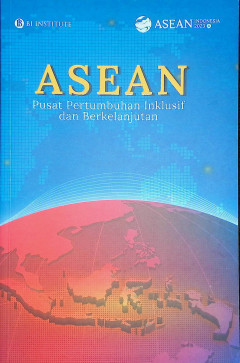
ASEAN pusat pertumbuhan inklusif dan berkelanjutan
Buku ini mengkaji peran Indonesia dalam memajukan pertumbuhan inklusif dan berkelanjutan di ASEAN selama Kepemimpinannya pada tahun 2023. Buku ini membahas tantangan regional yang dihadapi Indonesia, termasuk perlambatan ekonomi global, fragmentasi geopolitik, kerentanan di negara-negara kurang berkembang, pengetatan kebijakan moneter di negara - negara maju, dan pemulihan pasca-pandemi yang se…
- Edisi
- Cet. 1
- ISBN/ISSN
- 978-623-5662-59-6
- Deskripsi Fisik
- xxx + 344 hlm.; 15 x 23 cm
- Judul Seri
- -
- No. Panggil
- 330.959 Kar a
 Karya Umum
 Filsafat
 Agama
 Ilmu-ilmu Sosial
 Bahasa
 Ilmu-ilmu Murni
 Ilmu-ilmu Terapan
 Kesenian, Hiburan, dan Olahraga
 Kesusastraan
 Geografi dan Sejarah