Ditapis dengan
The East European revolution
The East European Revolution by Hugh Seton-Watson provides an authoritative analysis of the political and social transformations that reshaped Eastern Europe after World War II. The book examines the rise of communist governments, the role of the Soviet Union in restructuring regional politics, the collapse of prewar institutions, and the emergence of new revolutionary elites. Seton-Watson offe…
- Edisi
- -
- ISBN/ISSN
- -
- Deskripsi Fisik
- xix, 435 pages : illustration ; 22 cm
- Judul Seri
- -
- No. Panggil
- 947 WAT e

The Evolution of an international actor: Western Europe’s new assertiveness
The Evolution of an International Actor: Western Europe’s New Assertiveness examines how Western Europe emerged as a significant actor in international politics after 1945. Edited by Reinhardt Rummel, the volume explores Europe’s evolving political identity, its economic transformation, defense policies, and its increasing role in global affairs. Through contributions from various scholars,…
- Edisi
- -
- ISBN/ISSN
- 0-8133-7534-7
- Deskripsi Fisik
- vi, 354 pages ; 22 cm
- Judul Seri
- -
- No. Panggil
- 320.94 RUM e

Memoires over de tweede wereldoorlog: De Storm steekt op – Van oorlog tot o…
This book is part of Winston Churchill's memoir series, which reviews world developments from the end of World War I to the outbreak of World War II. In De Storm Steekt Op – Van oorlog tot oorlog 1919–1939, Churchill describes the emergence of global political tensions, the rise of totalitarian powers such as Nazi Germany, Fascist Italy, and the Soviet Union, and the failure of the internat…
- Edisi
- -
- ISBN/ISSN
- -
- Deskripsi Fisik
- 497 pages : illustration ; 22,5 cm
- Judul Seri
- -
- No. Panggil
- 940.531 CHU m

The Unfinished revolution: Making sense of the communist past in Central-East…
The Unfinished Revolution by James Mark examines how Central and Eastern European societies have understood, negotiated, and remembered their communist past since the revolutions of 1989. Through comparative case studies, the book explores the social, political, and cultural transformations that shaped post-communist identity. Mark analyzes themes such as collective memory, political justice, d…
- Edisi
- -
- ISBN/ISSN
- 978-0-300-16716-0
- Deskripsi Fisik
- xxviii, 312 pages : illustration ; 24 cm
- Judul Seri
- -
- No. Panggil
- 943.705 MAR u
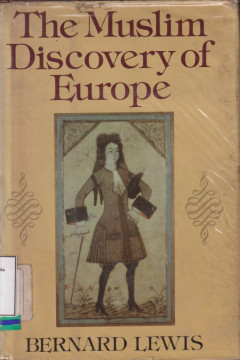
The Muslim discovery of Europe
The Muslim Discovery of Europe by Bernard Lewis explores how the Islamic world perceived, encountered, and interacted with Europe from the Middle Ages to the modern era. Drawing from historical texts, travel accounts, diplomatic records, and cultural writings, Lewis analyzes how Muslims viewed European society, politics, science, and culture. The book highlights the changing dynamics of East–…
- Edisi
- -
- ISBN/ISSN
- 0-393-01529-7
- Deskripsi Fisik
- 350 pages : illustration ; 24 cm
- Judul Seri
- -
- No. Panggil
- 303.482 LEW m

Socialism, politics, and equality: Hierarchy and change in Eastern Europe and…
Socialism, Politics, and Equality by Walter D. Connor examines the structure of social hierarchy, political dynamics, and patterns of social mobility in Eastern Europe and the Soviet Union during the socialist era. Through comparative analysis, the book explores how socialist ideology influenced class formation, political power, and inequality. Connor provides detailed sociological and politica…
- Edisi
- -
- ISBN/ISSN
- 0-231-04318-X
- Deskripsi Fisik
- x, 389 pages ; 23 cm
- Judul Seri
- -
- No. Panggil
- 301.44 CON s
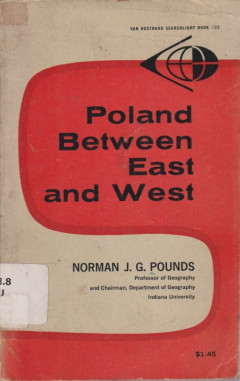
Poland between east and west
This book presents a comprehensive overview of Poland's geographic and geopolitical position as a country situated between the great powers of Eastern and Western Europe. Norman J. G. Pounds examines the history, socio-economic conditions, cultural influences, and political dynamics that shaped modern Polish identity. Part of the Searchlight Books series, this work aims to provide a concise yet…
- Edisi
- -
- ISBN/ISSN
- -
- Deskripsi Fisik
- 132 pages : illustration ; 20,5 cm
- Judul Seri
- -
- No. Panggil
- 943.8 POU p

Histoire des relations internationales. Tome sixième : Le XIXᵉ siècle. II…
This sixth volume of the “Histoire des relations internationales” series examines the development of international relations between 1871 and 1914, a period when Europe reached the peak of its political and economic power. Pierre Renouvin describes the rivalries between major powers, the growth of nationalism, imperialism, the alliance system, and the various international crises that ultim…
- Edisi
- -
- ISBN/ISSN
- -
- Deskripsi Fisik
- 401 pages : illustration ; 22 cm
- Judul Seri
- -
- No. Panggil
- 327.09034 REN h

Histoire des relations internationales. Tome cinquième : Le XIXᵉ siècle. …
This book is the fifth volume in the “Histoire des relations internationales” series written by Pierre Renouvin. In this volume, Renouvin examines the dynamics of international relations from 1815 to 1871, a period when Europe experienced the rise of nationalism, political restructuring after the Congress of Vienna, and the emergence of new powers on the international stage. The analysis co…
- Edisi
- -
- ISBN/ISSN
- -
- Deskripsi Fisik
- 421 pages : illustration ; 22 cm
- Judul Seri
- -
- No. Panggil
- 327.0903 REN h

Histoire des relations internationales. Tome premier, Le Moyen Âge
This book is the first volume of the “Histoire des relations internationales” series, written under the direction of Pierre Renouvin. François-L. Ganshof examines the development of international relations during the Middle Ages, from the collapse of the Roman Empire to the end of the Middle Ages. The analysis covers the political interactions between kingdoms, churches, and empires, as we…
- Edisi
- -
- ISBN/ISSN
- -
- Deskripsi Fisik
- xvii, 331 pages : illustration ; 22 cm
- Judul Seri
- -
- No. Panggil
- 940.1 REN h
 Karya Umum
  Filsafat
  Agama
Agama  Ilmu-ilmu Sosial
  Bahasa
  Ilmu-ilmu Murni
  Ilmu-ilmu Terapan
  Kesenian, Hiburan, dan Olahraga
  Kesusastraan
  Geografi dan Sejarah